Engineering-Grade Dust Collectors for Every Process Stage
Industrial manufacturing facilities and mineral processing plants demand heavy-duty particulate filtration systems built to handle severe dust loadings, extreme flue gas temperatures, and stringent regulatory limits. Covering the complete spectrum of industrial dedusting equipment, DARKO designs and manufactures high-performance filtration solutions ranging from mechanical coarse pre-separators to advanced sub-micron fabric filter systems engineered for ultra-low emissions.
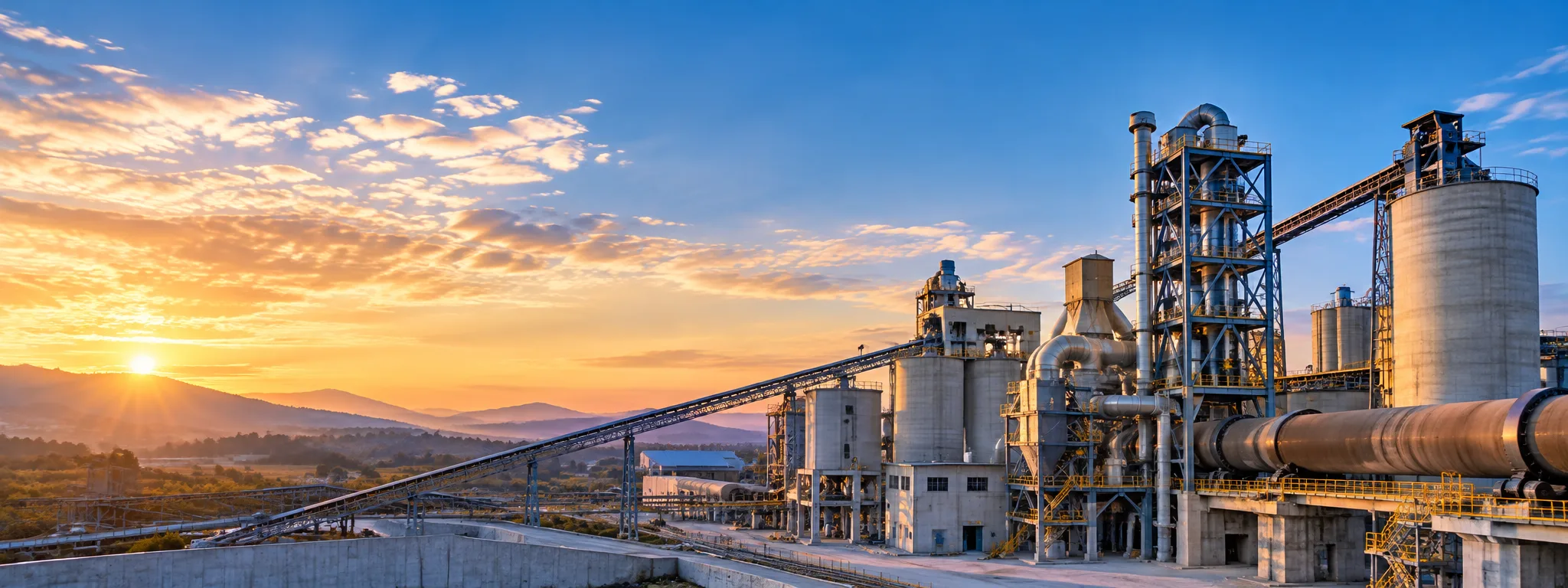
Multi-stage integrated dust collection systems developed by DARKO fulfill comprehensive process requirements across clinker calcination lines, raw grinding circuits, finish grinding mills, bulk storage silos, and conveyor transfer junctions worldwide. Explore our four foundational industrial dust collector products below to match your process parameters.
Baghouse Dust Collectors
High-volume, high-temperature continuous fabric filtration systems engineered specifically for rotary kiln exhaust, preheater towers, and clinker cooler venting, our baghouse dust collectors provide round-the-clock reliability under severe industrial gas loads.
Pulse Jet Dust Collectors
Automated online and offline compressed air cleaning systems in our pulse jet dust collectors maintain balanced differential pressure, prevent media blinding, and deliver uninterrupted continuous operation in high-inlet-load grinding circuits.
Cartridge Dust Collectors
Highly compact, high-efficiency pleated cartridge filtration units designed for cement silo vents, pneumatic conveying discharge points, packaging terminals, and tight footprint indoor plant installations.
Cyclone Dust Collectors
Robust centrifugal pre-separators engineered to extract high concentrations of coarse, abrasive particulates from high-velocity gas streams, protecting downstream fabric filters from excessive wear and thermal shock.
Heavy-Duty Casing Integrity
Structural housings engineered to withstand up to -7000 Pa negative pressure with precision continuous welding to prevent ambient air ingress.
Energy-Efficient Cleaning
High-flow submerged pulse valves operate at lower air pressures to reduce plant utility consumption while delivering uniform cleaning energy.
Tailored Media Formulations
Engineered selection of PTFE membrane fiberglass, aramid, and conductive anti-static needle felts matched to specific flue gas chemistry.
Tailored Dedusting Solutions Across the Cement Manufacturing Flow
Cement production demands specialized air pollution control engineered for aggressive operating environments, including highly abrasive clinker dust, extreme gas temperatures, chemical corrosion, and heavy inlet particulate loads. DARKO Cement Machinery designs robust baghouse dust collectors and industrial filtration systems optimized for airflow distribution, bag blinding prevention, and ultra-low particulate emissions across pyroprocessing, raw and finish grinding, clinker cooling, and bulk material transfer circuits.
Kiln Exhaust & Preheater Dedusting
Operating Challenges
- • Massive Flue Gas Volumes: Gas streams often exceed 800,000 m³/h with acidic SOx, HCl, and NOx content.
- • Severe Thermal Spikes: Sudden preheater process upsets risk exceeding standard media degradation thresholds.
- • Sub-Micron Particulates: Ultra-fine calcined meal particles demand high surface filtration efficiency.
Engineered Configuration
- • PTFE Membrane Media: High-temperature woven fiberglass with thermal-bonded expanded PTFE membrane.
- • Automated Emergency Bypass: Fast-acting pneumatic dampers integrated with cold-air dilution protection.
- • Thermal Insulation Shell: High-density 100mm mineral wool cladding eliminates cold spots and acid condensation.
Need a Custom Airflow & Differential Pressure Calculation?
DARKO engineers evaluate process gas volume, particulate loading, gas temperature, and abrasiveness to establish precise air-to-cloth ratios, duct velocities, and pulse cleaning logic for your cement plant.
High-Efficiency Filtration Engineered for Stricter Environmental Regulations
Engineered to eliminate compliance risks and reduce operating overhead, DARKO industrial baghouse dust collectors deliver verified ultra-low emissions, low-consumption pulse cleaning, and structural reliability under continuous heavy-duty loads.
Clean gas outlet concentration fully compliant with European, US EPA, and worldwide ultra-low emission mandates.
Average continuous non-breakage operating service life for premium membrane filter bags and precision cages.
Conservatively sized filtration velocity to maintain stable differential pressure and minimize compressed air usage.
Heavy-gauge structural rating resisting high negative draft pressure with verified air in-leakage rates below 2%.
Low-Pressure Pulse Jet Technology
High-flow submerged pulse valves operating at 0.20–0.35 MPa in our advanced pulse jet dust collectors deliver complete filter bag cake release, cutting mechanical stress and compressor power consumption.
CFD-Optimized Airflow Distribution
Stepped intake baffles and flow equalizers distribute dust-laden gas uniformly across the chamber, eliminating localized turbulence and abrasive wear across both bag and cartridge dust collectors.
Explosion-Proof & Anti-Static Compliance
Integrated ATEX-certified explosion relief panels, flameless venting devices, and conductive filter grounding protect hazardous coal grinding and fine fuel circuits.
Factory Testing & Quality Assurance
All DARKO dust collectors undergo rigorous airtight pressure decay testing and pulsing sequence simulations prior to dispatch.
Industrial Dust Collector Comparison & Sizing Guide
Specifying industrial dust collection equipment requires precise engineering evaluation of process volumetric flow rates, flue gas temperatures, moisture dew points, and grain loading concentrations. From heavy-duty kiln exhaust baghouses to compact silo-top cartridge venting units, aligning the proper air-to-cloth ratio, operating pressure drop, and media treatment ensures compliance with strict particulate emission limits (≤5 mg/Nm³) while minimizing operational downtime and fan energy costs.
Core Equipment Technical Matrix
| Collector Type | Suitable Particle Size | Airflow Capacity Range | Max Operating Temp | Typical Pressure Drop | Primary Application Fields |
|---|---|---|---|---|---|
| Baghouse Dust Collectors Continuous woven and needle-felt fabric | 0.5 – 100 μm | 10,000 – 1,200,000 m³/h | Up to 260°C (500°F) | 1,200 – 1,500 Pa | Rotary kiln heads and tails, clinker coolers, large-volume continuous calcination lines |
| Pulse Jet Dust Collectors Online and offline high-pressure pulse cleaning | 0.1 – 50 μm | 5,000 – 800,000 m³/h | Up to 200°C (392°F) | 1,000 – 1,300 Pa | Raw and cement grinding mills, coal grinding circuits, heavy dust concentration handling |
| Cartridge Dust Collectors Pleated surface filtration elements | 0.2 – 10 μm | 1,000 – 60,000 m³/h | ≤ 80°C (120°C with specialized media) | 800 – 1,100 Pa | Storage silo venting, belt conveyor discharge chutes, packing stations, compact footprints |
| Cyclone Dust Collectors Mechanical centrifugal pre-separators | 10 μm (Coarse particles) | 3,000 – 300,000 m³/h | Up to 450°C+ (842°F+) | 600 – 900 Pa | High-temperature coarse separation, primary spark arrestors, heavy abrasion material recovery |
3-Step Engineering Sizing & Selection Protocol
DARKO Cement Machinery applies a rigorous engineering methodology to calculate accurate air-to-cloth ratios, determine optimal differential pressure thresholds, and ensure structural longevity across harsh cement manufacturing environments.
Process Gas & Dust Characterization
Identify fundamental operational baseline metrics prior to structural equipment dimensioning:
- Inlet Dust Loading: Evaluate continuous and peak dust concentrations (g/Nm³) under operating surges.
- Flue Gas Properties: Monitor gas temperature profiles, moisture content, and acid condensation dew points.
- Particulate Behavior: Analyze particle size distribution (PSD), abrasiveness index, and hygroscopic tendencies.
Air-to-Cloth Ratio & Area Sizing
Calculate net filtration surface area based on volumetric flow and allowable interstitial velocities:
- Filtration Velocity: Establish 0.8–1.2 m/min for standard baghouses and 0.6–0.9 m/min for fine grinding circuits.
- Net Area Calculation: Determine total cloth area using Area = Total Airflow (m³/h) / (Velocity × 60) with reserve capacity.
- Can Velocity Control: Maintain upward interstitial gas velocity below 1.1 m/s to prevent dust re-entrainment.
Media Selection & Casing Specifications
Select specialized filter media and structural configurations tailored to chemical and mechanical risks:
- Filter Media Formulations: Select PTFE-membrane fiberglass, PPS, or P84 felts for acid and thermal resistance.
- Reinforced Casing: Construct heavy-duty housings rated for -7000 Pa negative pressure with insulated panels.
- Explosion Protection: Incorporate ATEX-certified flameless venting panels and antistatic grounding systems.
Balancing Energy Consumption and Filter Lifespan
Undersized dust collectors and aggressive air-to-cloth ratios accelerate bag blinding, elevate system pressure drop, and impose continuous parasitic electrical loads on induced draft fans. Over-cleaning through excessive pulse frequencies damages woven fiber matrixes and causes premature particulate bleed-through.
DARKO Cement Machinery optimizes fluid dynamics through CFD airflow modeling and stepped intake distribution baffles. Combined with high-efficiency low-pressure submerged pulse valves (operating at 0.20–0.35 MPa), our dust collection systems stabilize operating differential pressures at 1,000–1,400 Pa while extending filter bag service life beyond 25,000 continuous operating hours.
Need Expert Laboratory Analysis & Sizing Calculations?
DARKO offers complete process gas analysis, particulate characterization, and ductwork aerodynamic balance calculations to deliver an engineered dust collection system sized precisely for your plant's operating demands.
Turnkey Engineering: From CFD Simulation to Site Commissioning
Executing large-scale industrial filtration projects demands rigorous aerodynamic modeling, heavy-gauge steel manufacturing, and disciplined field commissioning. As an established cement equipment manufacturer, DARKO provides end-to-end turnkey dedusting system contracts, deploying heavy-duty baghouse dust collectors engineered to conquer extreme kiln gas temperatures, high clinker dust abrasion, and demanding ductwork layouts worldwide.
Site Survey & CFD Airflow Simulation
Comprehensive 3D plant laser scanning and computational fluid dynamics (CFD) modeling optimize gas flow distribution, balance inlet plenum pressures, and eliminate dust dropout zones before fabrication begins.
Heavy-Duty CNC Precision Manufacturing
Automated CNC plasma profiling, submerged arc seam welding, ultrasonic weld inspection, and Sa 2.5 grit blasting with industrial epoxy finishes guarantee casing structural integrity under severe negative draft.
Core Component Integration
Factory installation of high-speed submerged pulse valves, smart Siemens/ABB PLC automation cabinets, differential pressure instrumentation, and precision-matched OEM filter media assemblies for high-efficiency pulse-jet dust collectors.
Site Supervision & Commissioning
Senior mechanical and electrical field engineers supervise modular positioning, damper balancing, pulse timing calibration, and stack opacity testing to guarantee sub-5 mg/Nm³ particulate compliance.
Heavy-Duty Dust Collector Fabrication Standards
Industrial dust collector fabrication requires uncompromising quality control at every phase of heavy plate forming and assembly. Backed by world-class manufacturing infrastructure, DARKO delivers turnkey filtration installations—ranging from modular cartridge dust collectors to large-scale process baghouses—with capacities exceeding 1,000,000 m³/h for major cement plants and mineral processing facilities worldwide.
Require Custom Engineering or EPC Project Sizing?
Consult with our application engineers to review process gas flow rates, dust characteristics, and plant layout drawings.
Frequently Asked Questions on Dust Collection Systems
Find direct answers to common engineering questions regarding baghouse differential pressure management, high-temperature filtration design, equipment selection, and turnkey system maintenance for cement and heavy industrial plants.
High differential pressure (ΔP exceeding 1,500–1,800 Pa) indicates restricted airflow across the filter media, which increases fan power consumption and risks premature bag blinding.
Common Root Causes:
- Insufficient Pulse Air Pressure: Compressed air supply falling below the required 0.4–0.6 MPa, preventing effective dust cake dislodgement.
- Pulse Valve Failure: Torn diaphragms or malfunctioning solenoid coils leaving specific filter rows uncleaned during online cycles.
- Moisture Condensation & Mudding: Flue gas dropping below the acid or water dew point, causing hygroscopic cement raw meal to form a hard crust on media surfaces.
- Excessive Air-to-Cloth Ratio: Filter velocity designed too high for the actual process exhaust volume, forcing ultra-fine particulate deep into the fabric matrix.
Recommended Troubleshooting Steps:
- Inspect local air receiver pressure, drain header water traps, and verify pulse valve opening response times.
- Adjust PLC pulse interval and pulse duration settings to optimize cleaning energy without over-flexing the filter media.
- Check casing insulation, expansion joints, and inspection doors for ambient air leakage that causes localized dew point drop.
Preventive Maintenance Schedule
24/7 Field Diagnostics & Spares
DARKO provides plant operators with engineering sizing calculations, on-site commissioning, remote PLC diagnostics, and expedited genuine spare parts dispatch worldwide.