
Cement Equipment Selection Guides and Engineering Sizing Criteria
Selecting industrial powder handling and high-efficiency dust collection equipment for modern cement manufacturing lines demands rigorous empirical modeling rather than rule-of-thumb approximations. Factors such as aerodynamic drag, particle entrainment velocity, temperature dynamics, and mechanical abrasion dictate long-term throughput capacity and continuous uptime. Drawing from hundreds of kiln-feed, clinker grinding circuit, and bulk dispatch terminal installations worldwide, DARKO Cement Machinery provides standardized engineering sizing formulas, fluidization benchmarks, and equipment configuration matrices.
Bulk Material Physical Characterization and Design Limits
Accurate system design begins with comprehensive granular physical property profiling. Dry mineral powders exhibit distinct fluid-solid behavior across varying aeration pressures, moisture levels, and thermal conditions:
- 1 Aerated vs. Settled Bulk Density: Fine finished cement transitions from a settled density of 1.35 t/m³ (84 lb/ft³) to an aerated fluid state under 0.90 t/m³ (56 lb/ft³), directly altering chute volumetric displacement and airlock pocket filling efficiency.
- 2 Abrasiveness Index & Particle Hardness: Silica-rich raw meal and clinker fines (Mohs hardness 6 to 7) cause rapid wall erosion, requiring Hardox 450 wear plates, high-chromium cast liners, or basalt/ceramic cladding at direct impingement points.
- 3 Moisture Content & Hygroscopic Limits: Free moisture exceeding 0.8% promotes rapid particle agglomeration, leading to fabric blinding in air slide conveyors, premature filter cake crusting, and rotary valve pocket build-up.
- 4 Thermal Expansion Extremes: Kiln bypass dust and clinker discharge reaching 250°C (482°F) require high-tensile aramid fluidization membranes, high-temperature mechanical packing, and calibrated rotor thermal expansion clearances.
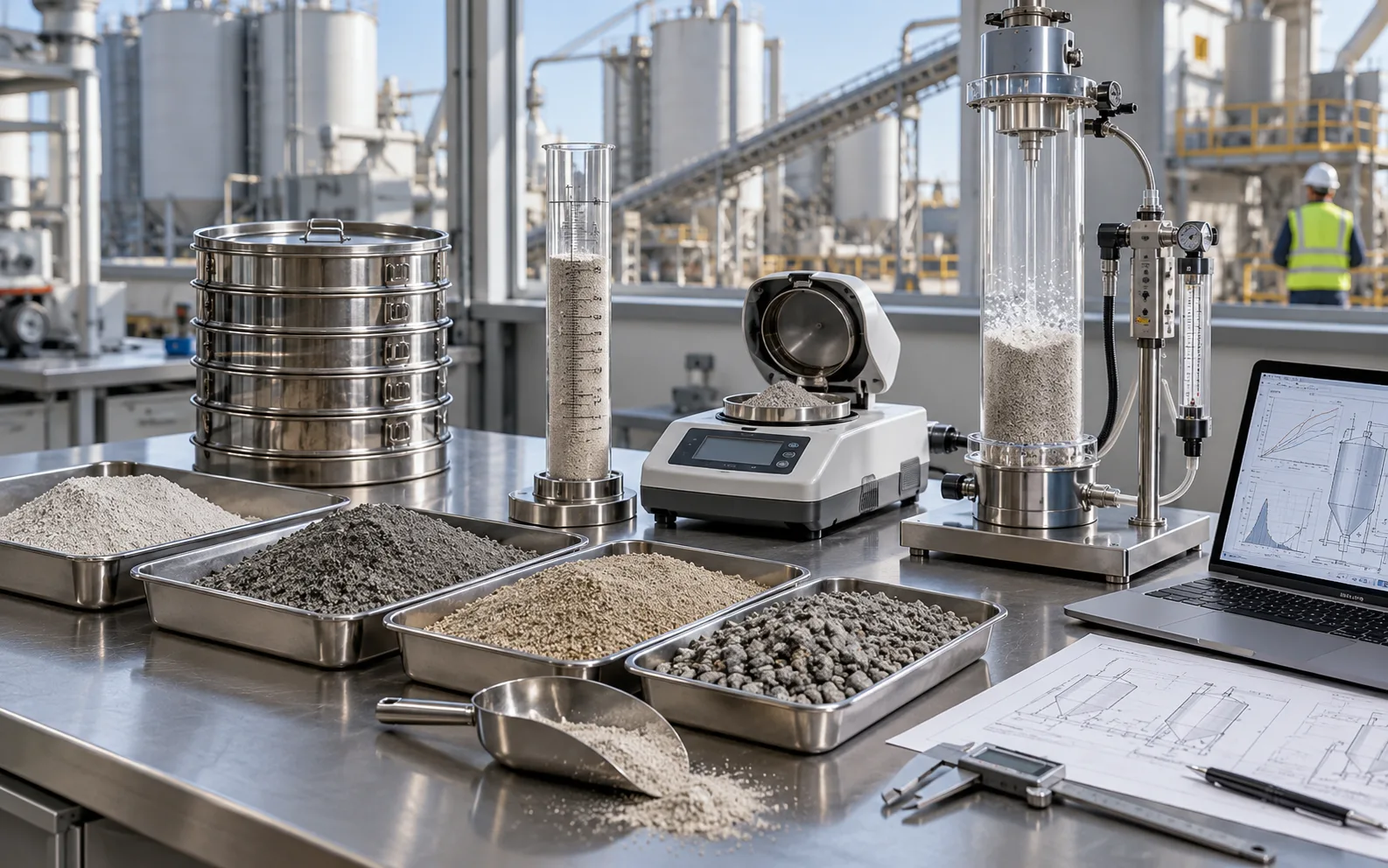
Powder Material Sizing Reference Matrix
Standard operational properties benchmarked across modern dry-process cement manufacturing facilities.
| Material Grade | Settled Density (t/m³) | Aerated Density (t/m³) | Min. Fluid Angle | Abrasion Rating | Max Safe Operating Temp |
|---|---|---|---|---|---|
| Portland Finished Cement (OPC) | 1.25 – 1.45 | 0.85 – 1.05 | 6° – 8° | Moderate | 110°C (230°F) |
| Dry Kiln Raw Meal | 1.10 – 1.30 | 0.75 – 0.90 | 4° – 6° | Moderate | 180°C (356°F) |
| Clinker Dust / Cooler Fines | 1.35 – 1.60 | 1.00 – 1.20 | 8° – 10° | Severe | 260°C (500°F) |
| Class F Pulverized Fly Ash | 0.90 – 1.10 | 0.65 – 0.80 | 4° – 5° | Moderate to High | 150°C (302°F) |
| Ground Granulated Blast-Furnace Slag (GGBS) | 1.20 – 1.40 | 0.80 – 0.95 | 6° – 8° | Extreme | 130°C (266°F) |
Core Equipment Engineering Selection Protocols
Proven engineering calculations, fluid dynamics benchmarks, and structural specifications for mission-critical bulk material transfer points.
Telescopic Bulk Loading Spouts
Engineered for high-rate, dust-tight loadout into enclosed tanker trucks, open hopper railcars, and river barges. Proper sizing balances gravitational discharge flow with negative-pressure dedusting aspiration integrated into dedicated baghouse dust collectors.
- Venting Aspiration: 900 to 1,500 CFM dedicated filtration draft
- Discharge Capacity: 150 to 1,000 TPH standard loadout rates
- Internal Liner: Hardox 450 or polyurethane-coated telescoping cones
Air Slide Gravity Conveyors
Energy-efficient pneumatic gravity conveying for fine powders. Operates by creating a fluidized bed across porous multi-ply woven polyester or aramid membranes at slight downward inclines.
- Chute Slope: 4° to 8° downward incline depending on fineness
- Aeration Volume: 1.5 to 2.5 m³/(m²·min) active fabric area
- Plenum Pressure: 3.5 to 6.0 kPa continuous static pressure
Industrial Isolation & Metering Valves
Heavy-duty rotary airlocks and counterweighted double flap valves prevent air leakage across positive/negative pressure zones at hopper discharge points under automated pulse-jet dust collectors, cyclones, and silo outlets.
- Differential Seal: Rated up to 1.0 bar (15 psi) pressure boundary
- Rotor Clearance: 0.10 to 0.15 mm precision radial tolerance
- Rotor Design: 8-vane closed-end rotor with replaceable bevel tips
Require Custom Engineering Calculations for Your Facility?
DARKO application engineers provide airflow calculations, chute flow analysis, and custom equipment layout assessments based on your materials and operating conditions.
Cement Machinery Working Principles and Fluidization Mechanics
Continuous dry bulk powder conveying, negative-pressure dust extraction, and airtight feeding rely on balanced fluid dynamics and thermodynamic stability. DARKO Cement Machinery designs industrial material handling systems and high-efficiency dust collection equipment using field-verified process calculations that prevent particulate blinding, preserve mechanical airlocks, and minimize operating power across heavy-duty cement plant duty cycles.
All system configurations adhere to ISO cement manufacturing guidelines, negative-pressure baghouse filtration ratings, and continuous pneumatic fluidization metrics.
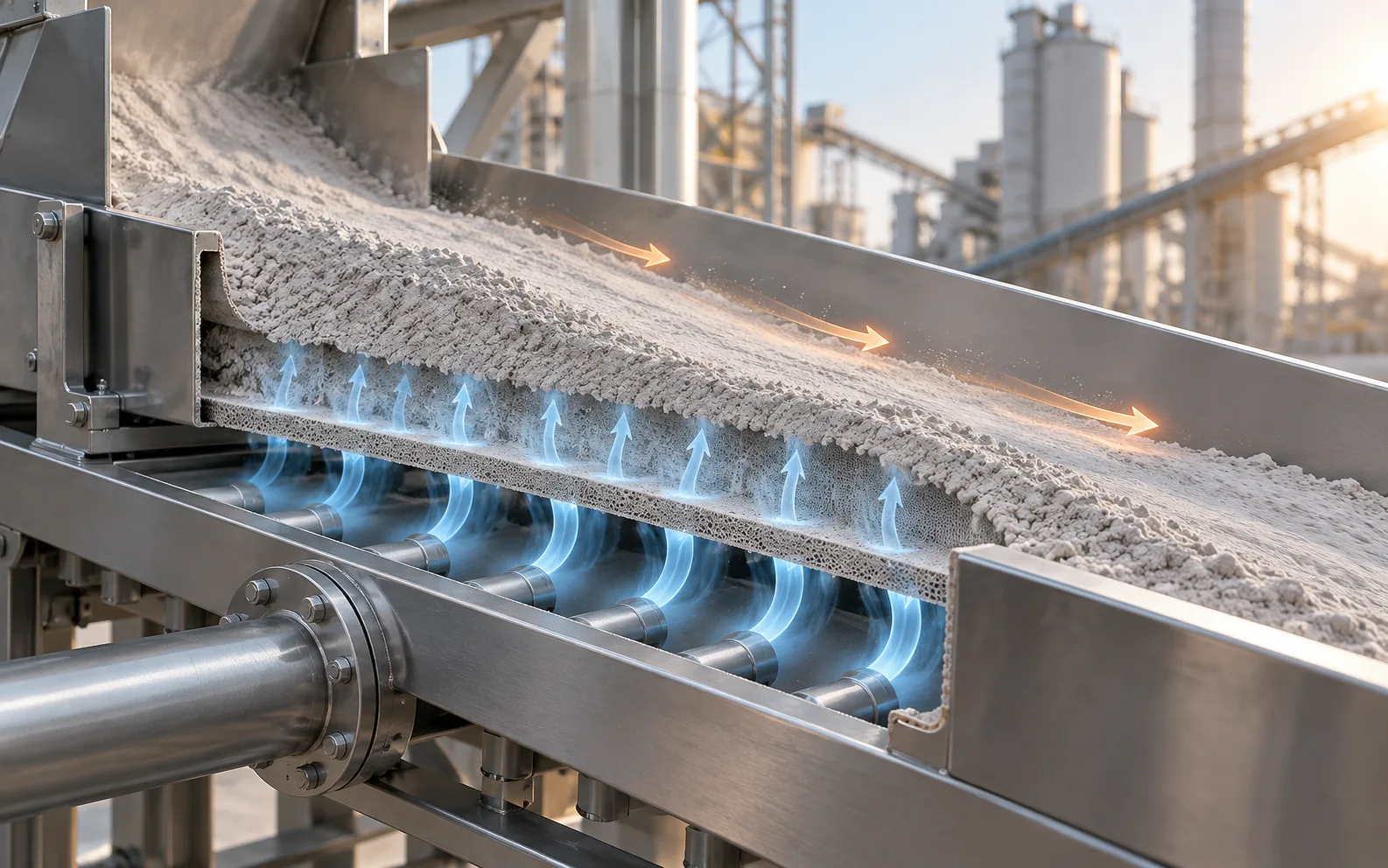
Porous Media Permeation and Micro-Angle Gravity Flow Mechanics
Air slide conveying relies on continuous gas-solid fluidization within an enclosed trough. Low-pressure blower air enters the lower plenum chamber under a controlled static pressure, typically maintained between 3.5 kPa and 5.0 kPa. The pressurized air permeates upward through a multi-ply synthetic fluidization canvas engineered with uniform microscopic pore structures.
As this laminar airflow envelops fine dry cement particles, it disrupts inter-particle friction and eliminates the material's natural angle of repose. The pulverized bulk powder transitions into a fluid-like state. Installed at a downward incline of 6 to 8 degrees, the fluidized cement flows gravitationally downstream at high volumetric rates with virtually zero mechanical resistance or equipment wear.
Superficial Air Velocity Balance
Superficial velocity is strictly managed between 1.5 and 2.5 m/min. Excessive airflow causes localized boiling and fugitive dust blowouts, while insufficient volume results in bed stagnation and line chokes.
Fluid Fabric Air Permeability
DARKO multi-ply woven polyester and aramid air slide fabrics deliver uniform pressure drops across the entire conveying length, resisting thermal degradation up to 180°C and preventing fabric blinding.
- ✓ Frictionless Material Handling: Non-mechanical fluidization eliminates moving components inside the material stream, lowering electrical power demand to low-pressure blower consumption.
- ✓ Calculated Chute Inclination: Exact trough slopes are calibrated against cement Blaine fineness and moisture levels to maintain continuous downhill discharge.
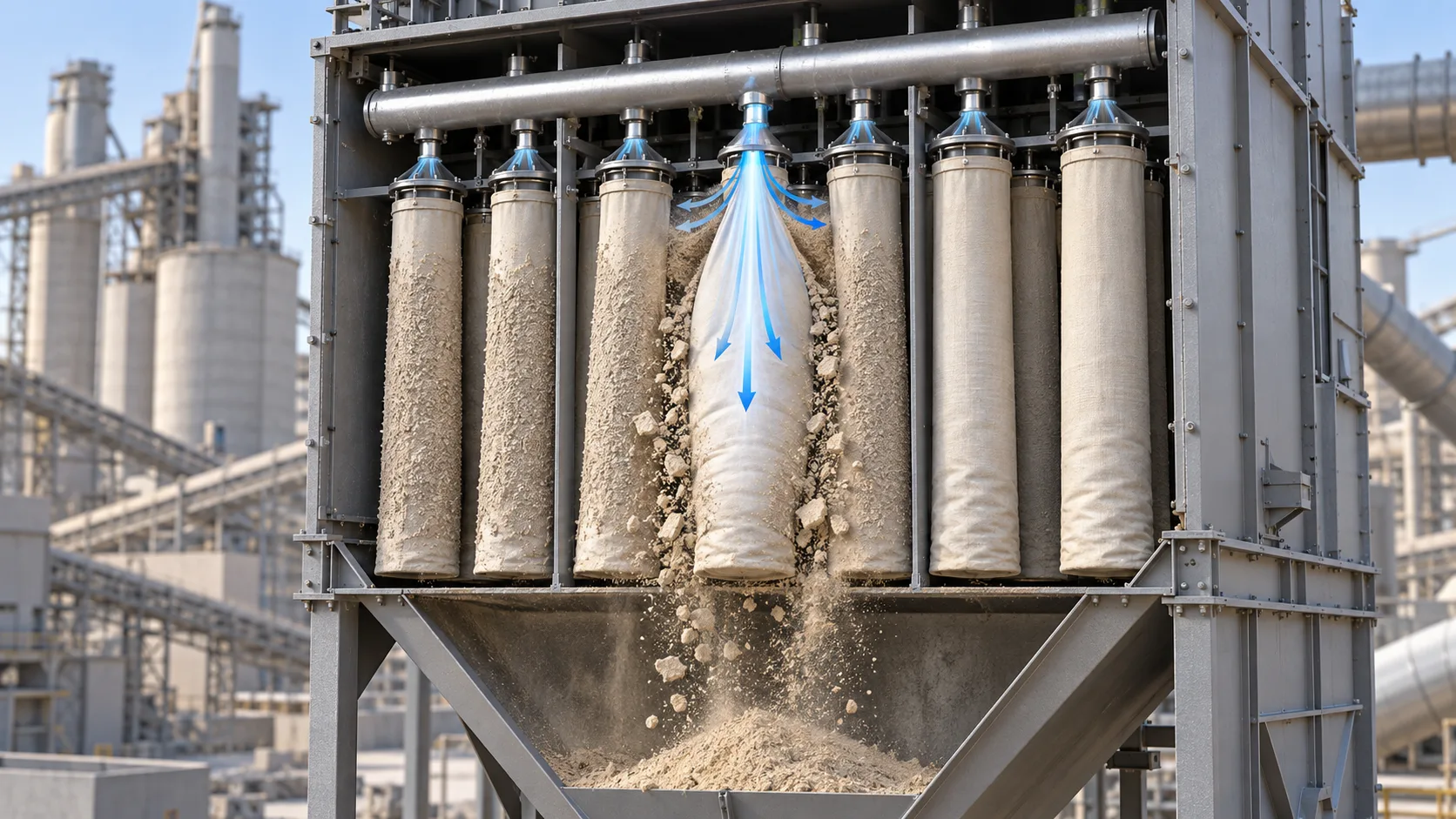

Optimized pressure range providing steady powder fluidization without turbulent boiling or line blockages.
Rapid supersonic burst delivering complete filter cake release while sustaining stable system differential pressure.
Precision airlock engineering maintaining airtight integrity across high differential pressure environments.
Industrial Equipment Performance Comparison and Technology Evaluation
Selecting reliable powder handling and industrial dust collection equipment requires an empirical balance between upfront capital expenditure (CAPEX) and lifecycle operating expenditure (OPEX). Heavy cement manufacturing circuits operate continuously under aggressive particle abrasion, elevated thermal spikes, and severe differential pressures. DARKO Cement Machinery delivers practical engineering evaluation matrices, comparing critical systems to help plant engineers minimize mechanical wear, avoid unplanned kiln outages, and optimize total energy consumption.
Industrial Dust Collector Systems Comparison: Pulse-Jet Baghouse vs Cartridge Unit
Evaluating dust collection systems for cement pyroprocessing, clinker cooler ventilation, and finished grinding circuits requires examining raw inlet dust loadings, gas chemistry, and process moisture relative to the acid dew point. While pleated cartridge dust collectors offer a compact footprint for secondary bin vents, pulse-jet fabric baghouses remain the heavy-duty standard for high-volume, high-grain-load industrial process gas streams.
| Evaluation Parameter | Pulse-Jet Fabric Baghouse | Pleated Cartridge Collector | Engineering Selection Impact |
|---|---|---|---|
| Inlet Dust Loading Limits | Up to 1,000+ g/Nm³ with internal drop-out baffles | Generally restricted to ≤ 15–20 g/Nm³ | Tight pleat spacing bridges quickly under dense raw meal or clinker fines, triggering unrecoverable pressure drop spikes. |
| Continuous Operating Temperature | Up to 260°C (500°F) using PTFE, PI (P84), or woven fiberglass | Standard cellulose/spunbond limited to 80°C–135°C | High-temperature kiln exhaust and preheater gas streams demand fabric media to prevent filter structure degradation. |
| Air-to-Cloth Ratio (Filtration Velocity) | 0.8 to 1.2 m/min (2.6 to 4.0 ft/min) conservative design | 0.3 to 0.6 m/min (1.0 to 2.0 ft/min) for cohesive fine dust | Higher interstitial velocities between pleated elements cause dust re-entrainment during pulse cleaning cycles. |
| Physical Footprint Requirement | Requires larger site footprint and substantial structural clearance | 40% to 60% smaller footprint due to compact pleated surface area | Cartridge units are ideal for space-constrained silo top de-dusting, conveyor transfer heads, and packaging lines. |
| Filter Replacement and Maintenance | Extended media service life (2 to 4 years continuous run) | Frequent cartridge replacements (6 to 12 months in abrasive dust) | Baghouses significantly lower recurring consumable OPEX in continuous 24/7 cement clinker and grinding operations. |
Dry Bulk Conveying Systems Comparison: Air Slide vs Screw Conveyor
Transporting fine, pulverized dry solids between grinding mills, air classifiers, and storage silos requires balancing drive motor power with ongoing mechanical component wear. Air slide conveyors fluidize fine powders using low-pressure aeration to achieve frictionless gravity transport across shallow slopes. In contrast, mechanical screw conveyors depend on constant rotational torque to push bulk material forward through a stationary metal trough.
Air Slide Conveyor (Aerated Gravity)
Ultra-Low Power & OPEXPneumatic air slides introduce low-pressure blower air through a permeable multi-ply polyester woven canvas. As aeration eliminates inter-particle friction, the fluidized material behaves like a liquid, flowing down a 6° to 10° slope with virtually zero mechanical resistance.
- ✓ Minimal Power Consumption: Consumes only 10% to 20% of the kilowatt power required by equivalent-capacity screw conveyors.
- ✓ No Internal Moving Parts: Zero bearings, center hanger brackets, or rotating shafts exposed to abrasive powder streams.
- ✓ Long Run Capability: Easily conveys material over distances exceeding 100 meters without intermediate mechanical drive stations.
- ⚠ Slope Constraint: Requires a continuous downward slope and cannot convey powders uphill or along perfectly flat profiles.
Trough Screw Conveyor (Mechanical Auger)
Controlled MeteringMechanical trough screw conveyors use rotating spiral flighting within a heavy U-shaped or tubular housing. They excel as variable-speed bin extractors, volumetric feeders, and short-distance transfer links across flat or positive inclinations.
- ✓ Installation Versatility: Conveys material horizontally, inclined up to 30 degrees, or vertically where plant headroom is constrained.
- ✓ Volumetric Metering: Delivers controlled linear volumetric feed rates when coupled directly with variable frequency drives (VFDs).
- ✗ High Wear & Abrasion: Direct friction continuously erodes screw flights, intermediate hanger bearings, and trough bottom liners.
- ✗ Substantial Energy Usage: Requires 5x to 8x higher motor horsepower to overcome material friction and continuous mechanical drag.
Decision Framework for Abrasive, High-Temperature Powder Streams
Raw meal, hot clinker discharge, fly ash, and finished Portland cement display vastly different flow properties and wear characteristics. Plant engineering teams should evaluate these core material and process criteria before finalizing mechanical conveyor and filtration specifications:
1. Thermal Envelope and Moisture Dew Points
Operating gas streams above 160°C disqualify standard non-woven polymers and require specialized high-temperature media such as P84, Nomex, or fiberglass with acid-resistant chemical finishes. Moisture-laden gases risk blinding pleats with sticky dust cake, making fully insulated pulse-jet baghouses with hopper tracing heaters the dependable engineering standard.
2. Mohs Hardness and Particle Abrasion Rates
Materials containing free silica or hard, angular clinker nodules quickly erode rotary valve seals, screws, and standard steel chutes. For these severe paths, air slide conveyors equipped with high-durability aeration membranes, ceramic wear liners, and counterweighted double-flap valves deliver substantially longer service intervals.
3. Campaign Operating Cycles and Maintenance Access
Continuous production campaigns exceeding 330 operational days per year require assets that can be serviced without total system shutdowns. Modular multi-compartment baghouse dust collectors configured for off-line isolation allow routine row-by-row filter maintenance and compartment servicing while the primary pyroprocessing line continues running.

Standardized sizing matrices developed by DARKO Cement Machinery incorporate differential pressure drop, aeration air permeability, and verified lifecycle wear metrics to support high-efficiency plant retrofits and expansions.
Audit Your Bulk Handling and Filtration Equipment Sizing
Validate system flow rates, air-to-cloth ratios, and air slide slope requirements against proven field data. Work directly with DARKO process engineers to balance ventilation airflows, select wear-resistant equipment, and optimize plant energy consumption.
Cement Plant Maintenance Tips, Troubleshooting & Wear Parts Optimization
Operating heavy-duty cement production lines at peak capacity requires proactive mechanical upkeep across every phase of raw meal blending, clinker burning, finish grinding, and terminal loadout. An unscheduled shutdown of an air slide conveyor beneath a storage silo or a sudden pressure drop in a kiln exhaust baghouse instantly backs up upstream pyroprocessing circuits. Drawing on field service across global installations, DARKO Cement Machinery supplies concrete diagnostic frameworks, predictive service intervals, and wear parts management practices to eliminate unplanned outages, maintain differential pressure targets, and safeguard daily throughput.
By establishing documented field inspection routines for dynamic shaft packing, high-temperature filter media, and microporous aeration fabrics, plant teams resolve mechanical wear early, preserve system sealing, ensure environmental dust compliance, and control ongoing lifecycle costs.
Root-Cause Diagnostic Procedures for Dry Bulk Handling Systems
Select a common operational failure mode below to review rapid inspection steps, mechanical verification checks, and long-term corrective actions developed for demanding cement plant environments.
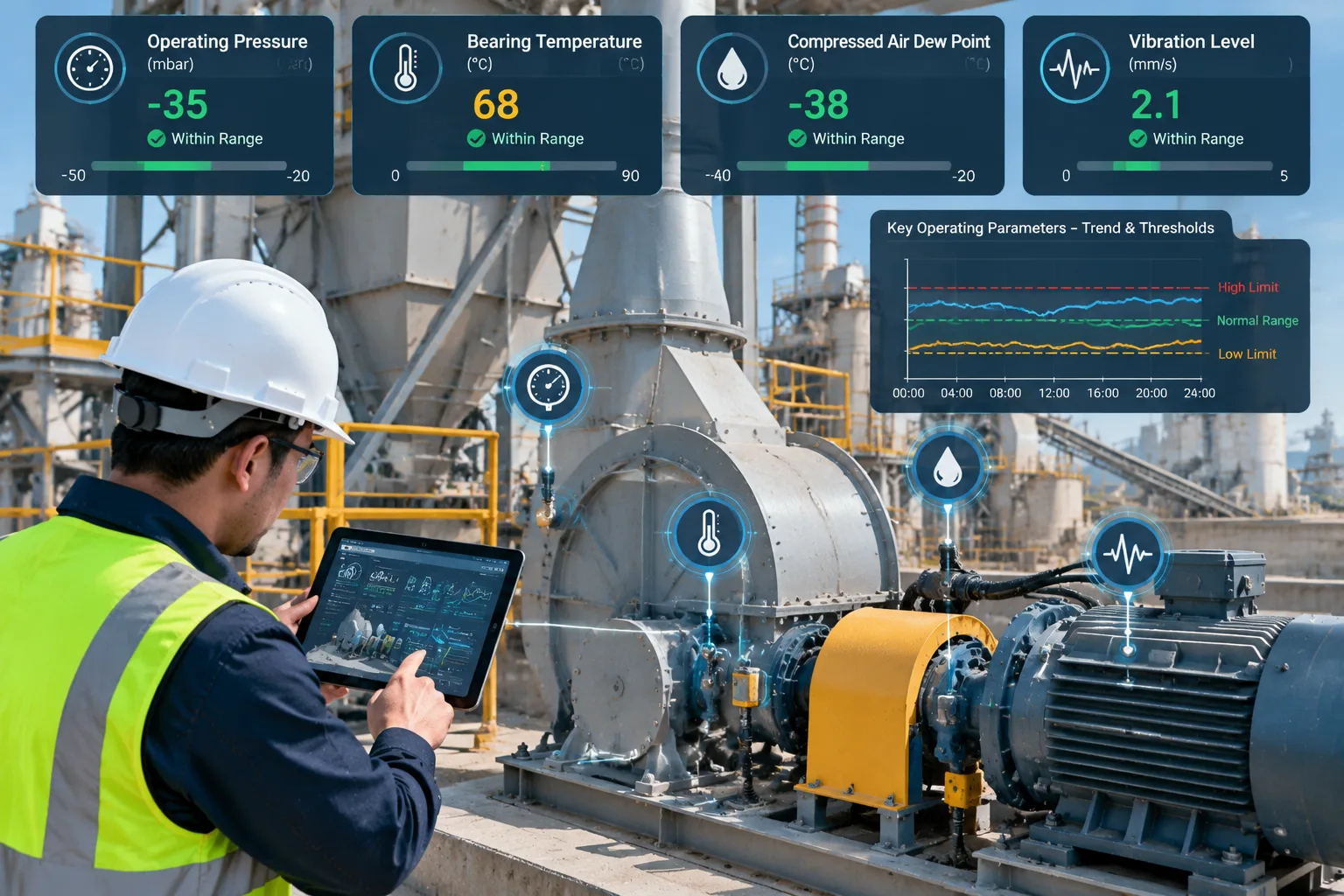
Predictive Maintenance Benchmarks & Operating Thresholds
Sustaining dry bulk equipment uptime depends on keeping operating pressures, bearing temperatures, and compressed air dew points strictly within engineered specifications.
Wear Parts Service Life Expectations & Inspection Schedules
Standardized replacement timelines compiled by DARKO engineering across high-volume clinker handling, silo aerated discharge, and nuisance dust control systems. Integrate these baseline intervals into your computerized maintenance management system (CMMS) to schedule changeouts ahead of component failure.
| Component & Location | Key Degradation Indicators | Inspection Frequency | Expected Service Life | Recommended Corrective Protocol |
|---|---|---|---|---|
| PTFE / Aramid Filter Bags | Felt thinning, snap-band bypass dust paths, residual baseline Delta-P exceeding 1,800 Pa | Weekly visual / Continuous Delta-P | 18 – 24 Months | Run row-by-row fluorescent dye leak checks; replace full compartment sets when micro-tears emerge. |
| Pulse-Jet Support Cages | Separated longitudinal wires, rough weld spots wearing bag liners, galvanic rust formation | Every bag changeout interval | 4 – 6 Years | Retire warped 10-wire or 12-wire cages; deploy passivated stainless steel or thick galvanizing in corrosive flows. |
| Air Slide Aeration Fabrics | Fabric surface glazing, oil saturation, pinhole fraying, localized meal compaction, low airflow | Monthly differential manometer check | 12 – 18 Months | Swap blinded sections promptly; re-torque perimeter clamping hardware to 35 Nm to prevent edge air blowby. |
| Hardox / Ceramic Chute Liners | Local plate wear thinning below 3 mm, fastener heads sheared off, uneven material bridging | Bi-monthly ultrasonic thickness test | 24 – 36 Months | Install pre-cut Hardox 500 plates or vulcanized 92% alumina ceramic tiles across heavy impact trajectory zones. |
| Rotary Feeder Tips & Seals | Radial gap width exceeding 0.40 mm, air leakage blowing up feed throat, scored shaft journals | Quarterly feeler gauge verification | 12 – 24 Months | Readjust or replace hardened wear tips; repack mechanical gland cavities using braided graphite-PTFE rope. |
| Bulk Loading Telescopic Cones | Through-wall cone abrasion, frayed internal hoist cables, loss of negative exhaust draft velocity | Monthly visual / Full hoist cycle test | 8 – 14 Months | Replace worn inner abrasion-resistant cones and install fresh polymer-coated lifting cables before strand failure. |
Systematic Compressed Air Quality Management
Over 65% of unscheduled maintenance events in pulse-jet dust collectors and pneumatic conveyance setups stem from poor plant compressed air quality. When moist or oil-laden air reaches raw meal circuits, fine particulates hydrate instantly within pulse solenoid valves, pilot exhausts, and microporous fluidization cloths. Plant air manifolds must utilize desiccant or refrigerated drying packages paired with high-efficiency coalescing filters to hold oil aerosols below 0.01 mg/m³ and keep the pressure dew point at or below -40°C under load.
Establishing automated daily reservoir blowdowns and tracking purge timings safeguards fast-acting pulse diaphragm valves from sluggish actuation, internal spring corrosion, and costly premature coil failures.
Precision Thermal Clearance Setting for Heavy-Duty Rotary Airlocks
Rotary valves installed directly under preheater cyclones, clinker coolers, and baghouse collection hoppers handle continuous dry bulk flows ranging from 120°C to 280°C (248°F to 536°F). Standard factory cold assembly tolerances of 0.10 mm will trigger rotor-to-bore binding because the rotor warms up and expands faster than the ribbed cast iron housing during continuous operation.
DARKO field service guidelines specify cold-setting rotor blade clearances between 0.18 mm and 0.25 mm based on validated thermal expansion models. Pairing these customized clearances with outboard spherical roller bearings and air-purged labyrinth packing eliminates galling while maintaining pressure sealing against differentials up to 50 kPa.
Technical Documentation & Engineering Whitepapers
Download peer-reviewed sizing workbooks, commissioning checklists, and flow balancing manuals authored by DARKO application engineers for global clinker and cement terminals. Explore our complete range of engineered dust-collection-equipment solutions.
Baghouse Pressure Balancing & Fan Matching Guide
Systematic methodologies for ductwork static pressure calculation, air-to-cloth ratios, and ID fan sizing across heavy-duty baghouse-dust-collectors in clinker coolers and raw grinding circuits.
- ✓System delta-P friction tables
- ✓Fan curve operating window limits
Air Slide Slope & Aeration Airflow Sizing Workbook
Automated Excel sheet calculating declination slope gradients, fabric permeability resistance, and blower CFM for raw meal and Portland cement.
- ✓Integrated throughput vs. angle cells
- ✓Blower pressure head calculations
Telescopic Bulk Loading Spout Selection Manual
Engineering reference covering enclosed tanker adapters, open-truck dust aprons, integrated pulse-jet-dust-collectors CFM criteria, and Hardox wear cone layouts.
- ✓Spout stroke and clearance curves
- ✓Integrated filter aspiration sizing
Rotary Airlock & Flap Valve Sealing Engineering Guide
Pressure differential calculations, rotor tip pocket leakage mitigations, and thermal gap tolerances up to 842°F (450°C) under high-vacuum silos.
- ✓Dynamic rotor clearance tolerances
- ✓Vent box and false-air control tips
Need a Tailored Conveying or Dust Collection Solution?
Share your material characteristics, operating temperatures, throughput requirements, and plant layout. DARKO's engineering team can help assess your application, recommend suitable equipment, and develop a project-specific technical proposal.
From equipment selection to integrated plant engineering.
Engineering Reliable Solutions for Demanding Cement Operations.
From individual equipment upgrades to integrated material handling and dust collection systems, DARKO works with plant operators and EPC partners to address demanding process requirements with practical engineering and manufacturing solutions.
Let's Discuss Your Engineering Requirements.
Tell us about your application, operating conditions, or equipment challenges. Our team is ready to discuss the next steps.
Contact Our Engineering TeamDARKO Cement Machinery · Industrial Equipment & Engineering Solutions
Built for Demanding Industrial Environments