Integrated Powder Handling and Conveying Engineering
Continuous, dust-free movement of fine mineral powders across complex industrial plants demands robust mechanical design and disciplined aerodynamic engineering. A modern cement fly ash conveying system must bridge varied operational sectors—from precipitator hoppers and finish grinding circuits to distribution terminals—while completely preventing fugitive particulate emissions. DARKO Cement Machinery engineers end-to-end dry bulk handling products that pair fluidizing air gravity corridors with heavy-duty vertical lifts, giving plant managers uninterrupted throughput with minimal parasitic power draw.
Moving highly abrasive, cohesive powders such as raw meal, Portland cement, and pulverized fuel ash requires careful management of two-phase gas-solid fluidization, boundary friction, and localized chute geometry. DARKO integrates low-angle air slide conveyor runs, continuous bucket elevators, and micro negative-pressure transfer nodes into closed-loop fly ash transfer systems that run continuously in high-throughput production environments.
Fluidization Dynamics & Abrasive Powder Rheology
Dry bulk minerals present contrasting handling difficulties. Freshly ground finish cement carries elevated sensible heat and electrostatic surface charges that encourage severe aeration collapse and line plugging. Meanwhile, Class F and Class C fly ash particles contain sharp, glassy aluminosilicate microspheres that generate heavy sliding abrasion along standard pipe transitions, rotary valves, and drop chutes.
To overcome these rheological barriers without resorting to high-velocity, high-maintenance dilute-phase pneumatic lines, DARKO applies low-pressure fluidization technology. Low-noise centrifugal blowers supply air beneath high-tensile synthetic air slide fabrics, converting compacted powder into an aerated, free-flowing fluid layer. This material bed glides effortlessly down gentle slopes, saving significant energy compared to motorized screw or pressurized pipe systems.
- ✓ Anti-Deaeration Profiles: Precision-formed upper and lower casings maintain consistent fluidizing air distribution across long straight runs.
- ✓ Low-Incline Gravity Flow: Delivers powder transfer capacities up to 1,000 t/h along minimal 6° to 10° slopes using very low blower pressure.
- ✓ Thermal Expansion Engineering: Bellows-style expansion joints absorb thermal cycling from fresh mill feeds operating up to 150°C.
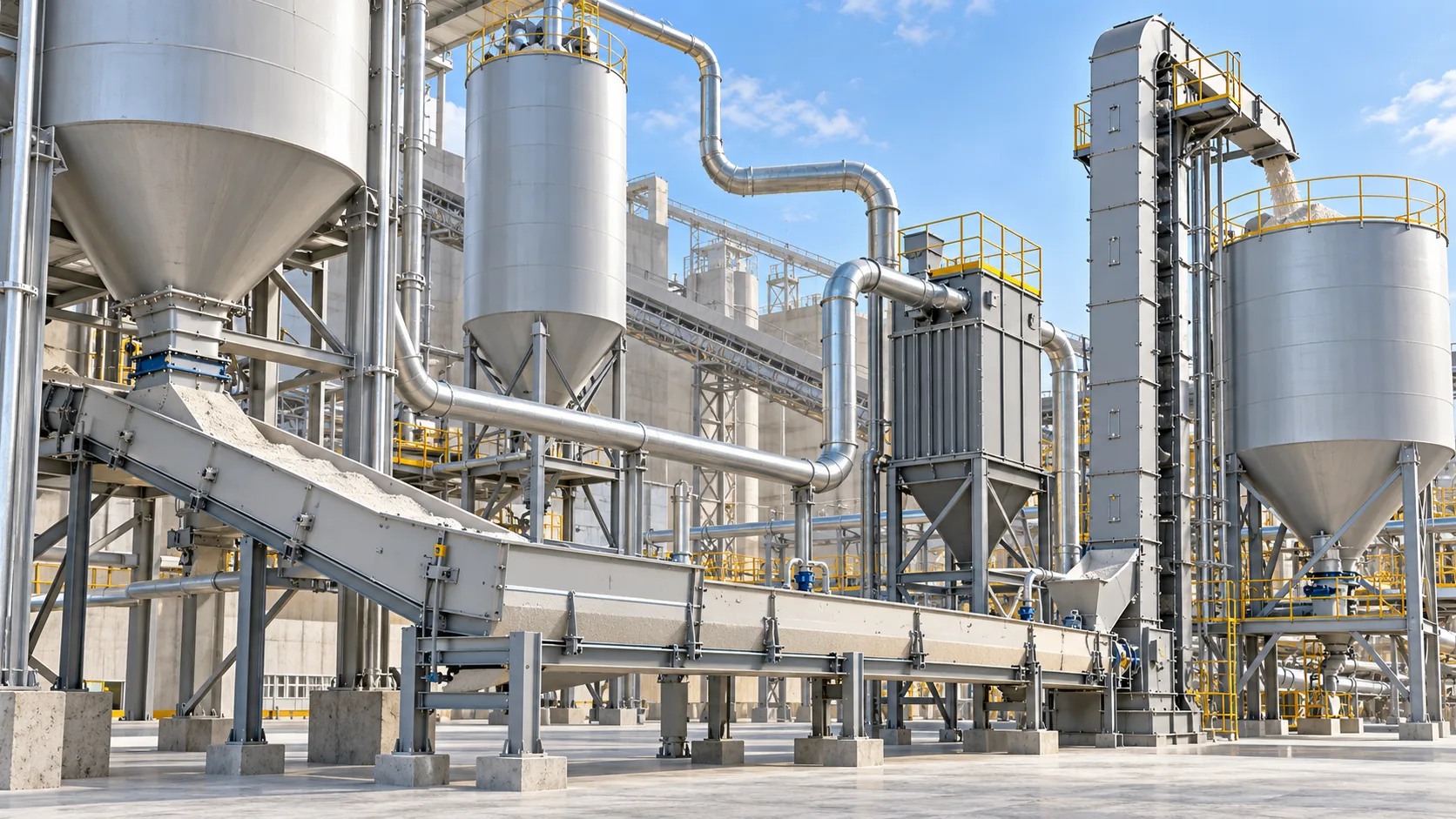
Closed-circuit material handling layout combining low-energy air slide chutes, dust aspiration piping, and vertical chain bucket elevation.
Core Handling Subsystems & Plant Operating Scenarios
DARKO configures modular dry bulk handling systems designed for specific plant sectors, ensuring reliable powder flow from raw capture points to final bulk dispatch.
Thermal Power Plant Dry Ash Evacuation Circuit
Dry pulverized fuel ash collected beneath electrostatic precipitators (ESP) or specialized baghouse dust collectors requires steady, wear-protected extraction. DARKO integrates fluidizing aeration troughs with precision airlocks and heavy-duty bucket elevators to move fine pozzolanic materials cleanly into bulk storage silos without pipe scouring or dust clouds.
- • Negative-Pressure Intake Nodes: Sealed rotary valves isolate hopper collection points to prevent false-air intrusion.
- • Grade Segregation Switching: Automated two-way diverter valves route coarse economizer ash away from fine classification silos.
- • Continuous Duty Aeration: Duty-and-standby Roots blower networks maintain reliable fluidization during high boiler burn rates.
Circuit Engineering Metrics
Engineering Specifications & Conveying Technology Matrix
Choosing the right conveying technology requires balancing particle size distribution, temperature, line layout, and power budgets. The matrix below illustrates how DARKO combines fluidization, mechanical lifting, and metered feed controls for reliable, efficient plant performance.
| Subsystem Component | Plant Application Scope | Particle Size Profile | Throughput Range | Wear Protection Package | Specific Power Consumption |
|---|---|---|---|---|---|
| Fluidized Air Slide Chutes | Long horizontal transfer, mill discharge, silo roof distribution | 10 - 200 µm dry powder (<1% moisture) | Up to 1,000 t/h | Heavy woven polyester fabric, basalt-tiled bends | Very Low (~0.10 - 0.18 kWh/t) |
| Chain Bucket Elevators | High-lift vertical elevation into blending silos & preheater towers | 0 - 25 mm raw meal, clinker fines, ash | Up to 800 t/h | Hardfaced bucket lips, heat-treated alloy chains | Moderate (~0.40 - 0.55 kWh/t) |
| Heavy Screw Feeders | Short-run volumetric extraction, feeder metering under hoppers | Varied fines to granular raw mixes | Up to 300 t/h | Hardox 450 / 500 flights, chromium carbide barrels | High (~1.00 - 1.45 kWh/t) |
| Rotary Airlock Feeders | Baghouse and ESP dropout lines, pneumatic pipeline isolation | 0 - 120 µm dry fly ash, calcined raw meal | Up to 150 m³/h | Stellite-tipped rotors, ceramic-sleeved bores | Low (Drive motor only) |
Micro Negative-Pressure Dust Containment
Uncontrolled dust emissions occur when conveying systems develop positive pressure over transfer chutes, pinhole flange gaps, and drop boxes. DARKO prevents this by engineering closed powder circuits with controlled micro negative pressure throughout the conveying stream.
Strategically located aspiration points vent displaced air to pulse-jet-dust-collectors, maintaining a continuous internal vacuum of -50 to -150 Pascals across transfer hoods. Any tiny perimeter leak pulls ambient air inward rather than releasing particulate matter, ensuring clean plant air and dust levels well within <10 mg/Nm³ emissions targets.
Heavy-Duty Wear-Resistant Lining Systems
High-velocity powder flow and directional changes cause severe sliding and impact wear at discharge boxes, chute corners, and diverter gates. Standard carbon steel chutes can wear through in just months when handling abrasive, high-silica coal ash or hard raw meal slurries.
DARKO reinforces all vulnerable impingement zones with modular, wear-resistant linings selected for each operating environment. We line critical wear areas with 92% alumina ceramic tiles, cast basalt segments, or replaceable NM400 and Hardox liner plates, extending equipment life beyond five years of uninterrupted service.
Custom Conveying Systems for High-Capacity Processing Lines
From raw meal feeds to extensive multi-silo fly ash storage networks, DARKO Cement Machinery engineers reliable material transport layouts tailored to your plant footprint. Our pneumatic and mechanical systems clear transfer bottlenecks, lower power consumption per ton, and keep production facilities clean and compliant.
Heavy-Duty Equipment for Abrasive Bulk Powder Conveying
DARKO manufactures heavy-duty conveying machinery engineered specifically for the harsh operating environments of modern cement grinding stations, power plant fly ash handling, and clinker processing facilities. Every subsystem combines hardened wear liners, micro-negative pressure sealing, and aerodynamically optimized flow paths to eliminate unplanned plant downtime, integrate seamlessly with auxiliary dust collection equipment, prevent fugitive dust emissions, and optimize specific energy consumption per ton conveyed.

Air Slide Conveyors for Fluidized Gravity Conveying
Air slide systems transfer dry aerated powders along a gentle 6° to 10° decline without internal mechanical drives. Low-pressure fluidization air evenly permeates multi-ply synthetic polyester canvas membranes, reducing material friction to achieve high-throughput, liquid-like gravity transit across extensive plant layouts.
- ✓ Zero Moving Parts: The absence of internal chains, shafts, and bearings reduces routine maintenance and parts wear by over 80%.
- ✓ Ultra-Low Power Draw: Powered solely by low-pressure Roots blowers and natural gravity, cutting operational energy costs by 40% compared to mechanical feeders.
- ✓ Thermal & Chemical Resistance: Heavy-duty synthetic permeable fabrics withstand continuous material stream temperatures up to 180°C (356°F).
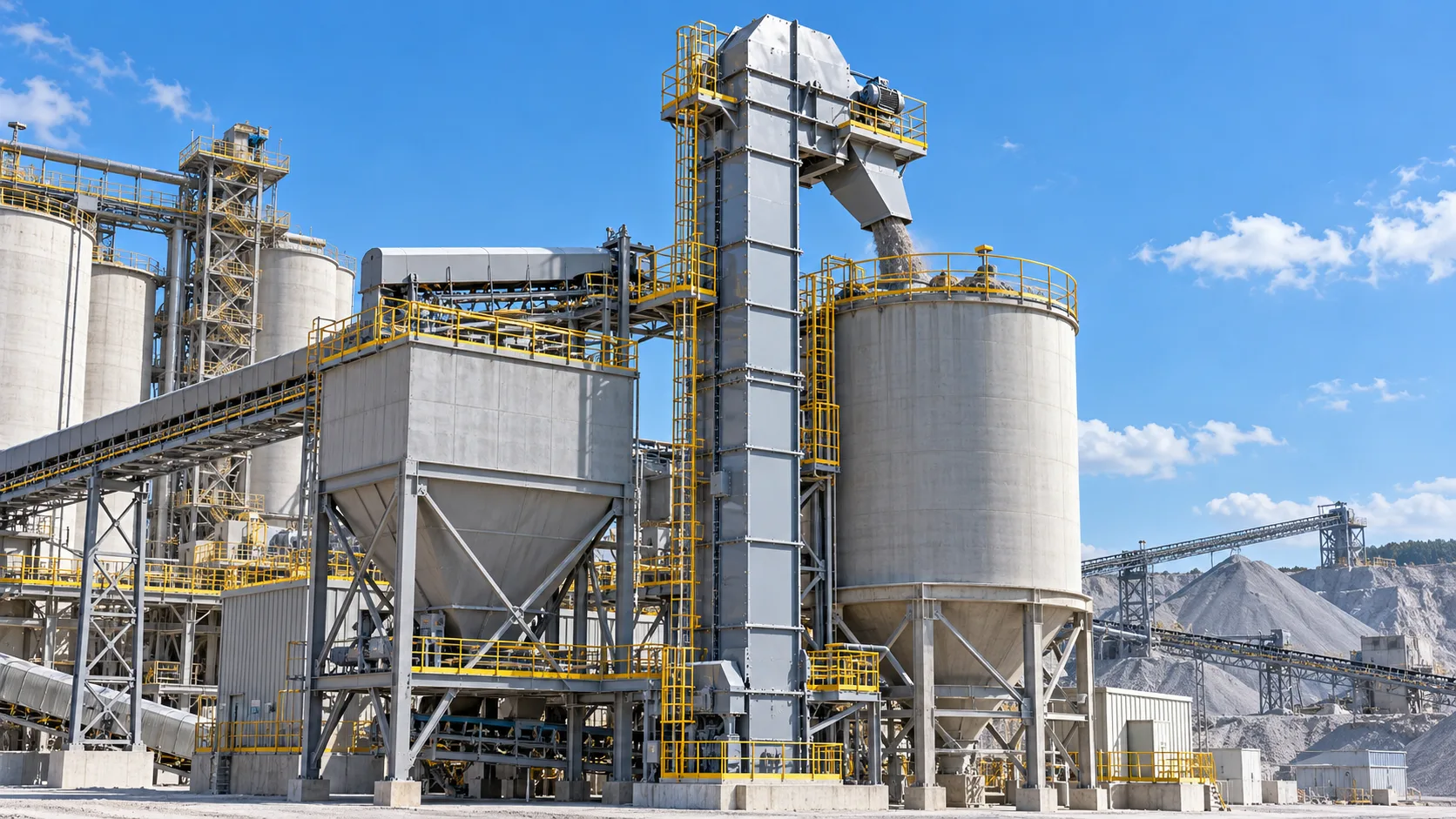
Heavy-Duty Bucket Elevators for Continuous Vertical Lift
Engineered for round-the-clock vertical transfer of abrasive dry solids directly into storage silos, blending bins, and bulk loadout stations. Available in high-strength plate chain or steel-cord belt configurations with deep bucket geometries that prevent back-legging and spillage.
- ✓ Alloy Steel Plate Chains: Precision-machined, heat-treated chain links deliver exceptional tensile strength under heavy cement and raw meal loads.
- ✓ Automatic Tensioning: Integrated gravity and internal spring take-ups maintain proper tracking to eliminate belt slip and boot-section material packing.
- ✓ Plant Safety Monitoring: Fitted with motion sensors, belt misalignment switches, explosion relief panels, and anti-reverse backstop drives.
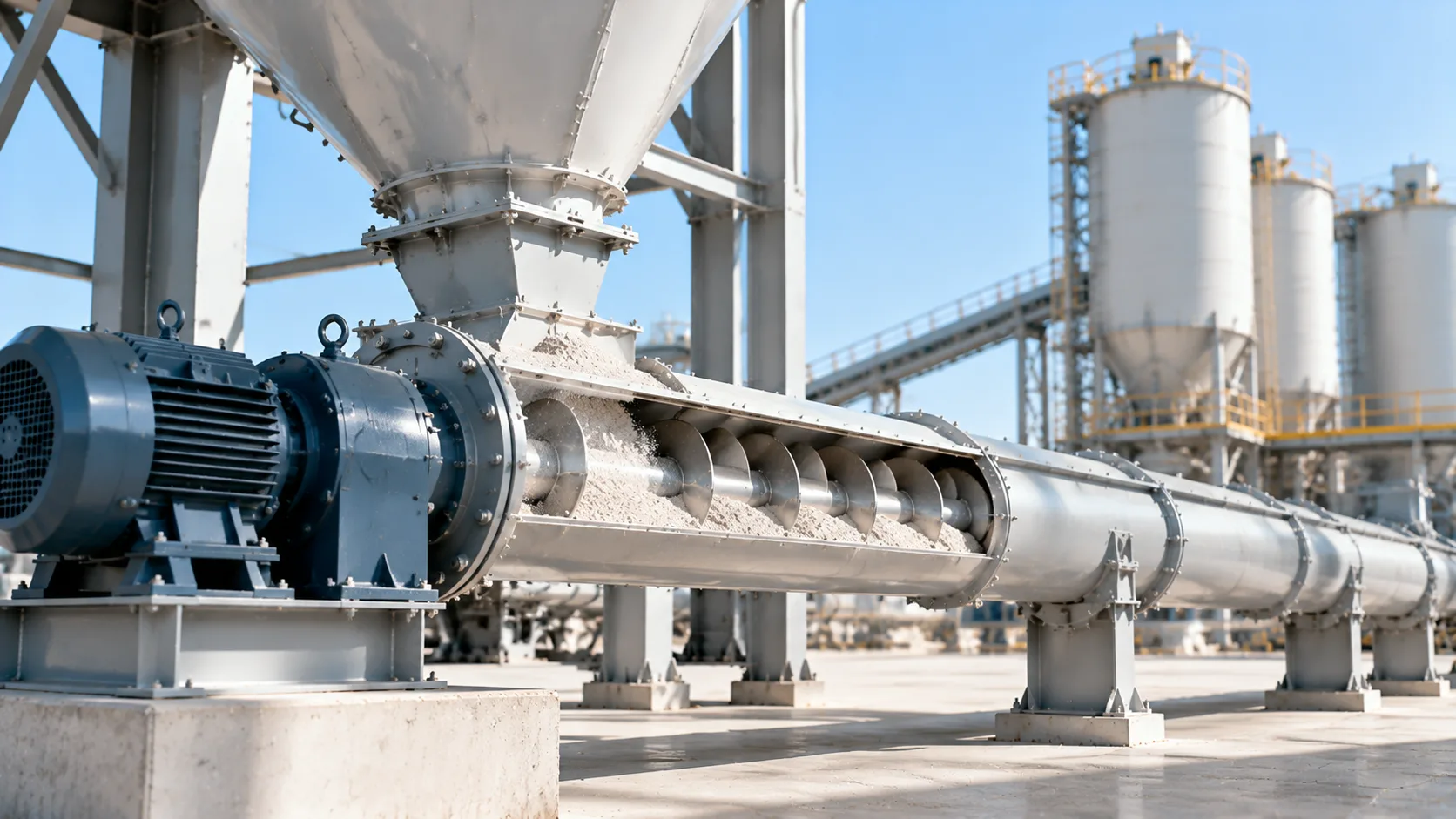
Industrial Screw Conveyors & Feeders for Volumetric Metering
Fabricated in heavy-walled tubular and U-trough configurations, DARKO industrial screw conveyors deliver controlled batch proportioning, silo discharge regulation, and dust-tight horizontal or inclined transit for highly aerated and fluid bulk materials.
- ✓ Hardfaced Flighting: Heavy-gauge sectional flights reinforced with tungsten or chromium carbide overlays protect against abrasive fly ash wear.
- ✓ Air-Purged Split Glands: Shaft end seals are isolated from the process stream with pressurized lantern rings to prevent particulate ingress and shaft scoring.
- ✓ Variable-Pitch Feeding: Progressive flighting geometry eliminates flushing of aerated powders, ensuring consistent dosing accuracy within ±1.5%.
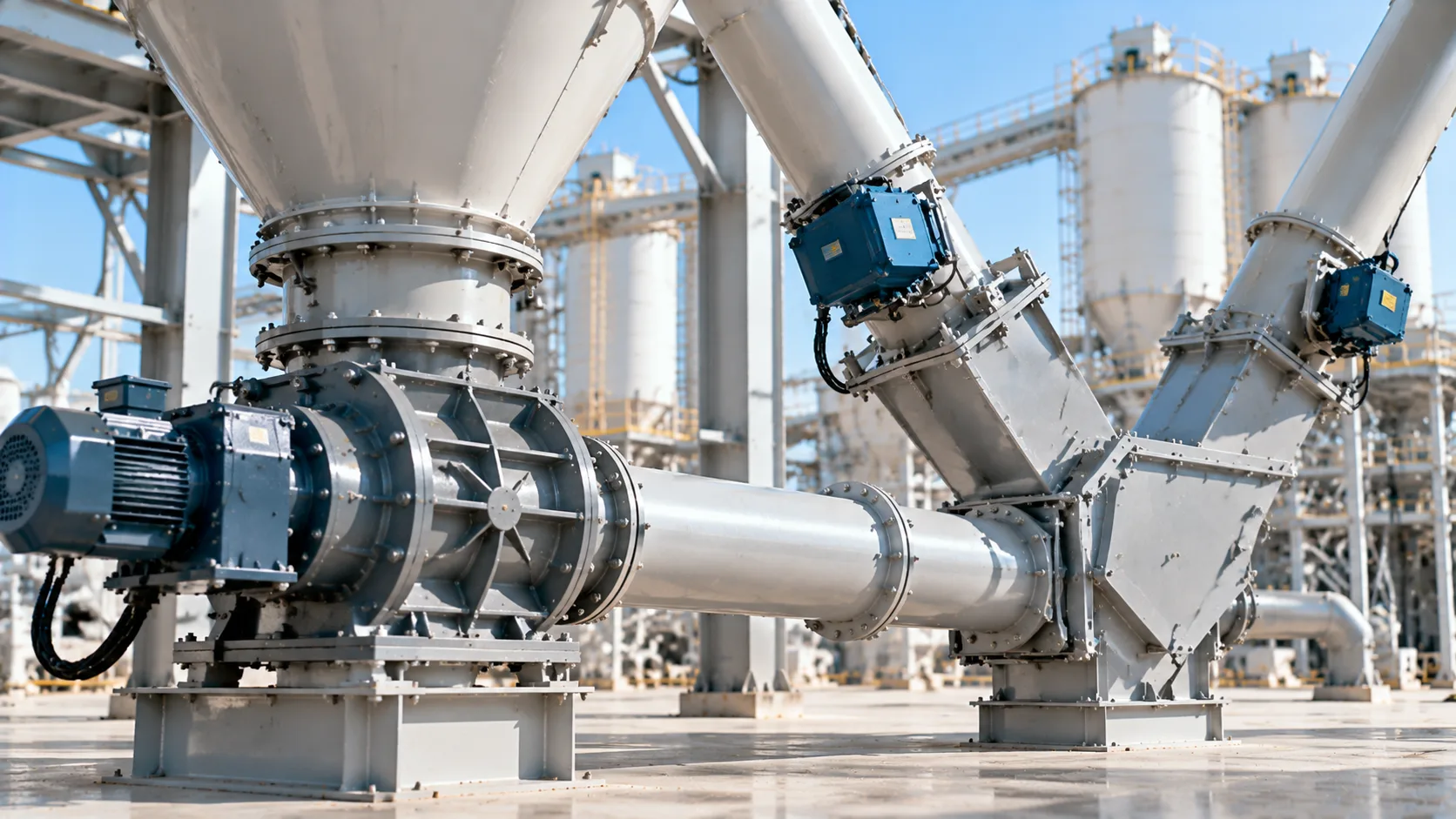
Flow Control Gates & Rotary Airlock Feeders
Pressure-tight isolation hardware maintains conveying circuit integrity across multi-silo feeding networks. Precision-machined rotary airlock valves, motorized double flap gates, and two-way diverter valves deliver dependable sealing against process pressure fluctuations.
- ✓ Adjustable Wear Rotor Tips: Replaceable Hardox or polyurethane rotor blade edges maintain tight radial clearances below 0.10 mm to prevent air bypass.
- ✓ Ceramic & Hard-Chrome Bores: Reinforced internal cylinder surfaces prevent premature erosion from high-velocity fine particle streams.
- ✓ DCS-Integrated Actuation: Fast-acting pneumatic cylinders and electric actuators enable automated line switching directly from the central control room.
Integrated Pulse-Jet Dust Collection Interfaces
Every material transfer point, elevator discharge casing, and air slide de-aeration port includes standardized flanged interfaces engineered for direct pairing with heavy-duty baghouse dust collectors and high-efficiency pulse-jet dust collectors. By maintaining controlled micro-negative pressure across the conveying circuit, DARKO systems eliminate particulate venting and ensure compliance with strict environmental emission limits under 10 mg/Nm³.
All equipment modules feature standardized ISO/ANSI bolt-hole patterns, pre-wired sensor arrays, and direct communication interfaces for plant SCADA and PLC control platforms.
Air Slide vs. Screw vs. Pneumatic Conveying: Engineering Comparison Matrix
Selecting the optimal dry bulk powder conveying method directly governs plant uptime, fugitive dust compliance, and specific energy consumption per ton transferred. In modern cement grinding terminals, clinker storage circuits, and coal-fired power plant fly ash handling facilities, process engineers must balance upfront equipment procurement against long-term maintenance cycles and power demands. This technical evaluation matrix analyzes fluidized air slides, industrial screw conveyors, heavy-duty bucket elevators, and pneumatic pipelines across operational throughput, abrasive wear profiles, and total cost of ownership.
| Evaluation Dimension | Air Slide Conveyor System | Industrial Screw Conveyor | Heavy-Duty Bucket Elevator | Pneumatic Conveying Pipeline |
|---|---|---|---|---|
| Primary Transport Vector | Horizontal to shallow decline (6°–10° downward slope) | Horizontal to moderate incline (≤20° uphill limit) | Continuous vertical lift (true 90° elevation) | Multi-planar 3D routing (horizontal, vertical, bends) |
| Material Suitability | Aeratable dry powders (≤1% moisture, e.g., cement, fly ash) | Dry to slightly moist bulk solids, non-packing fines | Free-flowing dry to semi-cohesive fine and coarse solids | Dry powders, fluidizable fine bulk solids (≤2% moisture) |
| Specific Energy Demand (kWh/t) | 0.15 – 0.35 kWh/t (Lowest Energy Footprint) | 1.20 – 2.80 kWh/t (Moderate Mechanical Draw) | 0.40 – 0.85 kWh/t (Efficient Vertical Lift) | 3.50 – 8.50 kWh/t (Highest Air Compressor Draw) |
| Component Wear & Abrasiveness | Near zero; no internal mechanical friction contact | Severe flight edge and trough wear under abrasive ash | Moderate; concentrated at chain links, sprockets, and buckets | High erosion at directional elbows and divert valves |
| Maximum Single-Line Throughput | Up to 1,000 m³/h (Scalable channel widths) | Up to 350 m³/h (Diameter and RPM constrained) | Up to 1,200 m³/h (Continuous high-capacity buckets) | Up to 400 t/h (Pressure vessel batch dependent) |
| Capital Expenditure (CAPEX) | Low to Moderate (Minimal drive machinery) | Low initial purchase cost | Moderate to High (Tower and casing structures) | High (Blowers, pressure vessels, filtration banks) |
| Service Interval & Routine Maintenance | Synthetic fabric replacement every 3–5 years | Flight re-welding and bearing service every 6–12 months | Lubrication quarterly; annual chain stretch checks | Ceramic elbow patching and seal checks every 6–18 months |
Fluidized Conveying Dynamics vs. Mechanical Shear Mechanics
Operating energy efficiency in dry bulk conveying is primarily governed by particle shear resistance and sliding friction. In conventional industrial screw conveyors, rotating helical flights compress abrasive cement or fly ash particles against stationary trough walls, generating substantial drag torque, heat, and aggressive metal gouging. This continuous mechanical grinding not only drives up motor sizing but also necessitates frequent hardfacing and flight replacements on highly abrasive quartz-bearing materials.
Conversely, DARKO air slide conveyor systems leverage low-pressure fluidizing aeration. Micro-porous synthetic membranes introduce controlled air currents beneath the powder bed, completely breaking inter-particle adhesion and transforming consolidated powders into a free-flowing, liquid-like fluid state. Guided by an engineered downward slope of 6 to 10 degrees, gravity transports the material forward at high velocity with negligible mechanical resistance, cutting electrical power consumption by 40% or more compared to motorized screw assemblies.
Process Engineering Takeaway
Whenever plant layout and elevation allow for continuous gravity drop, fluidized air slides deliver the lowest lifecycle operating cost, completely eliminating intermediate bearings, exposed chains, and abrasive sliding friction.

Particle Aeration Criteria and Moisture Limits
Predictable fluidized conveying requires fine, dry bulk materials with stable fluidization velocity curves. Portland cement, raw meal, Class F and Class C fly ash, and ground granulated blast-furnace slag (GGBS) exhibit exceptional fluid properties when moisture levels stay strictly below 1.0%. If moisture ingress exceeds this threshold, particulate agglomeration blinds porous aeration membranes, signaling the need for heavy-duty screw conveyors or specialized mechanical feeders.
Lifecycle Cost Analysis: Upfront Investment vs. Long-Term Maintenance
Fluidized Air Slide System
Balanced capital investment coupled with industry-lowest operational expenses. Zero internal moving mechanical components virtually eliminate unplanned downtime, gearhead rebuilds, and routine wear-part replacements across decades of operation.
- • Operating Expense (OPEX): Lowest (low-pressure aeration only)
- • Primary Wear Part: Permeable polyester fabric liner
- • Unplanned Downtime Risk: Under 0.5% annualized runtime
Heavy-Duty Industrial Screw
Cost-effective initial procurement tailored for compact transfer runs under 15 meters, silo under-pan metering, and shallow inclines. However, severe abrasive wear on flights and hanger bearings generates steady, recurring rebuild expenses.
- • Operating Expense (OPEX): Moderate to High (frequent resurfacing)
- • Primary Wear Part: Hardfaced screw flights & end packings
- • Unplanned Downtime Risk: Bearing failure and flight stall risks
Dense Phase Pneumatic Line
Unrivaled 3D line-routing flexibility over extended terminal distances spanning hundreds of meters. Requires significant capital for compressors and pressure vessels, combined with heavy electrical kilowatt-hour consumption during peak operation.
- • Operating Expense (OPEX): High (continuous compressor loads)
- • Primary Wear Part: Ceramic-lined pipe elbows & airlock seals
- • Unplanned Downtime Risk: Pipeline slugging and line-plug cleanouts
Engineering Rules of Thumb for Dry Bulk Handling Selection
Application engineers at DARKO Cement Machinery rely on rigorous field performance metrics to select, size, and integrate bulk conveying hardware into plant production flowsheets:
Whenever plant structures accommodate a continuous 6° to 10° downward slope, deploy fluidized air slide conveyors first. This frees plant electrical capacity for primary grinding mills and eliminates maintenance-intensive mechanical drives.
Avoid relying on high-velocity pneumatic vertical pipelines when transfer capacity exceeds 200 t/h. Heavy-duty plate-link bucket elevators deliver far lower energy consumption per metric ton lifted to the tops of storage silos.
Limit mechanical screw conveyors and feeders to short-distance metering chutes under storage bins, dust hoppers, and weighing stations. Avoid extended transport runs where abrasive fly ash wear rapidly escalates maintenance costs.
Always route transition boxes, drop heads, and discharge diverter valves directly into dedicated pulse-jet dust collectors or heavy-duty baghouse-dust-collectors. This maintains micro-negative air balance and ensures guaranteed dust-free transfer between operational units.
Proven Performance in Harsh Powder Handling Environments
High-throughput industrial plants require continuous, dust-free dry bulk handling under severe mechanical, thermal, and abrasive stresses. DARKO Cement Machinery engineers heavy-duty cement and fly ash conveying systems designed to manage extreme operating temperatures, aggressive quartz-induced wear, and complex fluidization dynamics. From finish grinding mills to coal-fired utility boiler baghouse dust collectors, our closed-loop pneumatic and mechanical transport systems eliminate transfer bottlenecks while guaranteeing zero fugitive particulate emissions.
Cement Grinding Stations & Clinker Blending Circuits
Finish milling circuits generate severe operational friction, high dust density, and prolonged thermal exposure. Ball mills and vertical roller mills discharge freshly ground Portland cement at temperatures exceeding 230°F (110°C), demanding conveying infrastructure engineered for thermal expansion, continuous duty, and surge suppression.
- • Thermal Integrity: High-density synthetic fluidization fabric maintains uniform permeability up to 300°F (150°C) without blistering or structural breakdown.
- • Surge Discharge Control: High-capacity air slides and heavy-duty bucket elevators readily absorb intermittent volume surges from dynamic separators.
- • Multi-Silo Distribution: Integrated pneumatic two-way diverter valves deliver reliable automated routing across multi-cell storage and blending silos.
Thermal Power Plant Fly Ash Handling
Pulverized coal combustion yields Class F and Class C fly ash loaded with hard spherical silicates. This fine particulate creates aggressive gouging and sliding abrasion across standard steel ducting, requiring robust wear linings and precision aeration controls to prevent pipeline washouts.
- • Engineered Wear Protection: High-chromium cast alloy inserts and NM400 abrasion-resistant liners protect impact zones and drop chutes.
- • Fluidized Air Delivery: Low-pressure blower aeration fluidizes fine ash evenly, enabling rapid horizontal flow at gentle slopes without pipe erosion.
- • Direct Hopper Extraction: Flanged mating assemblies below electrostatic precipitators (ESP) and baghouse hoppers ensure reliable, continuous ash takeoff.
Raw Meal Preparation & Mineral Processing
Raw meal homogenization systems process dry powders prone to fluidization variations and moisture agglomeration. Material conveyance must maintain steady volumetric mass flow across long distances without risk of compaction bridging or line blockages before kiln preheater feeding.
- • Anti-Bridging Aeration: Multi-plenum micro-fluidizing zones prevent compaction and dead pockets during stop-and-go plant feeding cycles.
- • High-Tonnage Throughput: Enclosed gravity air slide profiles transport up to 1,000 t/h with minimal structural slope requirements (6° to 8°).
- • Micro-Negative Sealing: Fully enclosed, gasketed casing design completely isolates raw mineral dust from structural plant galleries.
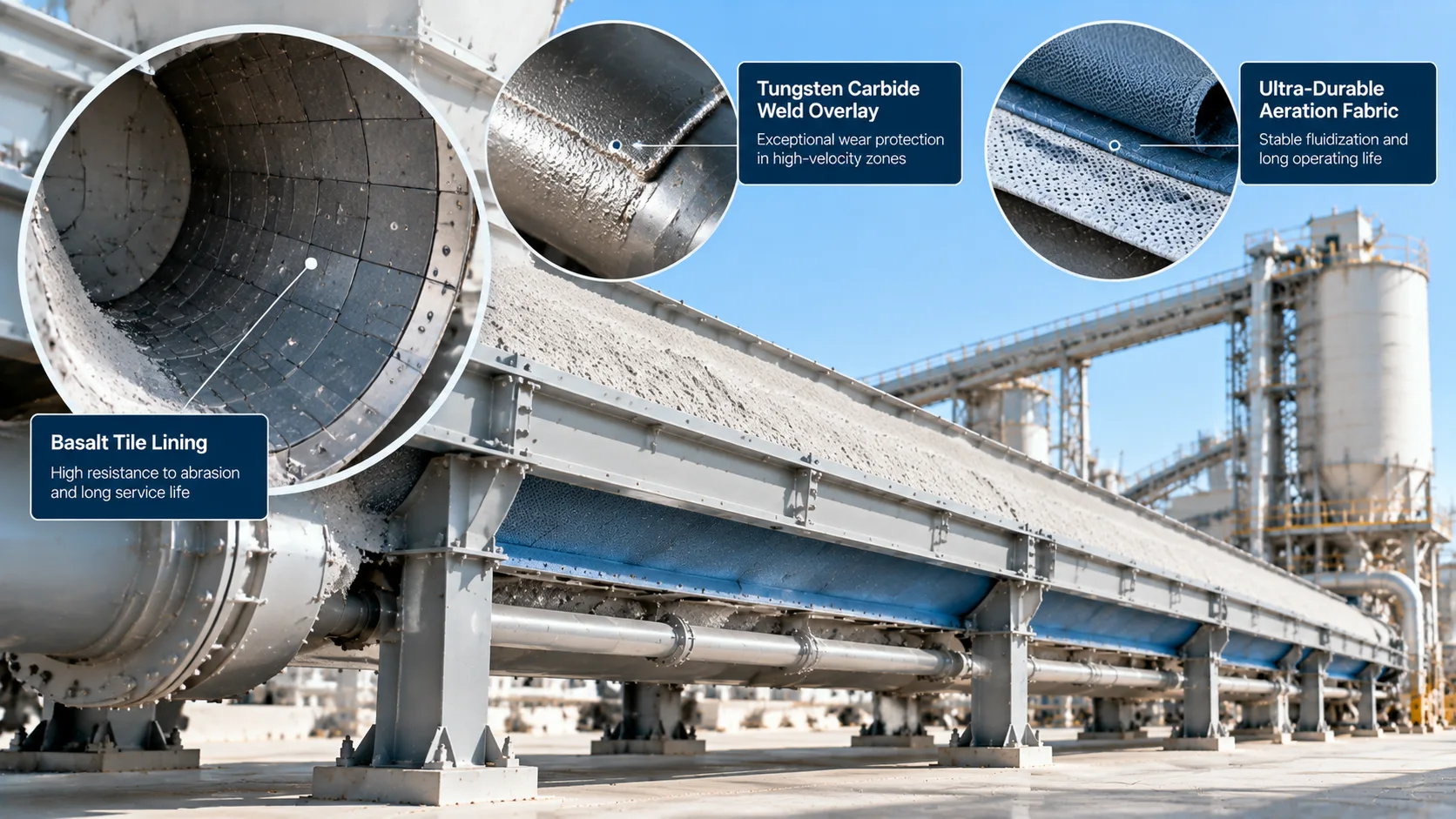
Built for Extreme Abrasives & Continuous Thermal Cycling
Fine powder handling involves aggressive physical dynamics. When high-velocity dry solids encounter standard mild steel elbows, wall erosion occurs within hundreds of operating hours. DARKO addresses these mechanical risks by integrating basalt tile segments, tungsten carbide weld overlays, and ultra-durable aeration fabric into our equipment matrix.
Our systems maintain continuous flow integrity by eliminating internal moving components within primary transfer troughs. Air slide installations utilize gravity combined with microscopic air layers to achieve frictionless fluid motion, slashing drive electricity demands and reducing scheduled maintenance shutdowns by over 60 percent compared to mechanical screw conveyors.
Dry Bulk Material Compatibility Specifications
Review physical characteristics, handling parameters, and recommended equipment configurations for primary dry bulk solids.
| Bulk Material | Bulk Density (t/m³) | Particle Sizing | Operating Temp | Abrasion Severity | Optimal Conveying Technology |
|---|---|---|---|---|---|
| Ordinary Portland Cement (OPC) | 1.10 - 1.45 (Aerated / Settled) | 85% < 45 µm (350 m²/kg) | Up to 248°F (120°C) | Moderate | Fluidized Air Slide + Bucket Elevator |
| Class F Fly Ash (Anthracite / Bituminous) | 0.80 - 1.15 (Fine Dry) | 75% < 45 µm (High Glass Phase) | Up to 302°F (150°C) | High / Severe | Air Slide with Ceramic Liners + Rotary Valves |
| Class C Fly Ash (Sub-Bituminous / Lignite) | 0.90 - 1.25 (Self-Cementing) | 70% < 45 µm (Alkaline Active) | Up to 284°F (140°C) | High | Air Slide with Dehumidified Aeration Air |
| Raw Meal Powder (Kiln Feed) | 0.95 - 1.30 | 88% < 90 µm | Up to 194°F (90°C) | Moderate to Low | Gravity Air Slide + High-Capacity Elevators |
| Ground Granulated Blast-Furnace Slag (GGBS) | 1.05 - 1.35 | 95% < 45 µm (420+ m²/kg) | Up to 212°F (100°C) | Extreme (Sharp Glass Shards) | Basalt-Lined Air Slide + Reinforced Chain Elevator |
| Micronized Limestone Dust | 1.10 - 1.40 | 90% < 75 µm | Ambient to 176°F (80°C) | Low | Standard Aeration Air Slides + Screw Metering Feeders |
Engineered permeability gradients avoid unfluidized dead zones and maintain continuous angle-of-repose descent.
Integrated negative micro-pressure design combined with sealed inspection ports meets strict EPA emission criteria.
Wear-hardened transport corridors and advanced aeration canvas provide years of uninterrupted plant operation.
Turnkey Engineering from Blueprint to Commissioning
DARKO manages the full project lifecycle for cement and fly ash conveying systems, ensuring precise material flow, zero dust leakage, and seamless integration into plant operations.
Material Rheology & Structural Site Assessment
Our engineers analyze bulk density, angle of repose, moisture, and silica abrasiveness. We evaluate structural drop heights, foundation capacities, and routing to prevent pipeline clogging and premature wear.
3D Plant Layout & Aerodynamic Fluidization Modeling
Using 3D spatial modeling and airflow dynamics, we calculate optimal air slide declination angles, blower pressures, and bucket elevator elevations to prevent air binding and eliminate structural interferences.
Heavy Precision Fabrication & Quality Assembly
All air slide troughs, high-temperature air slide fabric media, hardened screw flights, and elevator casing sections undergo strict dimensional inspection and pre-assembly testing in DARKO production facilities.
On-Site Erection, Dust-Free Testing & Commissioning
DARKO field technicians supervise mechanical alignment, flange sealing, and integration with the cement plant dust collection system, conducting negative-pressure testing to guarantee emission thresholds below 10 mg/Nm³ before handover.

Turnkey Delivery & Quality Standards
- Full compliance with ISO 9001 and international bulk conveying safety codes
- Precision laser alignment for elevators, drive assemblies, and divert gates
- Wear-resistant lining with NM400 and high-chromium alloy steel at transfer chutes
- Integrated sensor telemetry connecting pressure, level, and speed switches to plant DCS
Plan Your Custom Conveying System Project
Share your material transfer distance, hourly capacity, and site layout to receive a tailored CAD design and engineering quotation within 24 hours.
Frequently Asked Questions on Cement and Fly Ash Conveying
Key engineering insights on fluidization aerodynamics, abrasive wear mitigation, system retrofits, capacity calculation, and dust-tight transfer design utilizing advanced dust collection equipment for bulk dry powder facilities.
Air slide conveyors eliminate high-horsepower drive motors by pairing gravity flow with low-pressure fluidization. By introducing low-pressure aeration air through a porous synthetic fabric membrane, bulk powders like raw meal, Portland cement, and fly ash become aerated, eliminating internal friction and behaving like a free-flowing liquid.
- Zero Heavy Rotating Components: Eliminates continuous mechanical friction from heavy screw flights, drive shafts, internal hanger bearings, and roller chains.
- Low-Pressure Air Supply: Powered solely by energy-efficient centrifugal roots or side-channel blowers operating at 3 to 6 kPa, requiring only a fraction of mechanical drive power.
- Substantial OPEX Reduction: Consumes 35% to 50% less electrical energy per ton-mile compared to heavy-duty volumetric screw conveyors and high-pressure pneumatic pipelines.
DARKO optimizes aeration air velocity and fabric permeability to ensure reliable flow with minimal power consumption across long transport distances.
Engineering Sizing & Design
Conveying performance depends on bulk density, angle of repose, temperature, and moisture content. Submit your plant parameters to receive custom flow and equipment sizing calculations.
Manufacturing Standard
ISO 9001 / Heavy-Duty Fabrication
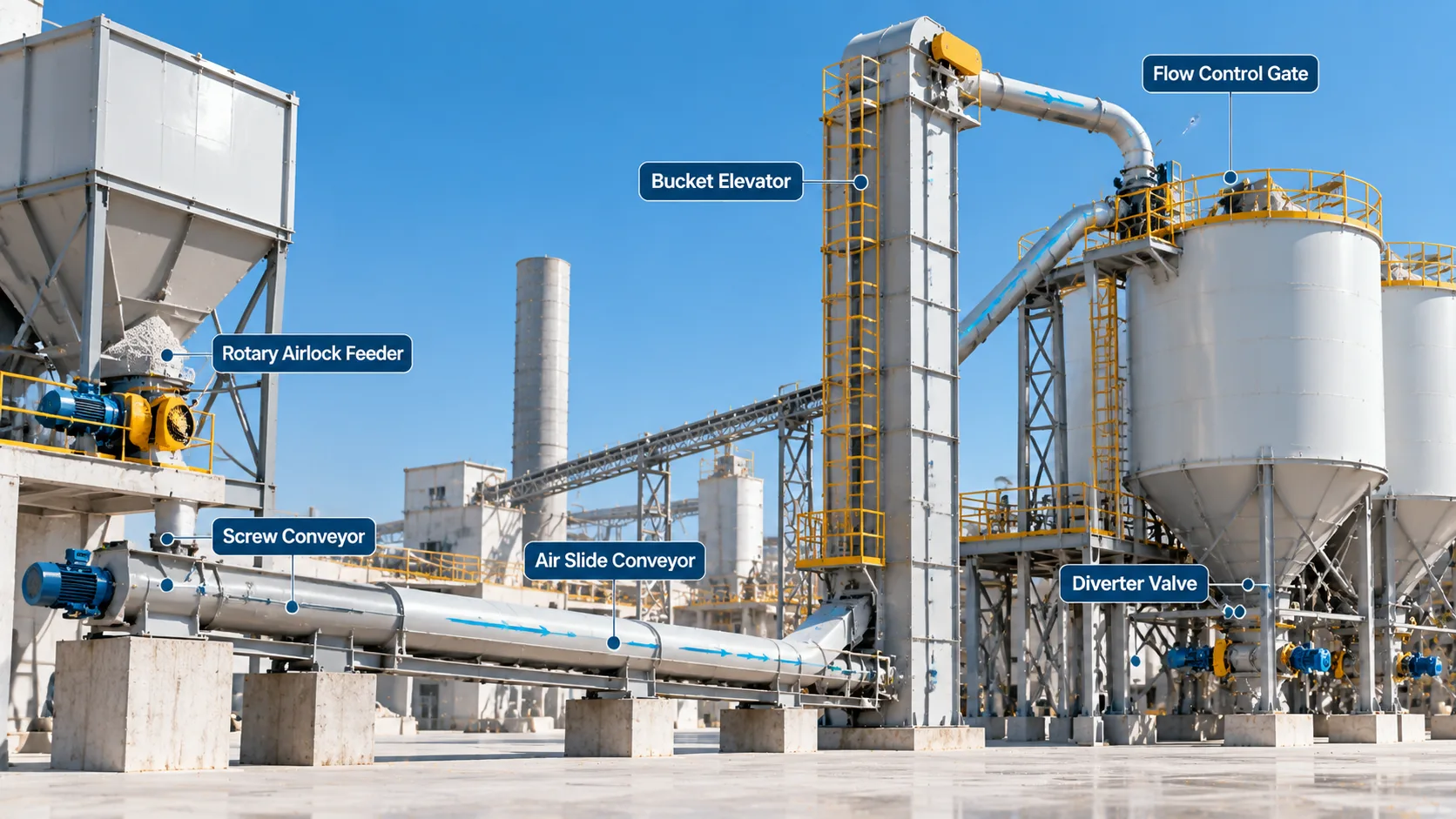
Turnkey Powder Conveying Systems
DARKO delivers integrated powder handling lines matching air slide conveyors, heavy chain bucket elevators, and specialized flow control valves for reliable, energy-saving plant performance.