What Is Loading Spout Coating and Why Does It Matter?
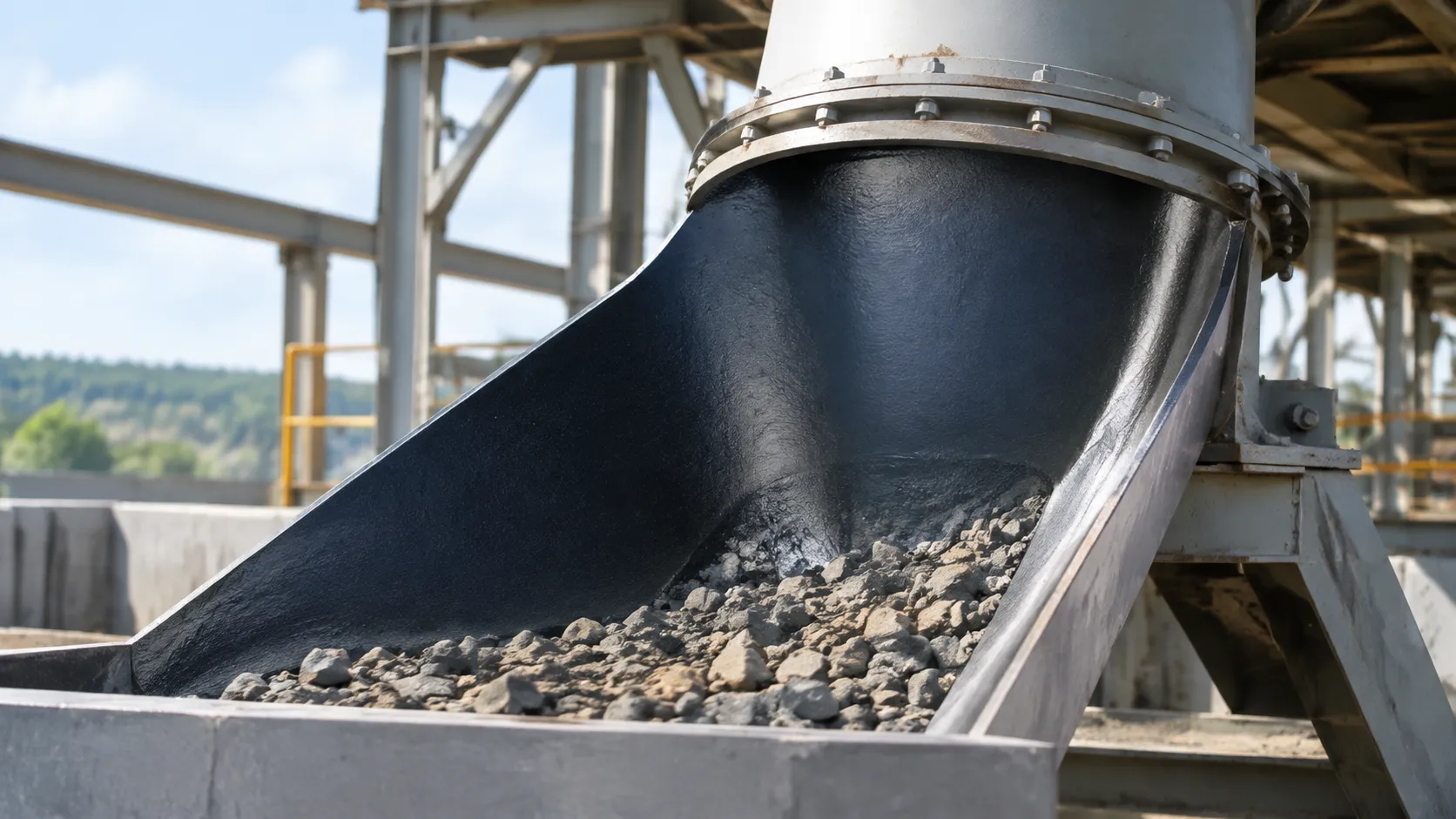
A loading spout coating is a high-performance protective barrier applied directly to the internal cones, cylinders, and wear components of a telescopic loading spout. In high-throughput bulk material handling, raw steel simply cannot survive the relentless abuse of dropping hundreds of tons of dry solids an hour.
Core Purpose of Protective Coatings on Telescopic Loading Spouts
The inner cones and guide sleeves of a telescopic loading chute face continuous dynamic stress. The primary goal of a loading spout coating is simple: absorb kinetic energy and shield the structural metal from direct degradation.
Without an engineered lining, abrasive friction scrubs away the base metal, leading to structural fatigue, retracted cone distortion, and sudden mechanical binding during extension or retraction cycles.
Preventing Abrasive Wear from High-Velocity Bulk Solid Discharge
Gravity discharge generates extreme particle velocities. When abrasive materials like clinker, silica sand, limestone, or fly ash hit the inner spout walls, they cause severe sliding abrasion and gouging.
-
- Impact energy dispersion: Elastic coatings absorb the kinetic impact of falling aggregates instead of fracturing.
- Friction reduction: Slick, low-friction polymers prevent high-velocity scratching along the sliding plane.
- Substrate preservation: The coating takes the wear so your primary steel cones never lose their design wall thickness.
Eliminating Material Buildup and Bridging Inside Loading Chutes
Fine powders and moisture-sensitive bulk goods naturally cling to bare metal surfaces, creating localized hang-ups that snowball into complete chute blockages.
-
- Ultra-smooth surface profile: Modern anti-stick coatings eliminate microscopic anchor points where moist fines lodge.
- Bulk solids flow promotion: Consistent surface lubricity prevents material bridging, ratholing, and sluggish drop speeds.
- Zero hammer-cleaning damage: Clean discharge surfaces mean operators do not need to strike chute sections with mallets to break free compacted plugs.
Controlling Fugitive Dust Emissions and Sidewall Blowouts
A dust-free loading chute relies on balanced negative pressure and an airtight physical envelope. When abrasive streams scour through unlined metal, they wear pinholes and hairline cracks into internal walls and outer shells.
-
- Preventing catastrophic blowouts: Coatings stop sidewall burn-through that ejects pressurized dust clouds directly onto the loading pad.
- Maintaining internal vacuum balance: Sealed, intact walls ensure dust-extraction systems pull airborne fines upward into the filtration unit rather than spilling into ambient air.
- Regulatory compliance: Eliminating blowout risk protects plant teams from environmental fines, silica exposure violations, and combustible dust hazards.
Types of Loading Spout Coatings for Bulk Material Handling
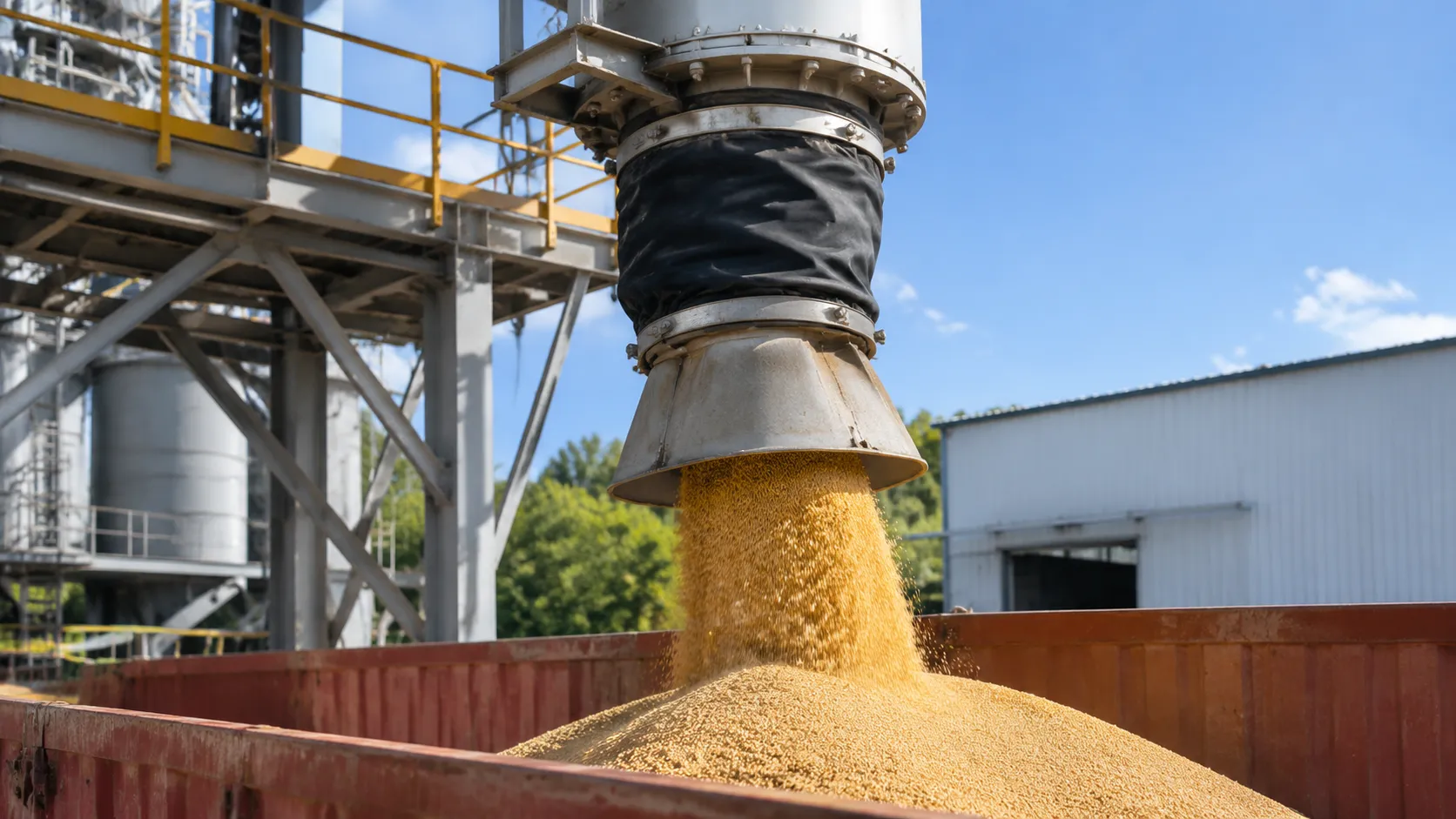
Every bulk solid acts differently as it drops through a telescopic chute. Fine fly ash behaves like liquid, raw clinker cuts like broken glass, and wet grain sticks to raw steel walls. Choosing the right loading spout coating depends on your material’s drop height, velocity, particle shape, and moisture profile.
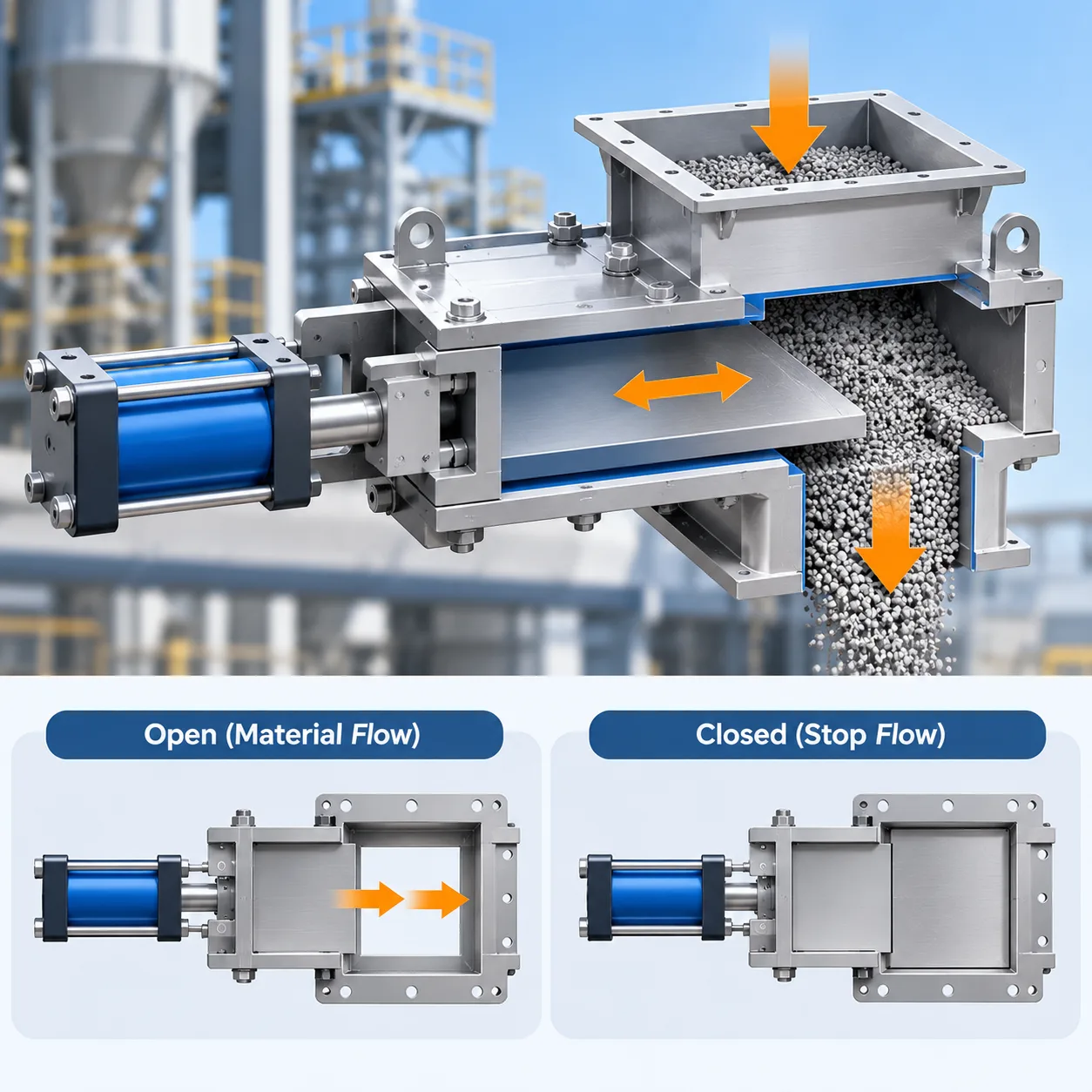
Feed rate and drop velocity dictate how fast a liner wears out. Before material ever hits the chute, we regulate gravity feed from silos by matching chute capacity against the right slide gate valve dimensions and specifications guide to prevent stream surging that destroys inner cones.
Spray-Applied Polyurethane Coatings
Spray-applied polyurethane is our go-to solution for high sliding abrasion and moderate impact:
Seamless coverage: Sprays directly onto complex inner cones, telescoping sections, and transition rings without seam gaps.
Elastic rebound: Absorbs kinetic energy from high-velocity particles and snaps back, outlasting bare carbon steel by up to eight times.
Corrosion barrier: Forms a tight chemical seal on structural steel against ambient moisture and condensation.
UHMW-PE and Engineered Polymer Liners
Ultra-High-Molecular-Weight Polyethylene (UHMW-PE) solves friction-related bottlenecks:
Zero surface drag: The slick, wax-like surface promotes steady bulk solids flow and eliminates bridging inside inner chutes.
Anti-stick performance: Stops damp powders, gypsum, and fine chemicals from packing onto spout walls.
Drop-in replacement: Fastened with countersunk weld studs or flush rivets for quick mechanical replacement during shut-down windows.
Ceramic-Filled Epoxy Composite Coatings
For severe gouging and high-volume mineral handling, ceramic-filled epoxies deliver extreme rock-hard protection:
Maximum hardness: Dense suspensions of silicon carbide or aluminum oxide beads inside a tough epoxy matrix resist gouging from sharp aggregates, cement, and ores.
Trowel-applied flexibility: We mold it cleanly over high-wear impact zones, dead-boxes, and discharge lip edges without requiring custom-cast tiles.
Zero joint wear: Unlike square ceramic tile linings, monolithic epoxy leaves no exposed edges for fine dust to undercut.
Elastomeric Rubber Linings
When coarse, heavy lumps drop from tall storage bins, rubber provides pure mechanical damping:
Impact absorption: Soft-durometer natural and synthetic rubbers compress under heavy impact, saving the outer spout shell from dents and fractures.
Acoustic deadening: Drops decibel levels around truck and railcar loading bays by muffling metallic chute ring.
Tear resistance: Deflects sharp, jagged rock edges that would shatter brittle coatings.
PTFE Fluoropolymer Coatings
For sticky, hot, or chemically aggressive powders, PTFE offers unmatched release and thermal stability:
Thermal endurance: Maintains release properties in dry bulk streams exceeding 200°C (392°F).
Chemical inertness: Impervious to acids, salts, and caustic industrial reagents.
Caking prevention: The ultimate anti-stick surface for hygroscopic food starches, pigments, and synthetic resins that cling to raw metals.
How to Select the Right Loading Spout Coating
When a liner fails prematurely, your bulk solid chews right through the outer shell, causing dusting, unplanned shutdowns, and wasted product. When we evaluate plants and advise operators on how to select bulk loading spout protection, we focus on five operating parameters:
Material Abrasiveness, Drop Height, and Velocity
The mechanical stress inside your spout depends entirely on particle shape, hardness, and drop distance:
High-velocity sliding abrasion: Fine, abrasive powders like fly ash and cement scour metal fast. Here, thin-profile, slick coatings like polyurethane or ceramic-filled epoxies maintain smooth flow while resisting micro-scratching.
Heavy drop impact: Coarse aggregates, ores, and clinker falling from multiple meters crush brittle coatings. We rely on thick elastomeric rubber linings or impact-absorbing composite liners inside heavy-duty telescopic loading spouts to deaden the blow and stop substrate cracking.
Operating Temperature and Thermal Cycling
Temperature swings destroy linings through thermal expansion mismatches and heat degradation:
Cold to ambient flows (-20°C to 60°C): Standard polyurethane and engineered polymers handle everyday seasonal swings with ease.
Elevated process temperatures (100°C to 200°C+): Calcined minerals, hot cement clinker, and boiler ash melt typical polymers and delaminate cheap adhesives. In high-heat applications, we specify PTFE fluoropolymer systems or high-temperature ceramic formulations that withstand extreme thermal spikes without blistering.
Chemical and Corrosion Resistance
Moisture combined with corrosive salts and chemical fertilizers will eat steel from the inside out:
Fertilizers and potash: Urea, potash, and nitrates attack mild steel and swell porous rubbers, causing under-film corrosion and catastrophic liner peeling.
Resistant chemistries: Modified novolac epoxies, high-density fluoropolymers, and vulcanized synthetic rubbers create an impermeable chemical barrier that locks out ambient humidity and chemical attack.
FDA and USDA Food-Grade Compliance
Food, grain, and pharmaceutical processing require strict contamination prevention:
Non-leaching formulations: Grains, corn starch, refined sugar, and powdered milk require non-toxic, non-porous coatings meeting FDA 21 CFR 177 standards.
Sanitation durability: These coatings must endure caustic CIP washdowns, steam sterilization, and mechanical scraping without peeling, micro-cracking, or harboring bacterial growth.
Anti-Static and ATEX Dust Safety
Dry powders moving at high speed generate massive static electrical charges through triboelectric charging:
The explosion risk: In combustible dust environments handling flour, plastic pellets, grain dust, or sulfur, an ungrounded non-conductive liner acts as a massive capacitor waiting for a static discharge.
Conductive and dissipative coatings: For ATEX-rated explosion zones, we install anti-static linings blended with carbon-black or metallic fillers. These coatings provide surface resistivity below $10^8$ ohms, bleeding electrical charges safely to ground before a static spark can trigger an explosion.
Applying and Curing Loading Spout Protective Coatings
Even the best loading spout coating fails quickly if the application is rushed. When we coat a telescopic chute or spout inner cone, we treat surface preparation and curing with the same precision as the chemical formulation itself. Skipping steps leads to delamination, edge lifting, and costly blowout repairs.
Substrate Preparation: Degreasing and Grit Blasting
Adhesion depends directly on mechanical interlock. We start by removing all oil, grease, and process residues using industrial solvent degreasers or thermal baking.
Once clean, the steel goes through abrasive grit blasting:
Blasting Standard: Blast to an SSPC-SP 10 (NACE No. 2) Near-White Metal finish.
Surface Profile: Achieve a sharp, angular anchor pattern of 3.0 to 4.5 mils (75–115 microns) using angular chilled iron grit or aluminum oxide.
Cleanliness Check: Blow down the surface with dry, oil-free compressed air and test for dust residue to ensure the chute wear liner bonds straight to bare metal.
Primer Application to Prevent Delamination
Flash rust forms within hours in humid plant environments. Immediately after blasting, we apply a dedicated bonding primer—typically a low-viscosity, moisture-tolerant epoxy or polyisocyanate.
This thin tie-coat penetrates the blasted anchor profile, eliminates micro-voids, and ensures the polyurethane spout lining or composite resin will not peel away under the violent shearing forces of high-velocity bulk discharge.
[ Blasted Steel: 3.0-4.5 mil Profile ]
↓
[ High-Adhesion Tie Primer ]
↓
[ Spray Polyurethane / Ceramic Layer ]
Application Techniques: Spray Systems vs. Bonded Liners
The design of your chute determines how the protective layer goes on:
-
- Spray-Applied Coatings: High-pressure plural-component spray systems apply polyurethane or polyurea seamlessly over complex shapes, inner telescoping cones, and rim flanges. This creates a continuous, joint-free seal that eliminates material hang-up points.
- Bonded Drop-in Liners: For straightforward cylindrical sleeves or flat impact zones, we install pre-cast elastomeric sleeves, vulcanized rubber sheets, or mechanically fastened UHMW chute liners using structural adhesive beds and countersunk weld studs.
If you are retrofitting chutes beneath storage silos or bins, shut and lock out the upstream slide gate valves to prevent stray material or moisture from contaminating the wet lining during application.
Cure Schedules, Temperature Control, and Quality Testing
Rushing a chute back into production before the polymer cross-links guarantees premature failure. We tightly control environmental variables during the entire cure cycle:
Climate Management: Keep metal substrate temperature at least 5°F (3°C) above the dew point, maintaining ambient curing conditions between 65°F and 85°F (18°C–30°C).
Cure Timelines: Fast-set spray elastomeric coats allow handling within 1 to 2 hours, but they require a full 24 to 48 hours to reach maximum tensile strength and abrasion resistance. High-load aggregate chutes can be force-cured with indirect heat to accelerate turnover.
Post-Cure Quality Inspection: We verify final Dry Film Thickness (DFT) using magnetic gauges, check polymer hardness with a Shore D durometer, and run high-voltage spark testing (holiday detection) across the entire inner face to catch pinholes before reinstalling the assembly into the bulk loading dispatch system.
Loading Spout Coating Maintenance and Wear Inspection
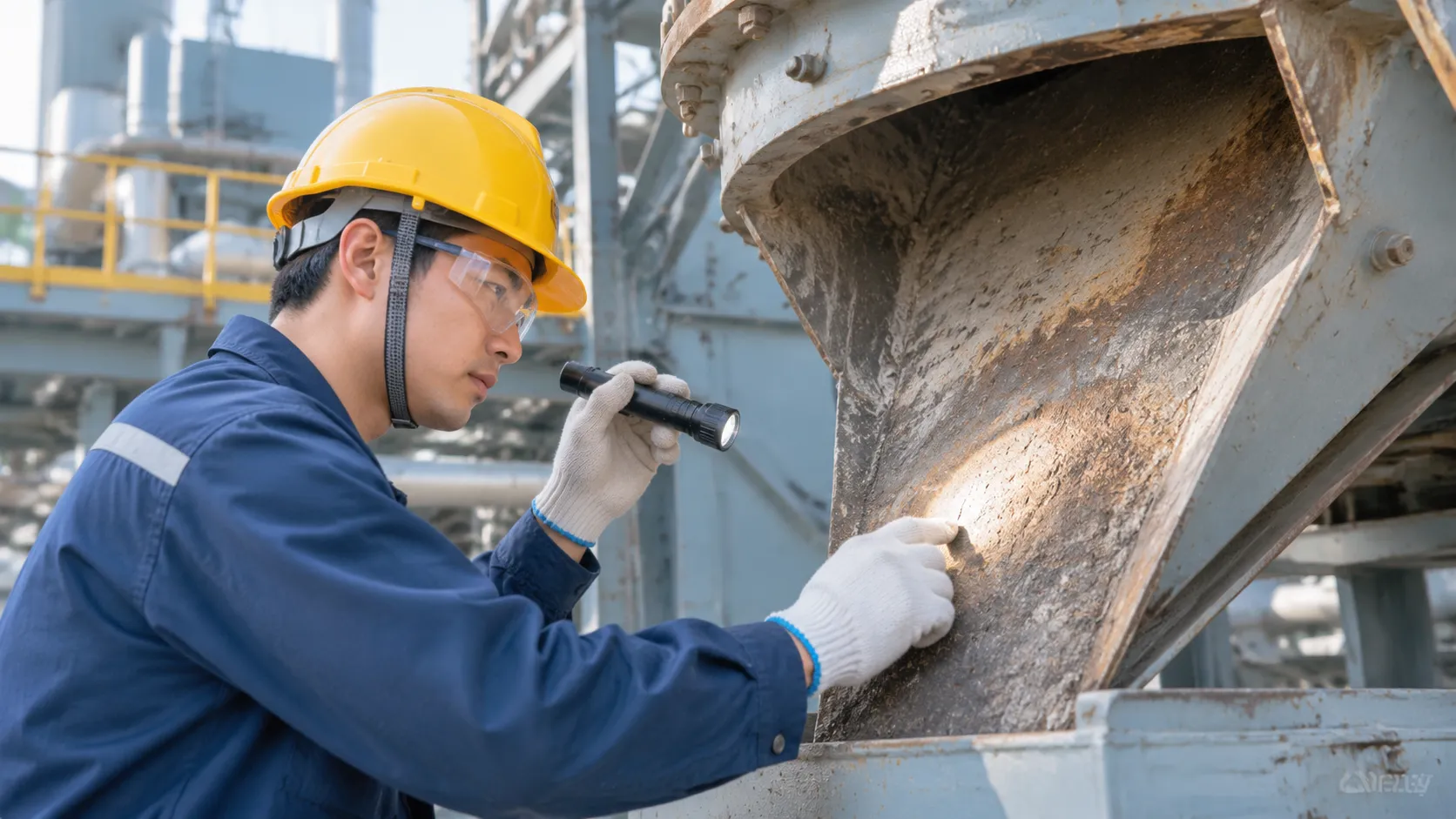
Catching Thin Spots with Routine Inspections
We never wait for dust clouds to signal a problem. Visual checks and non-destructive thickness testing identify early coating wear long before the base metal erodes:
-
- Daily Visual Walkdowns: Inspect the primary impact zone right below the feed inlet and the inner cone lips. Look for scoring, chipping, or localized delamination.
- Dual-Color Wear Indicators: When applying your loading spout coating, use a contrasting base primer (such as bright orange under a black or gray topcoat). Once the base color peeks through, maintenance crews know it is time to plan service.
- Ultrasonic Thickness (UT) Gauging: Measure wall thickness along high-velocity trajectory angles monthly to track exact liner consumption per thousand tons loaded.
Field Patch Repairs vs. Complete Shop Recoating
Deciding whether to patch in place or pull the spout for a complete overhaul comes down to the wear surface footprint and downtime windows:
| Repair Method | Best For | Typical Downtime | Procedure |
|---|---|---|---|
| Field Patch Repair | Localized gouges, seam wear, spots under 6 inches | 2 to 4 hours | Grind area clean, feather edges, and apply fast-curing ceramic epoxy putty or brushable urethane. |
| Complete Shop Recoating | Widespread wear over 40% of surface, base metal exposure | 24 to 48 hours | Pull cones, grit blast to bare substrate (SSPC-SP 10), re-prime, and cast or spray a fresh, seamless lining. |
Tracking Wear Life to Stop Sidewall Blowouts
A blowout during loadout halts transport trucks, triggers dust safety violations, and wastes hours in cleanup. By logging tonnage across your bulk loading equipment, you can accurately match lining consumption to specific throughput volumes. Tracking wear rate per metric ton allows our teams to schedule recoats during planned plant outages instead of suffering high-consequence failures mid-cycle.
Real Cost Savings: Extended Life and Less Downtime
Investing in a dedicated industrial anti wear coating drops total operating expenses across three core operational metrics:
-
- Direct Hardware Longevity: Protecting the inner cones triples the working service life of the metal chutes, preventing early fabrication and replacement expenses.
- Zero Emergency Labor: Controlled shop recoating during planned turnarounds avoids premium-rate overtime callouts and delayed carrier fees.
- Maximum Loading Uptime: Maintaining continuous, unhindered discharge keeps loading cycles running at maximum capacity without abrasive drag or flow disruptions.
Frequently Asked Questions About Loading Spout Coating
How long does a typical loading spout coating last before needing replacement?
Service life depends directly on material abrasiveness, drop velocity, and daily tonnage. In our field experience handling moderately abrasive bulk solids like agricultural grains or plastic pellets, a high-grade spray polyurethane spout liner typically lasts 24 to 36 months.
When moving hard minerals, clinker, or heavy silica sand, an unprotected steel cone can fail within weeks, whereas an elastomeric polyurethane or ceramic composite lining pushes service intervals to 12 to 18 months. Establishing ultrasonic thickness checks every quarter helps you schedule relining before the substrate steel takes structural damage.
Which loading spout coating is best for highly abrasive cement and clinker?
Ceramic-filled epoxy composites and vulcanized ceramic-rubber hybrid linings deliver the highest wear resistance for high-velocity mineral loading. When running materials out of a cement fly ash conveying system, the fine particles create continuous sliding abrasion that shreds standard paint and thin liners in days.
-
- High-Alumina Ceramic Matrix: Resists heavy gouging and micro-cutting from sharp clinker edges.
- Elastomeric Backing: Absorbs the raw kinetic impact at the transition cones.
- Seamless Polyurethane Coats: Ideal for intermediate telescopic drop cones handling non-calcined cement powder.
Can a worn loading spout be patched in the field without complete teardown?
Yes. We regularly perform and recommend spot repairs using two-part trowelable polyurethane or ceramic bead-filled epoxy putties to avoid pulling the entire telescopic assembly down.
-
- Surface Prep: Mechanically grind the worn area back to bare metal (SSPC-SP 11) and feather the edges of the surrounding intact lining.
- Degrease: Clean thoroughly with a residue-free fast-evaporating solvent.
- Application: Trowel the high-build composite directly into the gouge, matching the original lining profile.
- Cure Time: Fast-cure formulations allow equipment restart in 2 to 4 hours at standard plant temperatures (70°F / 21°C).
What coatings meet food safety regulations for agricultural dry bulk?
For loading edible dry bulk—such as sugar, flour, soy meal, and feed grains—coatings must strictly comply with FDA 21 CFR 177.1680 (polyurethane) or FDA 21 CFR 177.1550 (PTFE fluoropolymers).
These formulations contain zero heavy metal curing agents and create a non-porous, smooth surface that prevents bulk solids flow degradation and cross-batch biological contamination. High-slip PTFE and virgin UHMW liners are favored here because they resist washdown chemicals, eliminate bacterial harbor points, and promote clean discharge without oil lubrication.
How do antistatic spout coatings help prevent combustible dust explosions?
Static electricity naturally accumulates as millions of dry solid particles rub against inner chute walls during high-volume discharge. If static charges build up on non-conductive surfaces, they can discharge as an incendiary spark inside the suspended dust cloud.
-
- Carbon-Black Loading: Conductive additives drop surface resistivity below $10^6$ to $10^8$ ohms per square.
- Continuous Path-to-Ground: The coating bleeds electrostatic charges harmlessly through the metallic chute structure to plant ground.
- Integrated Safety: Combining conductive spout liners with an active cement plant dust collection system controls both the ignition source and the suspended dust concentration, ensuring compliance with NFPA 652 and ATEX zoning rules.