
High-Temperature Industrial Damper & Zero-Leakage Performance Metrics
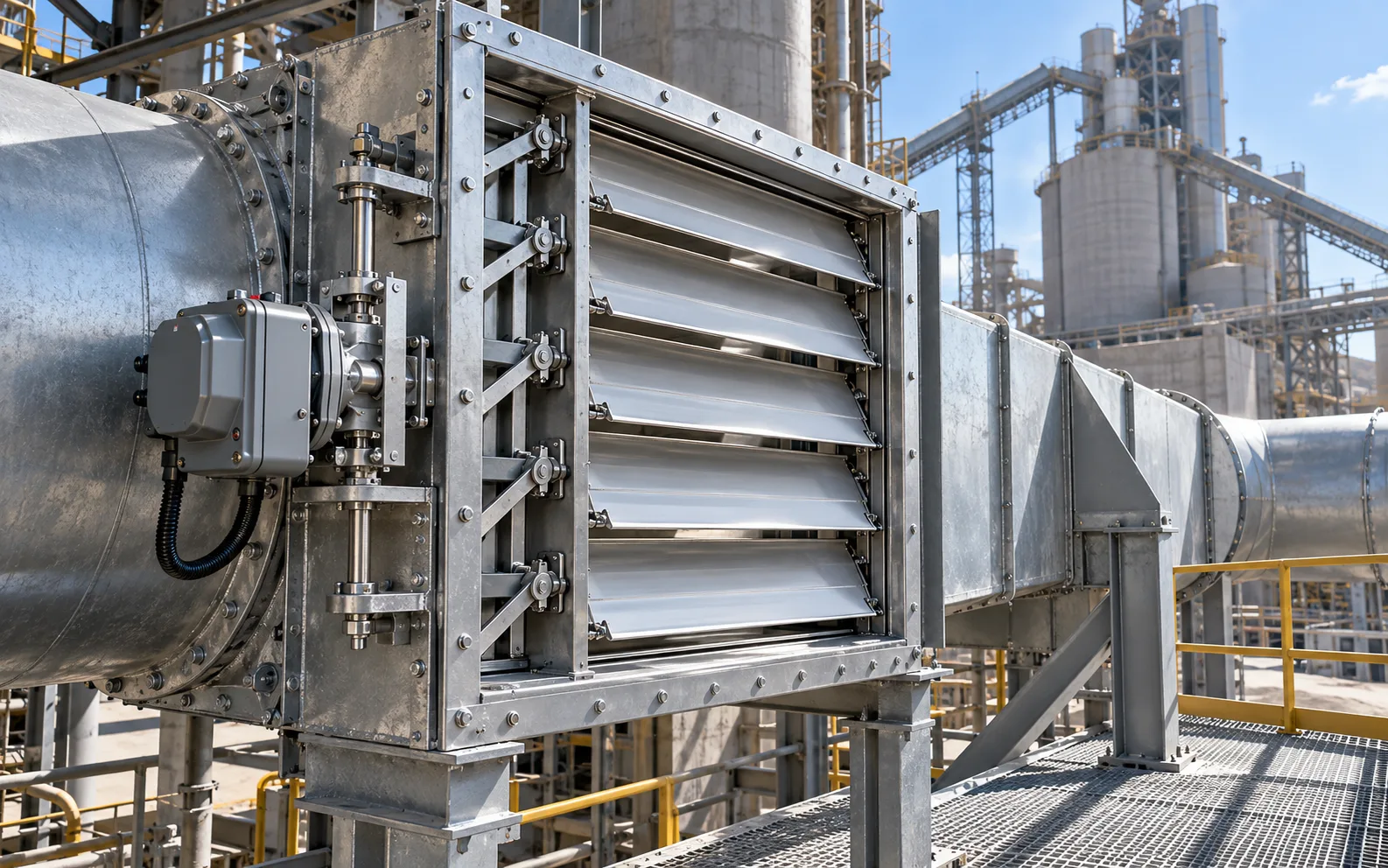
DARKO Cement Machinery delivers heavy-duty duct isolation valve systems and heavy-industry duct products engineered to maintain structural rigidity, exact aerodynamic control, and absolute gas shutoff under severe thermal cycling and abrasive dust streams.
Maximum Thermal Capacity
Fabricated with structural SS310S, Inconel superalloys, and internal abrasion-resistant refractory castables to protect downstream dust collection equipment while enduring kiln exhaust and tertiary air streams.
Zero-Leakage Sealing Rate
Employs synchronized double-blade architecture backed by a pressurized Seal Air System, delivering absolute hot-state zero-leakage isolation for systems paired with baghouse dust collectors.
Duct Sizing Range
Full-scale custom engineering spanning DN200 to DN6000 layouts for heavy circular pipes, large rectangular exhaust ducts, and transition geometries.
Continuous Operating Lifecycle
Equipped with isolated out-of-stream bearings rated for 200,000+ trouble-free cycles, ensuring smooth 0–90° linear modulation and DCS communication.
DARKO designs and manufactures every gas flow control damper to rigorous industrial fluid mechanics standards, ensuring uncompromised mechanical reliability under heavy particulate loads and extreme draft pressures.
Industrial Damper Valve Matrix: Mechanical Architecture & Selection Guide
Engineered specifically for heavy industrial gas handling, DARKO Cement Machinery manufactures heavy-duty damper valve configurations designed to withstand severe thermal expansion, abrasive clinker dust burdens, and high differential pressures across kiln lines, raw grinding mills, and dust collection equipment circuits.
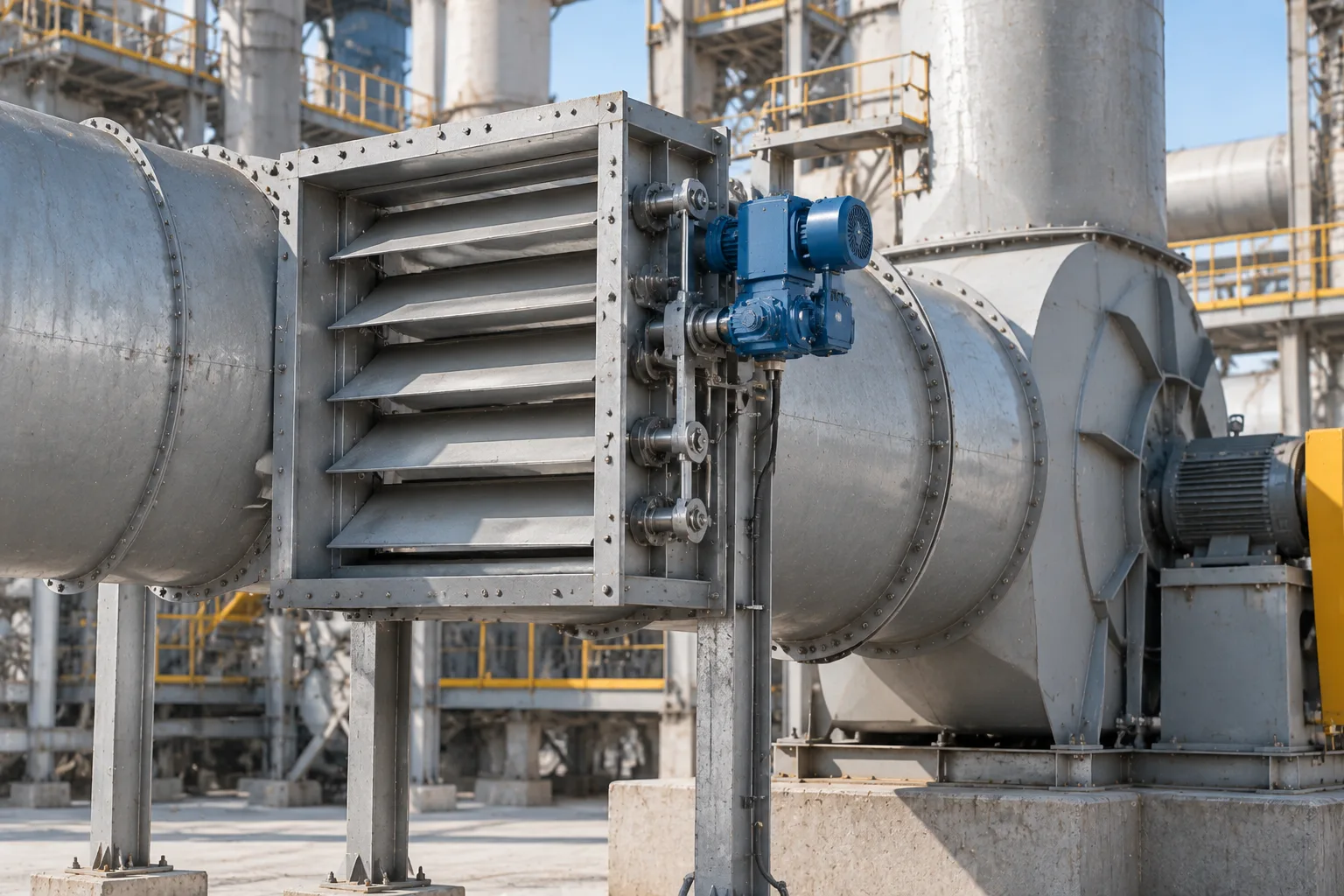
Louver Damper Valve
Multi-blade opposed or parallel linkage geometry delivering high-accuracy gas flow balancing, low torque demand, and reduced fan motor power consumption.
- Blade Linkage: Opposed / Parallel
- Isolation Tightness: 99.0% - 99.5% (Metal-to-Metal)
- Pressure Drop: < 120 Pa (100% Open)
- Key Installation: ID Fan Inlets & Raw Mills

Guillotine Isolation Damper
Solid plate sliding blade isolation gate combined with a heated seal air barrier cavity, providing 100% man-safe positive shutoff for online servicing.
- Blade Structure: Solid Plate / Reinforced Box
- Isolation Tightness: 100% (Pressurized Seal Air)
- Pressure Drop: Zero In-Duct Resistance
- Key Installation: Baghouse Isolations & Kiln Exit
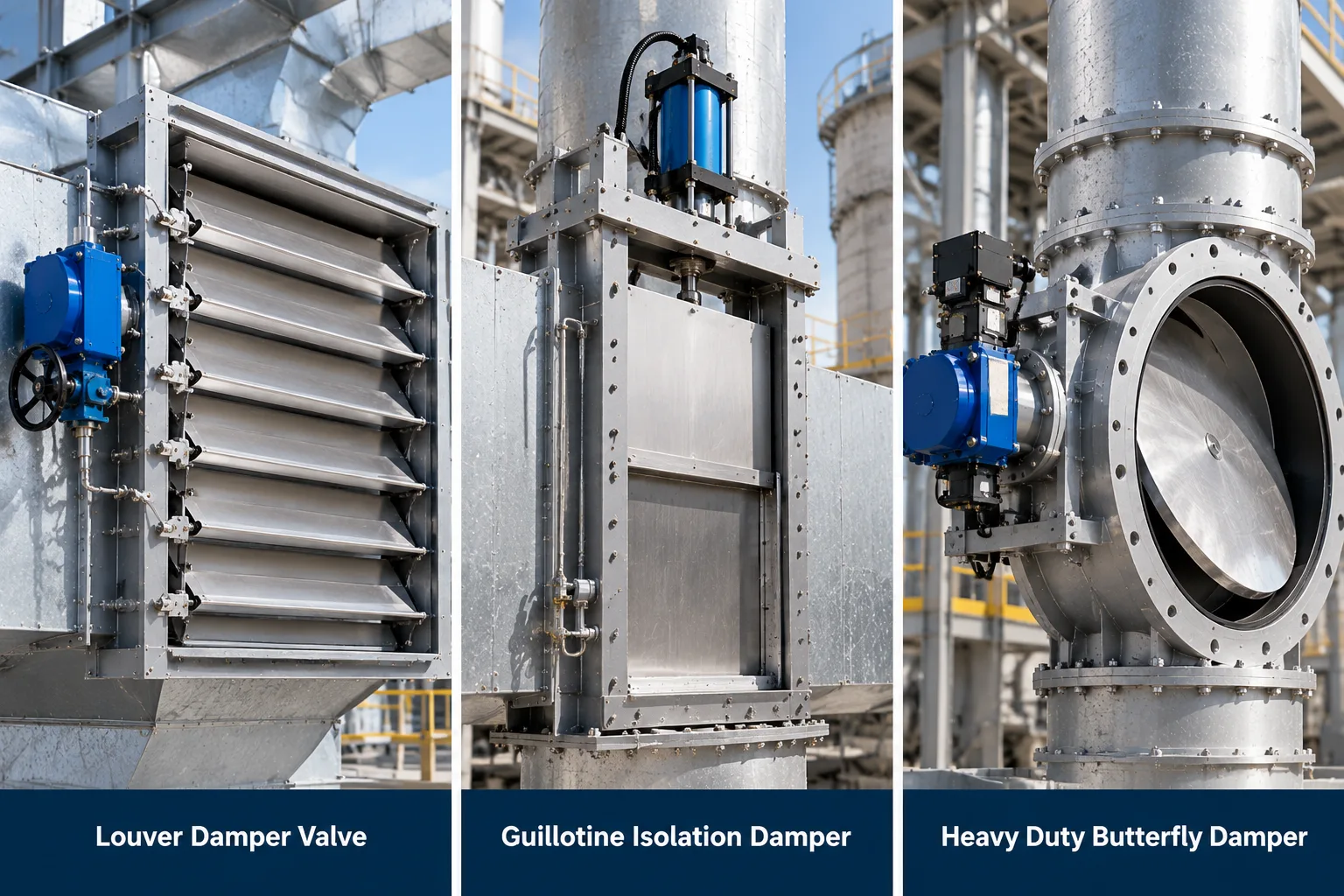
Heavy Duty Butterfly Damper
Custom-built for circular process ducting, delivering fast quarter-turn actuation, compact face-to-face dimensions, and wear-resistant disc edging.
- Disc Orientation: Concentric / Offset Geometry
- Isolation Tightness: 98.5% - 99.5% (Step Seat)
- Pressure Drop: < 80 Pa (Aerodynamic Disc)
- Key Installation: WHR Loops & Tertiary Air
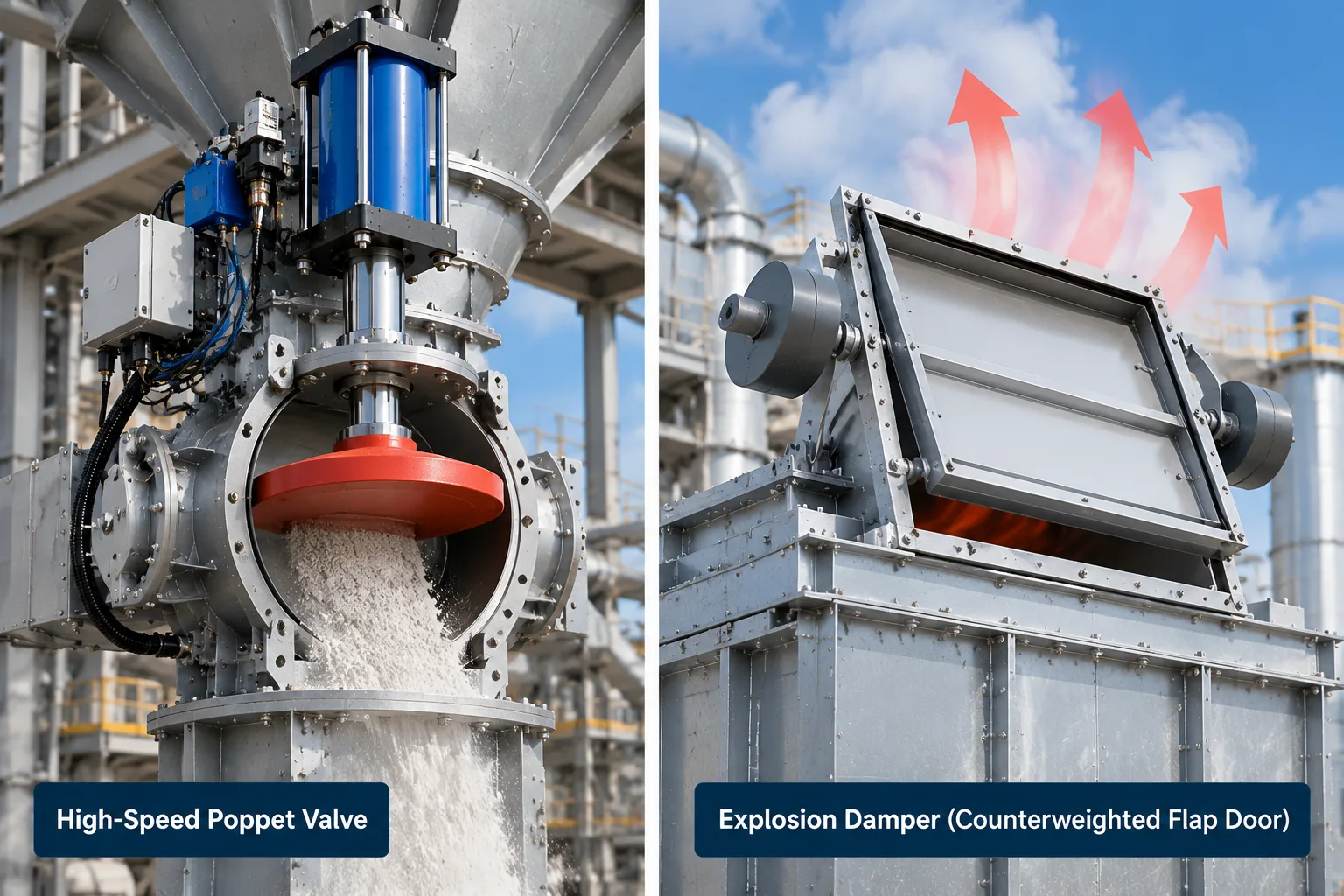
Poppet & Explosion Damper
High-speed linear travel poppet valves and counterweighted flap doors engineered for rapid baghouse compartment switching and immediate overpressure relief.
- Actuation Speed: 0.5 - 2.0 Seconds
- Isolation Tightness: 99.8% (Machined Land Seat)
- Pressure Drop: < 150 Pa (Inline Clean Air)
- Key Installation: Baghouse Outlets & Kiln Hoods
Mechanical Kinematics & Aerodynamic Flow Linearity Analysis
Industrial ductwork requires specialized damper kinematics calculated to match process aerodynamics. A recurring cause of equipment failure in cement manufacturing and heavy dust handling is specifying a single-disc butterfly valve where opposed-blade multi-louver kinematics are required for draft stability, or utilizing basic louvers for personnel isolation where only a positive seal-air guillotine gate ensures total physical safety.
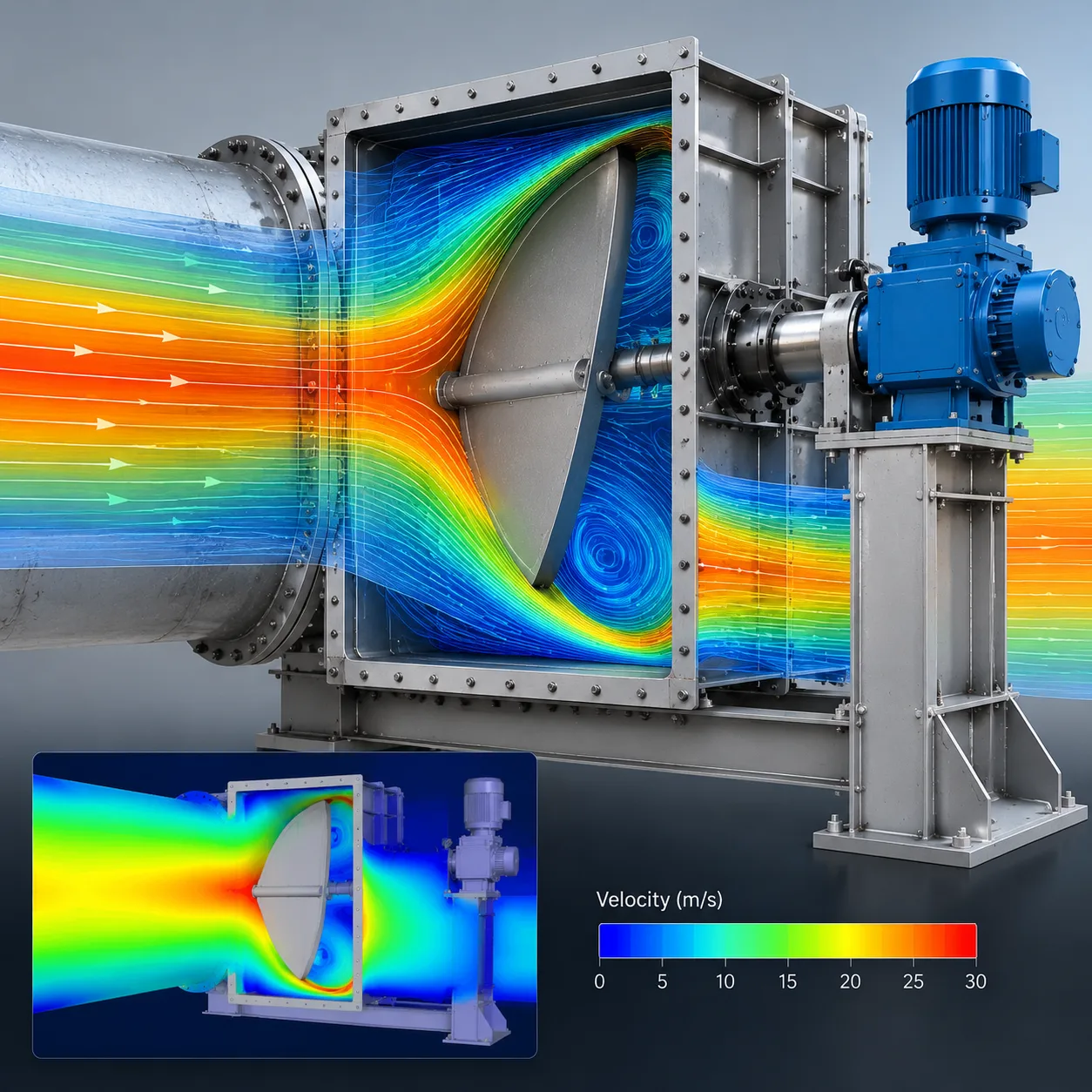
DARKO Cement Machinery utilizes computational fluid dynamics (CFD) modeling to evaluate blade deflection, turbulence zones, and ash settling pockets. Every design incorporates heavy structural stiffeners, outboard pedestal bearing stands, and self-cleaning shaft geometries that permanently prevent thermal binding and particulate seizure.
Multi-Blade Louver Kinematics: Opposed vs. Parallel Action
Opposed-blade configurations rotate adjacent blades in counter-rotating directions. This generates a centered, converging aerodynamic orifice that delivers superior linear modulation (equal percentage flow curve) between 20% and 80% stroke, making it the premier choice for induced draft fan throttling and raw mill ventilation.
Parallel-blade arrangements rotate all blades in unison toward the same angle, deflecting the gas stream toward one duct wall. This yields a rapid flow increase upon initial opening, making it ideal for quick-response emergency bypass circuits or low-resistance on/off flow diversion.
Positive Guillotine Isolation vs. Butterfly Throttling Performance
Guillotine isolation dampers retract the entire blade assembly completely out of the active gas stream during normal operation. This eliminates in-duct pressure drop, removes the blade from direct abrasive particulate impact, and allows 100% gas-tight human entry into downstream baghouse dust collectors and electrostatic precipitators.
Heavy-duty butterfly dampers remain inside the gas stream at all times. They provide an economical, rapid-response isolation and throttling solution for circular duct lines up to 3,200 mm, but require hardfaced alloy trims to withstand continuous high-velocity particulate erosion.
| Damper Type | Control Function | Isolation Class / Tightness | Max Thermal Limit | Standard Actuation Options | Flange Interface Range |
|---|---|---|---|---|---|
| Series DK-LD (Louver) | Linear Modulation / Draft Balancing | ≤ 0.5% (Standard) / 0.1% (Flap Seal) | Up to 900°C (1,652°F) | Intelligent Electric / Modulating Pneumatic | 400×400 mm to 5,500×5,500 mm |
| Series DK-GD (Guillotine) | Positive Man-Safe Isolation | 100% Zero Leakage (Pressurized Seal Air) | Up to 1,100°C (2,012°F) | Rack & Pinion / Electro-Hydraulic Push-Rod | 600×600 mm to 6,000×6,000 mm |
| Series DK-BD (Butterfly) | Quick Shutoff / Coarse Flow Throttling | ≤ 0.5% (Machined Step Seat) | Up to 1,000°C (1,832°F) | Quarter-Turn Pneumatic / Electric Rotary | DN300 to DN3200 Circular |
| Series DK-PD (Poppet) | Rapid Compartment Trip / Safety Venting | ≤ 0.1% (Resilient / Machined Seat) | Up to 450°C (842°F) | High-Speed Linear Pneumatic Cylinder | DN400 to DN2400 / Custom Flaps |
Outboard Thermally Isolated Bearings
All heavy-duty bearing assemblies are mounted on external pedestals displaced over 150 mm from the hot duct wall. This completely prevents heat transfer to bearing grease and shields rotating elements from clinker dust ingress.
Adjustable Gland Packing Cartridges
Equipped with multi-ring die-formed flexible graphite and braided PTFE packing. The external split-gland cartridge design permits quick in-service adjustment and repacking without duct depressurization or production line stoppages.
Hardfaced Erosion-Resistant Metallurgy
Blade leading edges and high-wear perimeter sealing strips receive automated chromium carbide weld overlays (CCO). This prevents structural erosion caused by high-velocity abrasive particles in tertiary air and raw meal circuits.

Cement Plant Damper Applications Across High-Dust & Extreme Thermal Circuits
Cement clinker manufacturing demands rugged flow isolation and modulating equipment capable of withstanding extreme thermal shock, abrasive particulate streams, and aggressive chemical atmospheres. DARKO Cement Machinery delivers specialized damper products engineered to resolve chronic shaft seizure, thermal distortion, blade thinning, and bypass leakage across every pyroprocessing stage.
Kiln Exhaust & TAD
Withstands sustained 850°C–1050°C gas streams, severe thermal creep, and molten alkali-silicate accretion.
Baghouse Isolation
100% zero-leakage seal air guillotine dampers delivering certified human-safe online filter compartment maintenance.
ID Fan & Raw Mill
Aerodynamic opposed-blade louver dampers engineered for balanced closed-loop draft regulation with low startup torque.
Cooler & WHG Bypass
Heavy-duty hardfaced butterfly dampers resisting high-velocity abrasive clinker nodule impingement.
Cement Kiln Exhaust & Tertiary Air Duct (TAD) Flow Control
Tertiary air ducts (TAD) channel high-temperature preheated secondary air from the clinker grate cooler directly to the precalciner, laden with abrasive raw meal and volatile alkali-sulfur compounds at velocities exceeding 25 m/s. Standard carbon steel or unlined dampers warp and deform rapidly under cyclic thermal fatigue, leading to actuator binding, casing rupture, and unmetered false air ingress that destabilizes calciner combustion.
Operating Challenges
- Severe thermal creep, oxidation scaling, and structural blade sag
- Aggressive alkali, chlorine, and sulfur build-up causing blade jamming
- Continuous particulate sandblasting and severe local erosion
DARKO Engineering Solution
- High-nickel alloy structural frame (SS310S / Inconel 625)
- Internal refractory-castable lined blade cavities to resist heat scouring
- Standoff self-aligning bearing assemblies isolated from thermal zones
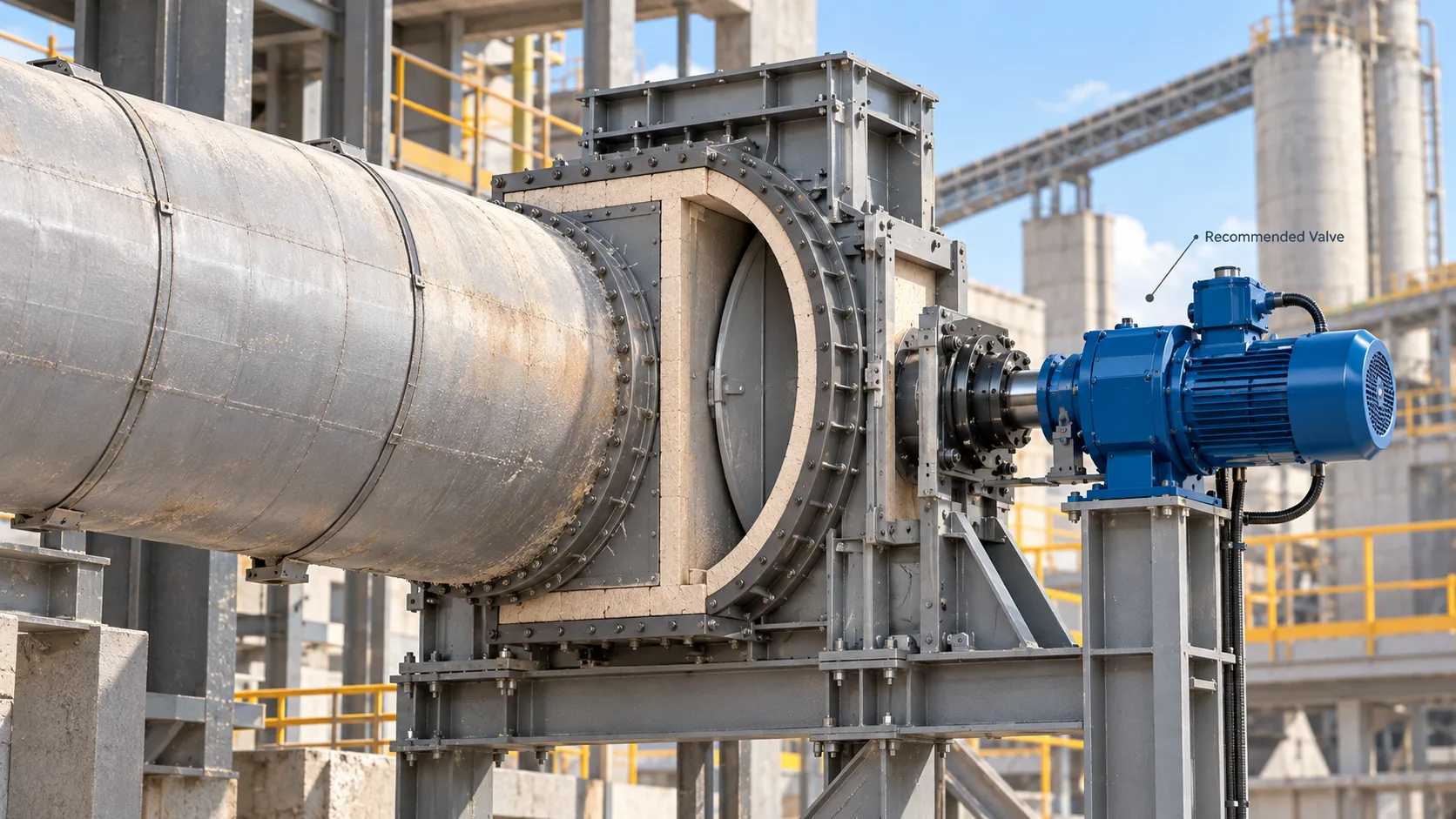
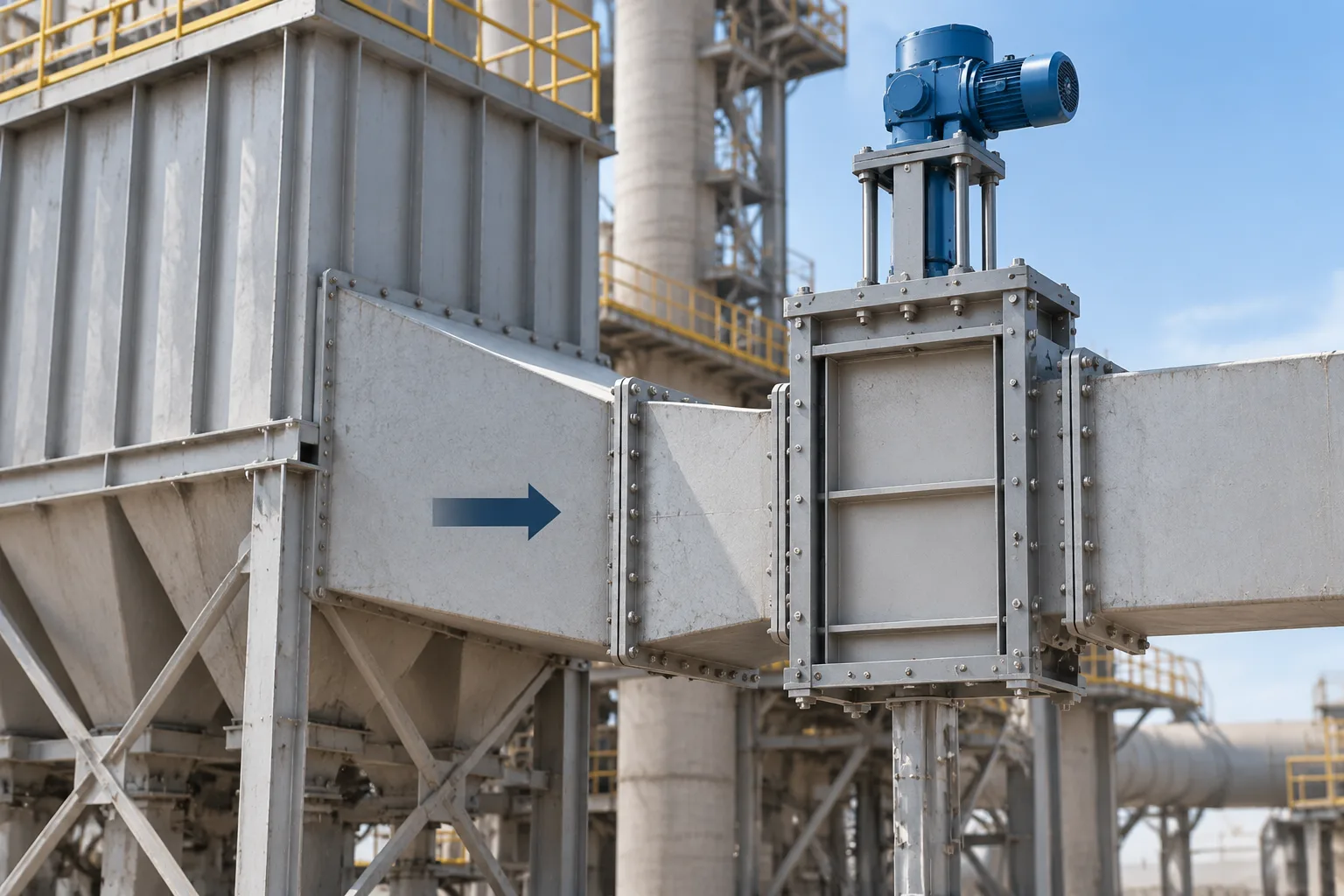
Baghouse Filter Inlet & Outlet Compartment Isolation
Routine maintenance on industrial baghouse dust collectors and fabric filter compartments requires fail-safe compartment isolation while the cement kiln operates continuously. When operators enter offline dust collection equipment to inspect or replace bags, high-temperature toxic gases carrying acidic sulfur compounds and fine particulate must be completely blocked. Conventional metal-to-metal dampers leave 0.5%–2% leakage gaps, creating hazardous working conditions and requiring costly kiln curtailments.
Operating Challenges
- Fugitive toxic gas migration endangering maintenance personnel
- Heavy particulate compaction in bottom guide slots causing jam-ups
- Acid dew point corrosion on blade skins and perimeter framework
DARKO Engineering Solution
- Dual-blade envelope with pressurized seal air barrier (zero leakage)
- Bottomless pass-through blade geometry eliminating dust collection grooves
- Self-cleaning perimeter scraper seals with Inconel spring energizers
Induced Draft (ID) Fans & Raw Mill Recirculation Systems
Main exhaust ID fans and raw grinding mill recirculation circuits require continuous, precise draft modulation to balance kiln hood pressure while accommodating mill online/offline transitions. Poor damper flow characteristics cause aerodynamic turbulence, severe duct pulsation, and drive motor overload. DARKO opposed-blade louver damper valves deliver linear flow characteristics across the entire modulating angle, minimizing fan startup load and cutting annual power consumption.
Operating Challenges
- Flow turbulence and structural duct chatter at throttling angles
- Mechanical linkage backlash causing control loop hunting
- Elevated fan motor startup draw due to poor closed-position cutoff
DARKO Engineering Solution
- CFD-optimized aerodynamic airfoil blade design for minimum pressure loss
- Precision zero-backlash linkage rods with self-aligning spherical joints
- High-resolution smart electric actuator integration for PID loop response
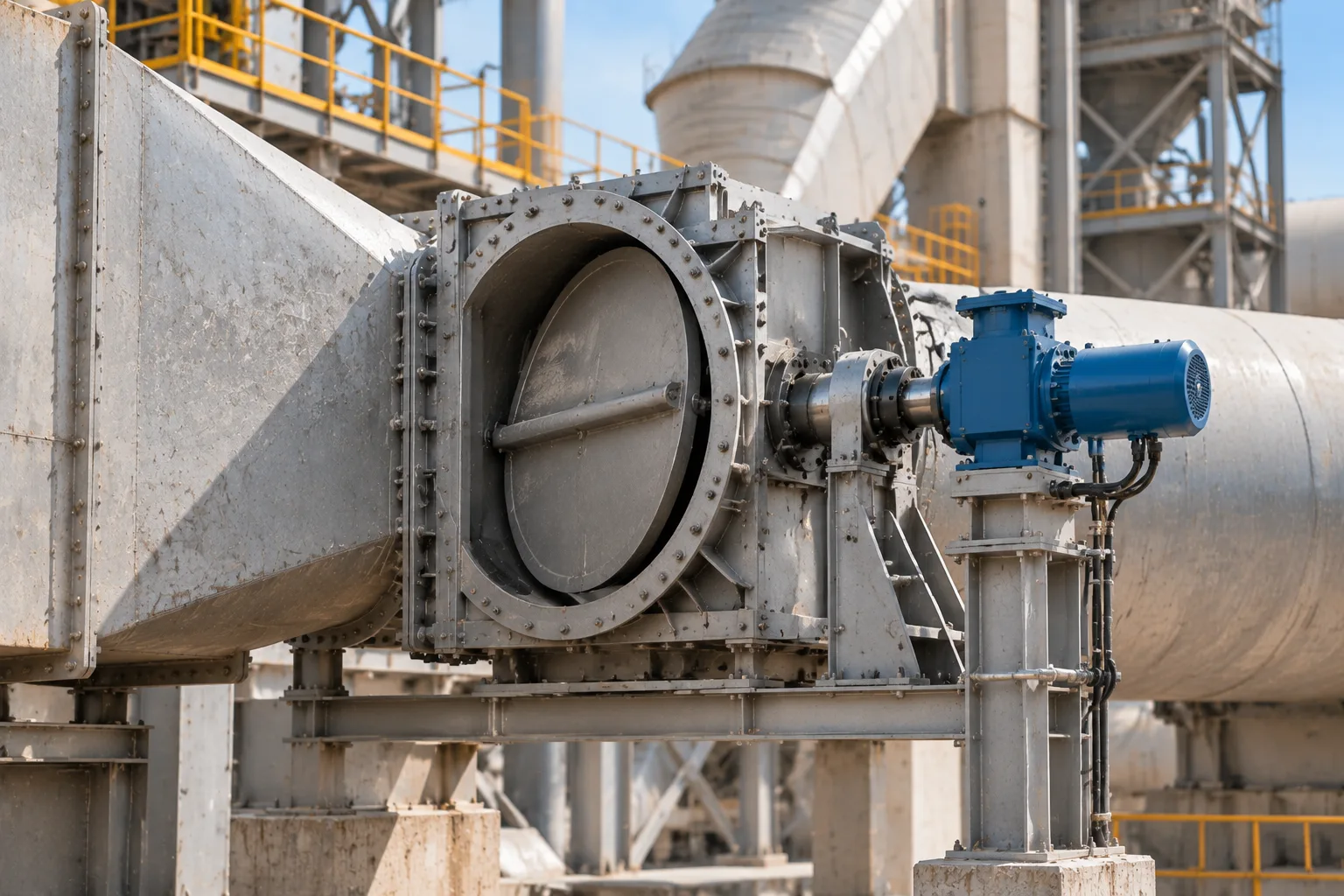
Clinker Cooler Exhaust & Waste Heat Recovery (WHG) Bypass
Exhaust air from clinker grate coolers transports highly abrasive, calcined clinker nodules at 350°C–500°C directly into waste heat recovery boiler circuits. When boiler protection trips or cooler thermal surges occur, bypass dampers must actuate instantly to divert gas flows without binding. Unprotected damper discs undergo severe abrasive washouts, causing internal bypass leakage that wastes recoverable thermal energy and reduces plant megawatt generation.
Operating Challenges
- Rapid blade thinning from high-velocity clinker nodule impingement
- Thermal shock during sudden boiler bypass changeover events
- Thermal bypass leakage lowering waste heat power generation output
DARKO Engineering Solution
- Chromium Carbide Overlay (CCO) hardfaced disc surfaces (58–62 HRC)
- Replaceable heavy-wall aerodynamic seat liners to shield casing
- High-torque pneumatic spring-return failsafe emergency actuation
Engineering Specification Matrix: Cement Duct Damper Selection
Cross-reference operational parameters, recommended damper configurations, and metallurgy grades for cement plant engineering, procurement, and operations teams.
| Process Node | Gas Temperature | Dust Characteristics | Preferred Damper Model | Isolation / Sealing Rate | Primary Drive Mechanism |
|---|---|---|---|---|---|
| Tertiary Air Duct (TAD) | 850°C – 1050°C | Alkaline meal dust, heavy scour | DK-BD / DK-GD High-Temp Refractory | 99.5% Metal-to-Metal / Refractory | Electro-Hydraulic / High-Torque Electric |
| Kiln Exhaust & Preheater | 350°C – 550°C | High-volume raw meal dust, calciner gas | DK-LD Multi-Blade Louver Damper | 99.0% Modulation / Isolation | Modulating Electric (4–20 mA PID) |
| Baghouse Compartment Inlet/Outlet | 120°C – 220°C | High-dust raw gas, acidic sulfur trace | DK-GD Zero-Leakage Seal Air Guillotine | 100% Zero-Leakage (Seal Air Purged) | Fast Pneumatic / Electric Lead Screw |
| Main ID Fan Inlet / Raw Mill | 90°C – 180°C | Cleaned flue gas / Grinding loop dust | DK-LD Opposed-Blade Louver Damper | 99.2% Flow Linear Regulation | Smart Modulating AUMA / Rotork |
| Clinker Cooler WHG Bypass | 350°C – 500°C | High-velocity abrasive clinker particles | DK-BD Hardfaced Butterfly Damper | 99.8% Fast Thermal Isolation | Pneumatic Spring-Return (<3s Trip) |
Need Custom Thermal Sizing or Gas Flow Analysis?
DARKO application engineers provide tailored CFD pressure-drop analysis, thermal stress assessments, and custom duct flange drawings for cement plants and high-temperature gas handling systems.
Wear-Resistant, Anti-Caking, and Zero-Leakage Core Engineering Technologies
Engineered specifically for abrasive clinker lines, kiln exhaust streams, and heavy dust collection equipment systems. DARKO damper valve assemblies eliminate actuator jamming, shaft galling, and fugitive flue gas emissions through field-proven structural isolation architectures.
Self-Cleaning Blade & Dynamic Scraper System
Prevents dense particulate buildup, alkali crusting, and dust packing in seat channels and pivot joints during modulating and isolation service.
- Hardfaced abrasion resistant blade profiles fabricated with high temperature alloy damper materials.
- Dynamic scraper edges continuously shear away settled dust during every open/close stroke.
- Self-purging seat geometry prevents mechanical binding and protects drive actuators from torque overloads.
Positive Pressure Seal Air Cavity System
Creates an impenetrable pneumatic barrier between duct sections, operating as a certified zero leakage seal air damper for absolute gas shutoff.
- Injects clean, heated air at +500 Pa above internal duct pressure via dedicated booster blowers.
- Provides 100% man-safe gas isolation, enabling online maintenance for baghouse dust collectors and safe personnel entry.
- Integrated differential pressure sensors feed the DCS to maintain continuous air curtain integrity.
Split Outboard Bearings & Graphite Packing Gland
Isolates pivot components from extreme flue gas temperatures and particulate contamination through an engineered external bearing design.
- Heavy-duty self-aligning bearings offset 150mm+ from corrosive, high-heat gas streams.
- Multi-tier flexible graphite packing sets prevent shaft gas blowby and ambient air infiltration.
- Split pedestal geometry allows routine inspection and repacking without unbolting duct flanges.
CFD Flow Dynamics Simulation for Extended Wear Life
All DARKO airflow damper products undergo CFD fluid dynamics simulation to optimize minimal pressure drop and maximize abrasive wear life. Finite-element velocity modeling eliminates localized eddy currents, preventing abrasive erosion on blade edges and wall liners.
Industrial Damper Valve Technical Specifications and Duct Sizing Selection Guide
Accurate industrial damper valve sizing and mechanical configuration are critical to maintaining optimal gas velocities, preventing aerodynamic duct choking, and eliminating process gas leakage across heavy industrial air-gas networks. Whether sizing valves for high-temperature tertiary air ducts, raw grinding circuits, preheater cyclone bypasses, or multi-compartment baghouse dust collectors, process engineers must balance thermal expansion margins, differential operating pressure, particulate grain loading, and allowable seat leakage rates.
DARKO Cement Machinery manufactures heavy-duty flow control, balancing, and positive isolation damper products engineered to endure severe pneumatic pulsations, mechanical abrasion, and thermal gradients up to 1050°C. Standardized round and rectangular flange profiles alongside 100% custom non-standard dimensional configurations ensure seamless drop-in replacement for aging plant equipment and precision integration into greenfield EPC ductwork.
Standard Industrial Damper Valve Specifications Matrix
Engineering parameters, ductwork damper specifications, and operating boundaries across primary structural configurations.
| Model Series | Damper Architecture | Flange / Duct Dimensions | Design Pressure | Operating Temperature | Leakage Rate Standards | Actuation Interface |
|---|---|---|---|---|---|---|
| DK-LD Series | Multi-Louver Control Damper (Parallel / Opposed Blades) | Rectangular: 400×400 to 4500×4500 mm Custom Flange Profiles & Transitions | ±15,000 Pa | -20°C to 850°C | Class I / II (≤ 0.5% Area Flow) | Intelligent Modulating Electric / Fast Pneumatic |
| DK-GD Series | Guillotine Isolation Damper (Single / Double Plate Gate) | Rectangular: 600×600 to 6000×6000 mm Heavy Stiffened Blade Assembly | ±20,000 Pa | -20°C to 1050°C | 100% Zero Leakage (Air Seal System) | Rack & Pinion / Electro-Hydraulic Thrust |
| DK-BD Series | Heavy-Duty Circular Butterfly Damper | Circular: DN300 to DN3000 mm Standard & Custom Bolt Circle Diameters | ±12,000 Pa | -20°C to 950°C | Standard ≤ 0.2% / Hard-Faced Step Seat | Quarter-Turn Electric / Pneumatic Actuator |
| DK-PD Series | Poppet Isolation & Pressure Relief Flap Damper | Modular: DN400 to DN2200 mm Multi-Poppet Chamber Array Configuration | ±8,000 Pa | -20°C to 450°C | 99.9% Resilient Perimeter Seal | Rapid Trip Pneumatic (1-2s Stroke Speed) |
Standards & Testing Compliance: Engineered and factory-certified in accordance with EN 1751, ANSI/FCI 70-2 (Class II through Class VI), and AMCA Standard 500-D.
Custom design pressures up to ±30,000 Pa available on request.Metallurgy Selection and Material Wear Compatibility
The continuous operational integrity of an industrial damper depends heavily on selecting structural alloys matched to flue gas chemistry, thermal cycling limits, and dust particle velocity. DARKO pairs frame housings, blade skins, drive shafts, and linkage assemblies with rigorously certified metallurgical compositions:
Q235B / ASTM A36 Carbon Steel
Heavy structural carbon steel providing superior mechanical rigidity and torsional stability for plant dust collection equipment, general ventilation ducts, and primary fan inlet regulation lines without acid condensation risk.
Q345R / 16Mn Low-Alloy Steel
High-strength, low-alloy pressure vessel plate specified for preheater cyclone branches, clinker cooler balancing lines, and raw mill recirculating ductwork operating under elevated thermal fatigue and particle impact.
AISI 304 / 316L Stainless Steel
Austenitic chromium-nickel stainless alloys engineered to resist dew point acid condensation, sulfur oxides (SOx), volatile chlorides, and corrosive chemical fumes commonly found in waste heat recovery gas paths.
SS310S / Inconel 625 Super-Alloys
High-nickel, high-chromium heat-resistant super-alloys configured to prevent high-temperature creep, oxidation scaling, and catastrophic thermal blade sagging in kiln tertiary air ducts (TAD) and bypass systems.
Chromium Carbide Overlay (CCO)
Automated metallurgically fused chromium carbide hardfacing applied to leading blade edges, seating perimeters, and internal deflector plates exposed to high-velocity clinker dust, silica, and pulverized coal streams.
Die-Formed Flexible Graphite & PTFE
High-density braided carbon yarn and pure flexible graphite packing rings reinforced with Inconel mesh, seated inside split-type outboard stuffing boxes positioned away from the hot gas stream.
4-Step Precision Sizing Methodology for Plant Engineers
To prevent blade binding, premature seal degradation, and oversized actuator power consumption, engineering consultants and plant procurement teams should follow this 4-step damper valve sizing methodology:
Define Process Gas & Dust Burden
Calculate continuous and peak volumetric flow rates (Nm³/h or ACFM), dust grain concentration (g/Nm³), chemical characteristics (SOx, NOx, moisture percentage), and particulate abrasiveness.
Determine Thermal & Pressure Envelope
Identify normal operating and upset gas temperatures (°C/°F), maximum ductwork design differential pressure (ΔP in Pa or in. w.g.), and allowable pressure drop across the open damper frame.
Select Flow Modulation vs. Isolation Duty
Determine operational function: high-accuracy linear throttling for fan balance (opposed multi-louver) versus 100% human-safe positive isolation for online baghouse bag replacement (seal-air guillotine).
Configure Actuation & DCS Integration
Calculate breakout and seating torque incorporating a minimum 1.5× to 2.0× safety factor under heavy dust buildup. Specify operating stroke time, fail-safe spring action, supply voltage, and bus protocols.
Need a Custom Flange Interface or Direct Drop-in Replacement?
Existing cement plants, power utilities, and metallurgical smelters often feature proprietary duct geometries with non-standard bolt hole patterns and compact face-to-face envelopes. DARKO provides custom engineering drawings in 2D DWG and 3D STEP formats to ensure exact dimensional alignment with your existing steel framework.
- Custom face-to-face flange body depths
- Specialty duct transitions (Rectangular-to-Round)
- Direct matching for legacy OEM valve footprints
- Comprehensive FEA stress & CFD flow analysis
Submit your duct cross-section, operating temperature, static pressure, and medium details to receive a preliminary sizing calculation and CAD interface drawing.
Submit Operating Parameters for Fast SizingDiverse Actuation Systems and Smart Automation Integration
Engineered for severe thermal and heavy-dust environments across our industrial duct products, cement kilns, raw grinding circuits, and exhaust systems. Our actuators deliver seamless DCS connectivity, precise PID modulating flow control, and rapid fail-safe isolation.
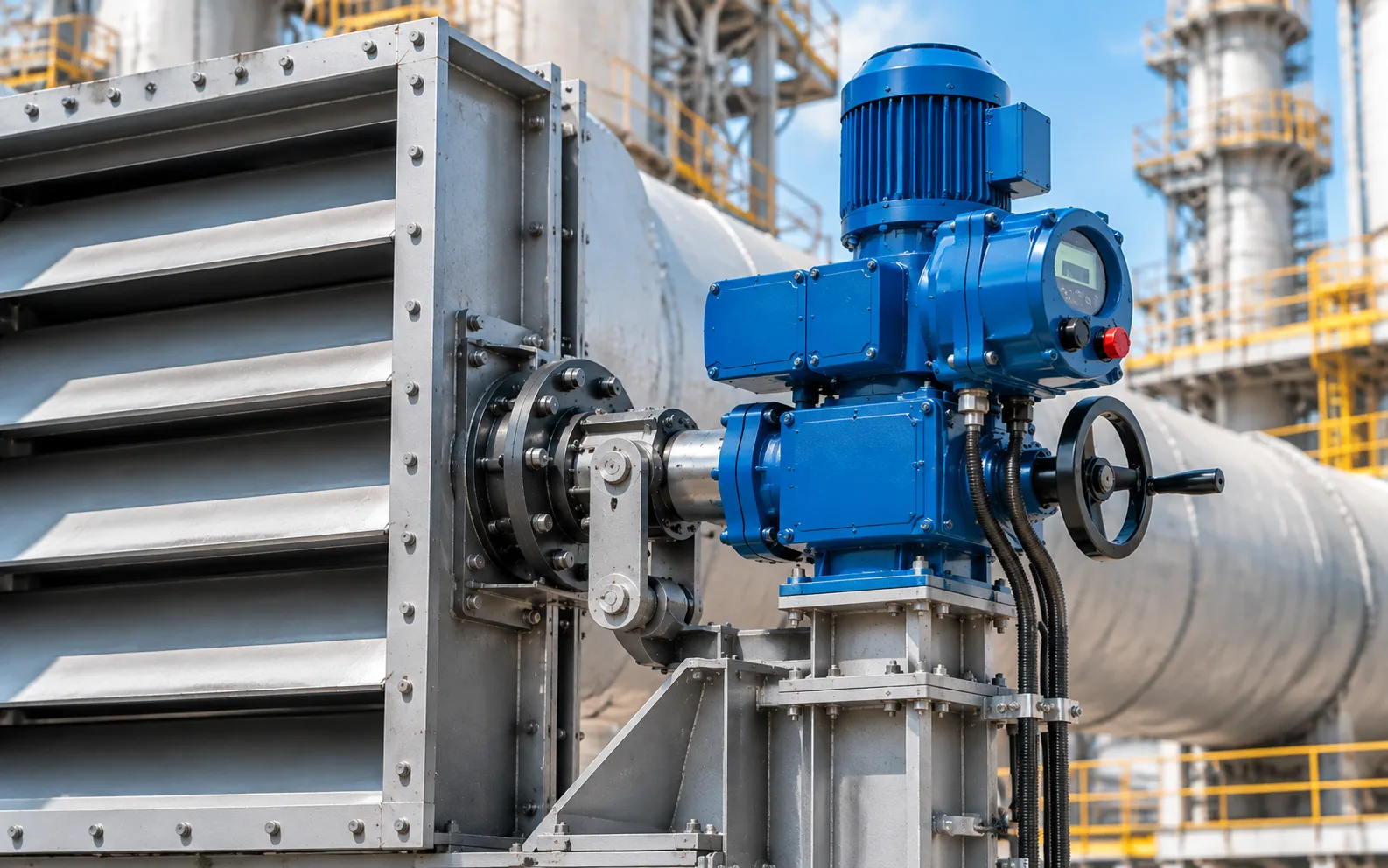
Intelligent Electric Actuator
High-resolution multi-turn and quarter-turn electric damper actuator designed for linear gas flow regulation, louver balancing, and closed-loop DCS integration.

Fast Pneumatic Actuator
Rapid-response pneumatic gas damper drive optimized for emergency duct isolation, kiln bypass trip shutoff, and baghouse dust collectors compartment protection.
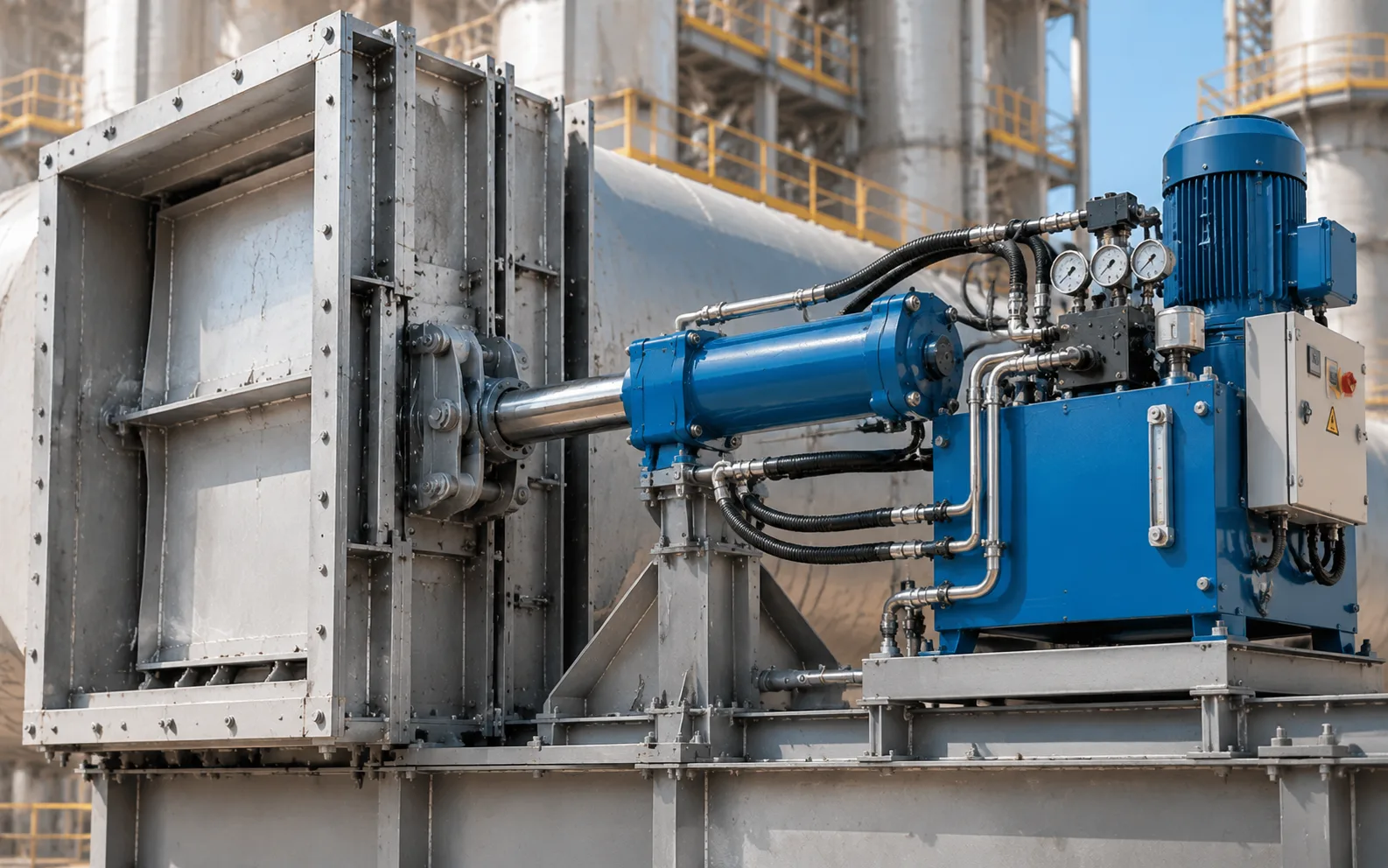
Electro-Hydraulic System
Dedicated high-thrust hydraulic drive for large-scale guillotine dampers, generating multi-ton shear force to penetrate heavy ash beds and dust cake.
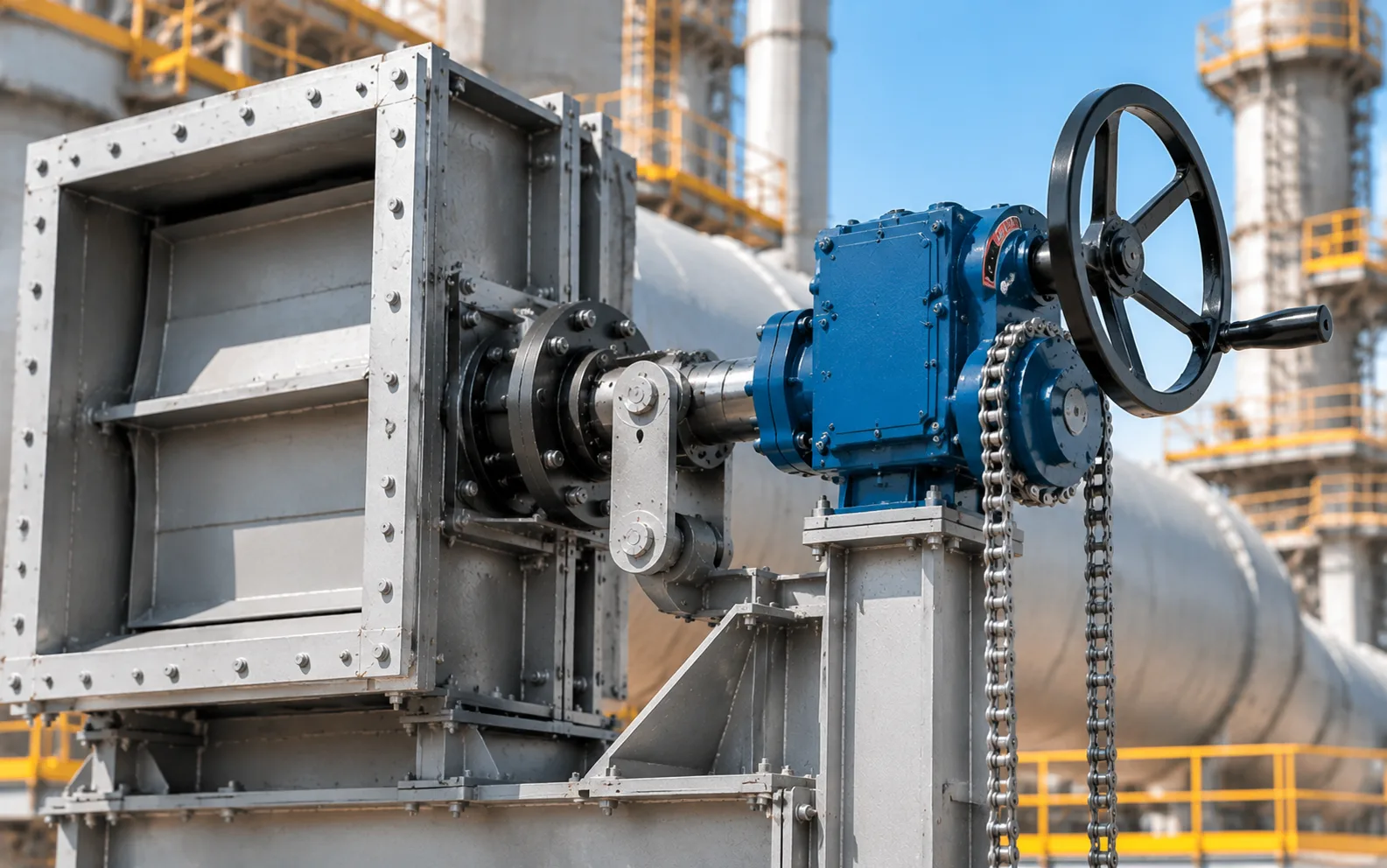
Manual Gear & Chain Drive
Cost-effective manual drive and declutchable auxiliary override for maintenance man-access gates, bypass diverters, and non-automated ducts.
72-Hour Full-Load Factory Testing for Seamless DCS Integration
Every DARKO DCS control damper and actuation package undergoes stringent 72-hour continuous cycle, torque verification, and thermal loading tests before dispatch. We pre-calibrate limit switches, torque transducers, and fieldbus protocol mappings to guarantee instant plug-and-play installation on site.
Standard DCS & Industrial SCADA Connectivity
Hazardous Area & Enclosure Protection
Industrial Damper Engineering FAQ, Sizing & Troubleshooting Hub
Optimizing gas flow and isolation across cement pyroprocessing lines, raw mill circuits, and industrial dust collection equipment networks requires precise aerodynamic and thermodynamic engineering. Below, DARKO application engineers address critical selection criteria, seal air barrier mechanics, high-dust anti-binding designs, and field troubleshooting protocols for severe flue gas environments.
Zero-leakage continuous seal air barrier
Heat-resistant alloys & refractory lining
Linear PID modulation with DCS feedback
External thermal and particulate barrier
Selecting between a multi-louver damper valve and a guillotine isolation damper depends primarily on whether your baghouse process requires continuous dynamic flow balancing or safe, 100% physical barrier isolation for personnel entry:
Multi-Louver Damper Characteristics
- Dynamic Flow Modulation: Opposed-blade or parallel-blade designs deliver linear flow control to balance gas distribution across multiple filter compartments.
- Rapid Response: 90-degree rotary stroke completes full open-to-close travel within 5 to 15 seconds.
- Aerodynamic Profile: Low-profile airfoil blades minimize overall duct pressure drop in high-velocity fan exhausts.
- Standard Sealing: Achieves 98.5% to 99.5% volumetric shutoff with flexible metallic peripheral seals.
Guillotine Isolation Damper Characteristics
- Human-Safe Online Maintenance: Engineered for positive physical shutoff, allowing bag replacements while adjacent compartments operate at full thermal load.
- 100% Zero-Leakage: Monolithic solid blade paired with an active seal air blower envelope creates an impermeable physical barrier.
- Zero Gas Stream Obstruction: Fully retracted blade parks completely outside the duct cross-section, causing zero flow resistance.
- Isolation Stroke Speed: Slower linear travel via rack-and-pinion or power screw drives (30 to 90 seconds) dedicated to reliable on/off duty.
Engineering Practice: In modern multi-compartment baghouse dust collectors, DARKO Cement Machinery recommends tandem configurations: louver dampers on individual compartment entries for automated PID balancing, paired with guillotine gates on common exhaust manifolds for routine safe overhauls.
Field Troubleshooting & Rapid Diagnostic Guide
A quick-reference diagnostic matrix for mechanical engineers and plant maintenance personnel addressing common industrial flue gas damper operational anomalies.
| Operational Symptom | Root Cause Analysis | Immediate Corrective Action | Long-Term DARKO Engineering Solution |
|---|---|---|---|
| Actuator Torque Overload / Stall | Dust consolidation in shaft sleeves or thermal duct growth distorting actuator mounting linkages. | Check linkage clearances, clean stuffing box areas with dry air, and lubricate high-temperature sleeves. | Fit outboard bearing standoffs (≥150mm), self-aligning spherical bearings, and spring-loaded graphite packing. |
| Flue Gas Ingress Around Closed Blade | Seal air blower differential dropped below duct static pressure; cracked or worn flexible seal strips. | Confirm seal air pressure is ≥ +500 Pa over duct pressure; inspect blower inlet filters and damper limits. | Upgrade to a dual-cavity guillotine air seal system with multi-leaf Inconel 625 spring perimeter seals. |
| Accelerated Blade Erosion in Dust Streams | Localized turbulent gas velocities exceeding 28 m/s wearing away unprotected carbon-steel blade plates. | Apply temporary hardfacing weld passes or wear liners on thinned areas during a scheduled stoppage. | Re-profile blade contours via CFD analysis and apply 60 HRC chromium carbide composite overlay cladding. |
| Acid Dew Point Housing Corrosion | Cold ambient purge air cooling sulfur-bearing flue gas below the acid dew point (130°C–160°C). | Add thermal insulation over damper casing and purge lines; check upstream flue gas temperatures. | Incorporate an automated seal air electric heating skid and 316L/Hastelloy internal corrosion barriers. |
Need the Right Damper for Your Plant?
Share your application details with DARKO. Our team can help review the damper type, operating conditions, connection dimensions, and quotation requirements for your project.
Damper Selection & Sizing
Guidance based on duct dimensions, gas conditions, temperature, and control function.
Technical Drawings & Quotation
Discuss connection details, actuator options, and the technical information needed for your RFQ.
Direct Contact with DARKO
Contact our team directly if you prefer not to complete the inquiry form.
Request a Damper Technical Review
Tell us a little about your application. If you do not have every specification yet, simply share the details available.