

Formula details
Product Details
Overview
Manual Slide Gate Valve Features
| Core Feature | Factory Engineering Standard | Operational Advantage |
|---|---|---|
| Drive Mechanism | Handwheel, hand crank, or overhead chain-wheel | 100% operational without electrical or pneumatic power |
| Material Shut-Off | Precision-machined, beveled-edge slide gate plate | Clean cut-through of standing material columns |
| Flow Orientation | Unrestricted, full-bore gravity-discharge design | Eliminates product bridging, hang-up, and dead zones |
| Maintenance Profile | External packing gland adjustment with drop-in seals | Rapid servicing without removing the valve from the line |
| Integration | Standard PN10/ANSI drillings or custom flange patterns | Seamless drop-in replacement for existing hoppers and chutes |
Manual Operation Without External Power
Every hand operated slide gate we build runs entirely on mechanical input.
Zero Utility Dependency: Eliminates the cost of routing compressed air lines, solenoid valves, or electrical conduit.
Fail-Safe Reliability: Ideal for remote batching plants, off-grid transfer stations, and critical safety isolation where power outages cannot disrupt operations.
Smooth Gear Ratios: Heavy-duty ACME lead screws ensure low-torque operation, allowing operators to close the gate against head pressure with minimal manual effort.
Positive Isolation of Dry Bulk Material
Preventing leakage across the seat is critical in bulk material handling:
Precision Blade Profile: Our factory machines the sliding blade with a chamfered leading edge that slices through powders, pellets, and aggregates without lodging material into the end seal.
Dust-Tight Sealing: Resilient seal strips and adjustable gland packings ensure complete containment of fine powders, keeping work floors clean and reducing bulk material loss.
Suitable for Gravity-Discharge Systems
We design our gravity discharge slide gate units specifically to handle downward material drop from storage vessels:
Full-Bore Flow Path: The interior housing aligns precisely with the inlet opening, offering zero ledges for dry bulk materials to accumulate.
Clog-Free Geometry: Retracted plates sit completely outside the gravity stream, preventing material abrasion and buildup along the blade guides.
Simple and Serviceable Construction
Industrial operations require durable hardware with straightforward field serviceability:
Heavy-Gauge Housing: Fabricated from structural carbon steel or stainless steel plate to handle system deflections and structural hopper loads.
Externally Accessible Seals: Wear components and packing seals can be tightened or replaced while the valve remains mounted between connecting flanges.
Few Moving Parts: With only the lead screw, nut, and sliding plate subject to motion, mechanical downtime is virtually non-existent.
Flexible Installation Configurations
Our manual slide gate factory supplies units tailored to existing site layouts:
Horizontal or Vertical Flange Mounting: Functions reliably in horizontal chutes, inclined transfer pipes, or vertical discharge drops.
Multiple Actuation Positions: Handwheels and gearboxes can be mounted on either end or reoriented to avoid surrounding structural steel and process piping.
Customizable for Equipment Integration
Every manual slide gate valve for sale from our plant can be adapted to exact project parameters:
Dimensional Matching: Square, rectangular, and round transitions manufactured to match your exact chute geometry.
Custom Bolt-Hole Patterns: Factory-drilled patterns match legacy equipment, slide gate flanges, or customized bin connections without requiring on-site cutting or re-drilling.
How a Manual Slide Gate Valve Works
A manual slide gate valve operates through straightforward mechanical movement to shut off or meter gravity-fed bulk solids. By turning a handwheel, chain-wheel, or crank handle, the operator rotates an ACME lead screw. This rotary motion drives the sliding blade linearly across the material flow path, either sealing the opening or opening it for discharge.
For a deeper look at mechanical motion and blade travel in gate assemblies, see our slide gate valve operation guide.
Working Principle and Material Flow Control
Our manual gates rely on direct mechanical positioning rather than fluid or air pressure:
-
- Full Shut-Off: Turning the manual drive advances the gate blade fully into the valve throat. The leading edge slices through standing columns of dry material and seats firmly against the end seals, preventing dust egress and material leakage.
- Variable Metering: Operators can position the blade anywhere along its stroke. This partial opening restricts the throat dimension, giving you precise, manual throttling of dry bulk materials without needing external control instrumentation.
- Self-Cleaning Action: As the plate slides closed, integrated side wiper seals scrape residual fines off the blade surface, preventing material buildup and binding within the guide tracks.
Main Valve Components and Construction Details
At our factory, we build each handwheel slide gate valve with robust, field-serviceable parts engineered to withstand abrasive bulk handling:
-
- Valve Body / Housing: Heavy-duty carbon steel or stainless steel fabricated frame designed with unobstructed passage walls to avoid material bridging and hang-up.
- Slide Gate Plate: Precision-machined, flat blade with beveled leading edges. We machine the gate plate to close tolerances to prevent binding under high head loads.
- Drive Screw and Nut: High-strength, rolled ACME lead screw matched with a bronze or ductile iron traveling nut for low-friction manual operation under load.
- Blade Guides and Rollers: Hardened steel or polymer support guides that maintain true blade alignment and eliminate deflection across the entire stroke.
- Sealing Arrangement: Replaceable compression packing gland and perimeter wiper seals (available in PTFE, polyurethane, or silicone) to deliver a dust-tight seal around the blade perimeter.
Product Configuration Options
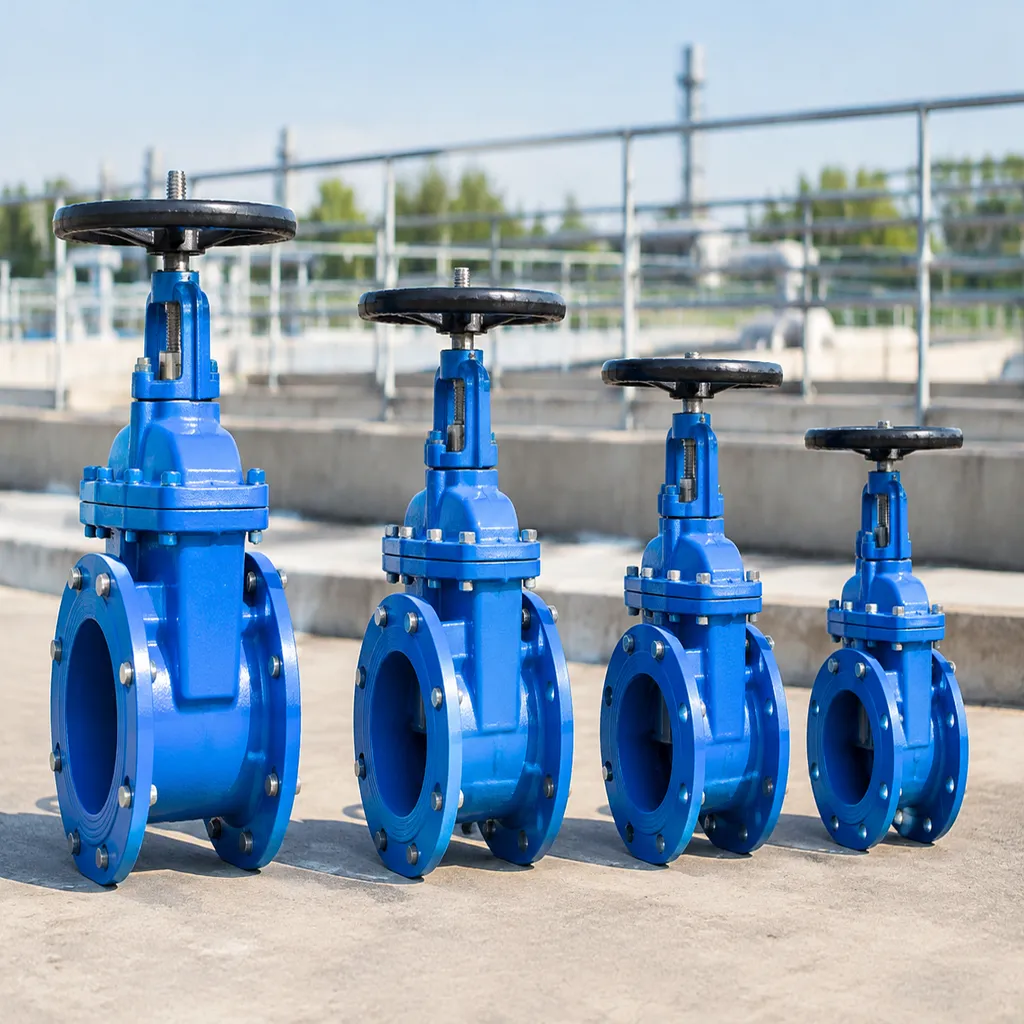
Handwheel-Operated Slide Gate Valve
The handwheel slide gate valve is our standard, most widely requested drive option for ground-level and platform-accessible installations.
-
- Direct-Drive Lead Screw: Uses a heavy-duty ACME screw to provide smooth linear motion with minimal physical effort.
- Bi-Directional Operation: Rotating the handwheel opens or closes the gate plate against gravity flow without jamming.
- Self-Locking Mechanism: The threaded screw prevents the gate plate from slipping or backing out under material weight.
- Low Maintenance: Fully enclosed bearing housings protect the drive screw from external dust and moisture.
Crank-Operated Configuration
For installations with tight side clearances where a standard handwheel diameter interferes with adjacent piping or structural steel, we supply a side-mounted crank drive.
-
- Compact Footprint: The offset crank handle reduces the overall side profile of the valve frame.
- Geared Assist: Integrated bevel or spur gears lower the manual torque required to cut through dense, packed powder columns.
- Removable Handle Option: Detachable cranks prevent unauthorized adjustments at manual transfer stations.
Chain-Wheel Operation for Elevated Lines
Installing valves beneath elevated hoppers, tall silos, or high discharge chutes makes direct handwheel access impractical. Our chain-wheel slide gate design solves this overhead challenge.
-
- Ground-Level Control: Heavy-duty guide chains drop down to operator height, allowing fast shut-off without ladders or scaffolding.
- Anti-Jump Chain Guides: Cast iron or fabricated steel guides prevent the hand chain from slipping off the pocket wheel during rapid pulling.
- Balanced Leverage: Sized sprocket ratios ensure smooth gate actuation under heavy heads of dry bulk material.
Body and Gate Plate Materials
Selecting the proper metallurgy prevents gate seizure, premature abrasive wear, and bulk contamination. We fabricate each manual slide gate valve from certified mill plate.
| Component | Standard Carbon Steel | 304 Stainless Steel | 316L Stainless Steel | Abrasion-Resistant Alloy |
|---|---|---|---|---|
| Housing / Frame | Q235B / A36 welded plate | Grade 304 sheet & plate | Grade 316L plate | Heavy carbon steel with Hardox liner |
| Slide Gate Plate | Precision-ground carbon steel | Precision-ground 304 SS | Ground 316L SS | Hardox 400 / 500 beveled plate |
| Drive Stem | 1045 Carbon Steel | 304 Stainless Steel | 316 Stainless Steel | High-tensile stainless steel |
| Best Used For | Non-abrasive dry powders, grains, pellets | Food products, light chemicals, outdoor rust resistance | Highly corrosive chemicals, washdown areas | Clinker, cement, sand, gravel, heavy ores |
As a premier slide gate valve manufacturer, we precision-machine every sliding plate edge with a clean bevel to cut directly through standing material columns.
Connection and Flange Options
To ensure a seamless fit into existing gravity-discharge systems without site modifications, our manual slide gate valve factory provides fully customizable inlet and outlet designs:
-
- Square and Rectangular Flanges: Industry-standard flanges designed to mate directly with conveyor chutes, bin outlets, and screw feeder throats.
- Round Flanges: Matched to standard piping diameters (ANSI 150#, DIN, or JIS standard bolt circles).
- Custom Bolt-Hole Patterns: Built to match non-standard customer drilling patterns to drop straight into existing process lines.
- Low-Profile Overall Height: Ultra-compact flange-to-flange dimensions to fit between tightly spaced equipment sections across all your valves and flow control systems.
Manual Slide Gate Valve Specifications
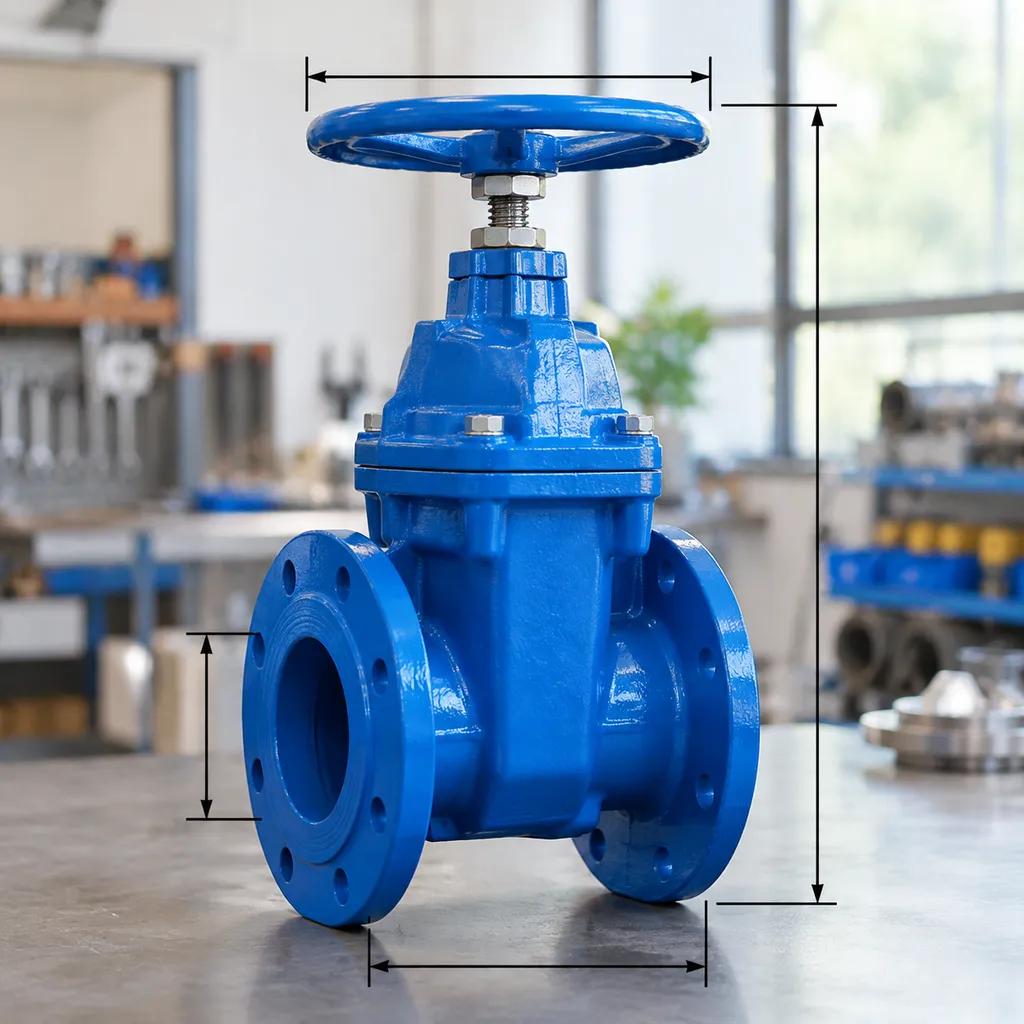
Technical Parameters and Dimensions Table
We offer standard square, rectangular, and round configurations. Below are standard baseline specifications for our core product line:
| Specification Parameter | Standard Range / Configuration |
|---|---|
| Nominal Port Sizes | 150 mm to 600 mm (6" to 24"); custom sizes up to 1200 mm |
| Body Housing Materials | Carbon steel (Q235B), SS304, SS316, or wear-resistant steel |
| Gate Plate (Blade) | Precision-ground SS304 / SS316 with beveled leading edge |
| Actuation Style | Handwheel with ACME lead screw, crank, or overhead chain-wheel |
| Sealing System | Adjustable PTFE gland packing; resilient polymer or metal seat |
| Operating Temperature | -20°C to +200°C (standard); high-temp trims up to 450°C |
| Working Pressure | Gravity discharge / low pressure differential (< 0.05 MPa) |
| Flange Patterns | ANSI/ASME B16.5, DIN PN10, square hopper pattern, or custom drill |
Whether you integrate our gates on single bin bottoms or combine them alongside diverter valves in complex dry bulk systems, our standardized dimensions guarantee dependable shut-off without material jamming.
Dimensional Drawings and 2D/3D CAD Files
Proper physical alignment prevents costly retrofits during plant assembly. Our manual slide gate valve factory supplies complete engineering documentation for every model we offer:
-
- 2D Approval Drawings (PDF/DWG): Detailed flange patterns, bolt-hole circles, overall height, and blade stroke clearances to confirm drop-in replacement.
- 3D CAD Models (STEP/IGES): Full solid assemblies ready to drop straight into your plant layout software, avoiding layout interference before fabrication begins.
- Custom Pattern Matching: If your existing silo flange uses non-standard pitch circles or unique spacing, our engineering team modifies our CNC laser-cutting programs to match your mating flange exactly.
Every manual slide gate valve for sale includes verified dimensional data to ensure fast, seamless equipment integration on site.
Manual Slide Gate Valve Applications
Hoppers and Storage Bins
Our valves act as an emergency or maintenance hopper shut-off gate directly below bin cones.
Prevents accidental downstream flooding during maintenance.
Allows operators to isolate downstream weigh feeders, screw conveyors, or rotary airlocks.
Bolted directly to square or round bin flanges with zero clearance issues.
Silos and Gravity Discharge Systems
For high-capacity silo storage, reliable cutoff is critical. We manufacture each silo discharge valve to handle the heavy head pressure of sitting material without binding or deflecting. They integrate seamlessly into complete storage and discharge equipment setups, providing positive isolation at the bottom cone of gravity discharge lines.
Chutes and Material Transfer Points
Material drop chutes take high impact from falling solids.
Beveled blade edges cleanly slice through stationary material columns to seal chutes.
In-line serviceability means our wear parts can be inspected without tearing down structural chute framing.
Dust-tight slide gate valve seals stop fugitive airborne dust at transfer transitions.
Cement and Concrete Batch Plants
In abrasive cement distribution systems, durability matters. Our heavy-duty gate designs are widely mounted directly beneath cement silos and batching hoppers. Fabricated from rugged carbon steel or wear-resistant liners, they easily resist continuous erosion from clinker, Portland cement, fly ash, and sand.
Mining and Mineral Processing Lines
Mineral handling environments demand thick-gauge steel. Our manual bulk material valve configurations feature reinforced guide tracks to stop jamming caused by jagged rocks, ores, lime, and crushed aggregate.
Grain, Feed, and Agricultural Processing
For food, feed, and seed lines, our manual slide gate valve factory supplies units in clean-finished 304 and 316 stainless steel:
Corrosion-resistant and food-contact safe.
Smooth interior transitions that eliminate pockets where grain or flour can spoil.
Tight perimeter seals that prevent pest ingress and product loss.
Chemical and Plastics Handling
Chemical powders and polymer pellets require zero cross-contamination and smooth discharge. We supply stainless steel slide gate valve units fitted with PTFE seals to resist chemical degradation while preventing pellet shearing or wedging during gate closure.
Common Bulk Materials Handled
| Industry Sector | Primary Materials Handled | Recommended Valve Configuration |
|---|---|---|
| Construction & Building | Portland cement, fly ash, dry sand, gypsum | Carbon steel body, hardened gate plate |
| Mining & Quarries | Crushed limestone, coal fines, silica, iron ore | Abrasion-resistant steel body, heavy-duty lead screw |
| Agriculture & Milling | Wheat, corn, soybeans, animal feed pellets | SS304/SS316 body, food-grade seals |
| Chemicals & Plastics | PVC resin, plastic pellets, soda ash, carbon black | Stainless steel plate, dust-tight polymer seals |
| Energy & Biomass | Wood pellets, bottom ash, pulverized coal | Heavy-duty steel body with high-temp packing |
Every manual slide gate valve for sale from our factory floor is dimensionally verified to match your plant's gravity-fed chutes, bins, and process lines.
How to Choose the Right Manual Slide Gate Valve
Selecting the correct manual slide gate valve prevents material jams, cross-contamination, and excessive seat wear. When you source directly from our manual slide gate valve factory, we evaluate five primary technical factors to configure the exact gate assembly your bulk handling process requires.
Confirm Material Characteristics and Flowability
Material behavior under gravity determines blade geometry, seal choice, and drive torque requirements.
Particle Size and Form: Fine powders (cement, fly ash, flour) require tight clearances and active packing seals to prevent dusting. Granules and pellets require beveled blade edges to shear through columns without pinching.
Abrasiveness: Highly abrasive materials like clinker, sand, or mineral ores need wear-resistant contact surfaces. Non-abrasive food products or plastic pellets operate reliably with standard stainless steel.
Moisture and Cohesiveness: Damp materials tend to cake in guide channels. We configure self-cleaning blade guides or deflector cones to keep the travel path clear.
Confirm Opening Size and Port Dimensions
Match the valve port to your upstream hopper discharge or transfer chute to eliminate bottlenecks and product bridging.
Port Profile: Choose square, rectangular, or round flow paths depending on existing mating flanges.
Process Role: For gravity shut-off feeding downstream volumetric equipment, an unobstructed full-bore opening ensures consistent throughput. A dust-tight slide gate valve is often installed directly above rotary airlock valves to serve as a reliable maintenance isolation barrier.
Select the Best Manual Operating Method
Select your drive configuration based on operator reach and valve location:
| Manual Drive Type | Best Installation Scenario | Operating Mechanism |
|---|---|---|
| Direct Handwheel | Chest-to-waist height locations with walk-around clearance | Lead screw and handwheel for fine stroke control |
| Side Crank Handle | Tight equipment racks with limited front clearance | Bevel gear or side-mounted handle drive |
| Chain-Wheel Drive | Overhead silos, bins, and elevated pipe racks | Loop chain dropping to floor level for remote access |
Select Body, Plate, and Sealing Materials
Our China manual slide gate valve factory manufactures valves using application-matched alloys and seat materials:
Valve Housing: Heavy-duty carbon steel for structural rigidity in standard dry solids; SS304 or SS316 for food-grade, sanitary, or corrosive environments.
Slide Gate Plate: Precision-ground stainless steel plates resist deflection under heavy static material heads. Hardened or beveled knife edges are used for dense, static columns.
Gland Packing & Edge Seals: Adjustable PTFE braided packing, silicone, or high-temp viton seals prevent external dusting and preserve line containment.
Verify Mounting Orientation and Space Limits
Check your physical clearances before finalizing valve dimensions:
Horizontal vs. Vertical: Standard gravity discharge gates operate horizontally. If installed at an incline or vertically, guide rails must be reinforced to prevent plate binding.
Blade Travel Envelope: Account for the fully retracted length of the blade and lead screw housing. If clearance around your hopper outlet is tight, we can modify the frame to an enclosed bonnet design or provide custom offset dimensions.
If you are evaluating a manual slide gate valve for sale for an upcoming retrofit, provide your flange dimensions, product density, and operating height so our engineering team can supply direct production drawings.
Manual Slide Gate Valve Compared with Other Valves
Manual vs. Pneumatic and Electric Slide Gates
The primary distinction between manual, pneumatic, and electric slide gates lies in operating frequency, automation requirements, and installation infrastructure:
| Feature | Manual Slide Gate Valve | Pneumatic Slide Gate Valve | Electric Actuated Slide Gate |
|---|---|---|---|
| Power Source | None (handwheel, crank, chain) | Compressed air (4–7 bar) | Electrical power (110V/220V/380V) |
| Actuation Speed | Controlled manual stroke | Fast (1–3 seconds) | Moderate (10–30 seconds) |
| Typical Duty | Low-frequency maintenance isolation | High-cycle batching & automation | Automated flow metering/positioning |
| Capital & Upkeep Cost | Lowest; zero wiring or air lines | Moderate; requires air line maintenance | Higher; electrical controls needed |
| Failsafe Position | Stays in position (fail-last) | Spring-return or fail-last options | Fail-last or battery-backup |
For bin bottoms, hopper maintenance shut-offs, and gravity chutes that open only during cleanout, inspection, or plant turnarounds, our hand operated slide gate eliminates the need for expensive air headers, wiring runs, and solenoid control cabinets.
Slide Gate Valve vs. Knife Gate Valve
While buyers often interchange the terms, standard slide gates and knife gates serve distinct processing roles:
-
- Manual Slide Gate Valve: Designed specifically as a bulk material handling valve for dry solids, pellets, aggregates, and powders under gravity flow. The rectangular or round sliding plate passes through side guides to clear dry product cleanly across a horizontal discharge port.
- Manual Knife Gate Valve: Engineered primarily for liquid slurries, pulp, wastewater, and viscous fluids operating under system pressure. The sharpened beveled blade cuts through fibers and presses into an elastomeric seat ring to create a liquid-tight seal.
Using a knife gate on dry, abrasive powders often leads to seat packing wear and particulate packing around the chest cavity. A heavy-duty slide gate valve avoids this by using perimeter packing glands and unobstructed slide channels designed for free-flowing solids.
Slide Gate Valve vs. Rotary and Butterfly Valves
Comparing a slide gate with butterfly and rotary valves highlights critical differences in material flow resistance:
-
- Slide Gate vs. Butterfly Valve: A butterfly valve places its disc directly in the center of the flow path, creating a major obstruction for dry powders. Fine particles hang up on the disc edge, causing bridging, uneven wear, and incomplete closure. A gravity discharge slide gate retracts completely out of the throat, providing a 100% full, unobstructed passage that allows bulk materials to drop unimpeded into downstream equipment such as a cement fly ash conveying system.
- Slide Gate vs. Rotary Valve: Rotary valves act as volumetric airlocks to continuously meter bulk materials while maintaining a pressure seal. They are not isolation shut-offs. We routinely supply our slide gates directly upstream of rotary feeders to act as emergency and maintenance shut-off gates whenever the rotary valve requires servicing.
China Manual Slide Gate Valve Factory
As a direct China manual slide gate valve factory, we eliminate middlemen to give you complete control over equipment specifications, build quality, and delivery schedules. Operating our own modern manufacturing workshops, we supply plant operators, engineering contractors, and equipment integrators worldwide with rugged valves designed specifically for dry bulk material isolation.
In-House Machining, Cutting, and Fabrication
Every manual slide gate valve starts on our factory floor, ensuring complete control over each manufacturing step:
-
- CNC Laser & Plasma Cutting: Heavy steel plates are cut cleanly to tight tolerances, ensuring distortion-free frames and perfectly square flanges.
- Precision Blade Machining: Gate blades are CNC-milled and beveled to prevent jamming against material flow and to maintain uniform seat contact.
- Rigid Structural Welding: Continuous welds on exterior ribs and bodies ensure the frame resists line deflection and pipe strain under full material loads.
- Lead Screw & Drive Machining: In-house thread-cutting guarantees smooth handwheel or chain-wheel operation without binding or premature thread stripping.
Factory-Direct Supply for OEM and Project Orders
Working directly with a dedicated manual slide gate valve factory allows you to adapt valve designs directly to your plant requirements:
-
- Custom Flange Matching: We drill square, rectangular, or round patterns to match your existing chutes, bins, or silo outlets without expensive transition hoppers.
- OEM Branding & Batch Supply: We provide contract manufacturing for bulk handling equipment brands, maintaining consistent finishes, labeling, and packaging.
- Engineered Project Orders: We support custom sizing, special paint systems, and wear-resistant liners tailored to demanding international industrial processing projects.
Strict Quality Control and Inspection Procedures
Our quality assurance protocols verify that every valve functions smoothly and seals reliably before it leaves our facility:
-
- Dimensional & Flange Verification: Bolt-hole centers, opening clearances, and overall face-to-face dimensions are 100% inspected against approved fabrication drawings.
- Manual Stroke Cycling: Every valve undergoes multi-cycle manual operation tests to verify smooth screw travel, zero blade binding, and positive open-to-close stops.
- Dust-Tight Seal Inspection: Blade-to-seat clearances and adjustable packing glands are checked to ensure reliable containment of fine powders and dust.
- Material Traceability: We verify chemical and mechanical properties for all raw carbon steel and stainless steel plates, providing mill test certificates upon request.
Installation, Operation, and Maintenance
Proper installation and routine upkeep ensure your manual slide gate valve delivers reliable shut-off performance and extended service life without unexpected line downtime.
Flange Alignment and Installation Guidelines
Correct alignment prevents mechanical binding of the slide gate plate and keeps the housing square under bulk material load:
-
- Verify Flow Direction: Mount the valve in line with material gravity flow. Ensure the beveled edge of the gate blade cuts cleanly through the incoming dry bulk material.
- Match Flange Patterns: Align mating counter-flanges precisely. Do not use mounting bolts to force misaligned pipe connections together, as pipe stress can warp the valve frame and jam the sliding blade.
- Install Gaskets Evenly: Place full-face, high-density gaskets between flanges to maintain a dust-tight slide gate valve connection. Tighten flange bolts in a standard crisscross pattern to uniform torque limits.
- Check Gate Clearance: Before filling the silo or hopper, cycle the valve open and closed manually to confirm the blade glides freely without internal rubbing or binding.
Safe Manual Operating Practices
Our hand operated slide gate valves are engineered for smooth mechanical action under gravity feed conditions:
-
- Operate Smoothly: Turn the handwheel, crank, or chain-wheel at a steady, consistent pace. The internal ACME drive screw provides high mechanical advantage without requiring excessive operator force.
- Avoid Cheater Bars: Never apply cheater pipes or excessive leverage to the handwheel slide gate valve handwheel. If the blade resists movement, inspect the internal chamber for material compaction or bridging rather than forcing the mechanism.
- Position Locking: When servicing downstream conveyors or feeders, lock the manual drive mechanism in the fully closed position to prevent accidental discharge of bulk solids.
Routine Maintenance and Wear Part Replacement
Minimal routine maintenance keeps an industrial slide gate valve operating at factory peak:
-
- Lead Screw Lubrication: Inspect and apply high-temperature grease to the ACME drive screw and thrust bearings every 30 to 90 days, depending on cycle frequency and ambient dust levels.
- Seal and Packing Adjustments: Check the adjustable packing gland around the blade entry point. Tighten packing bolts evenly to eliminate dust leakage without over-clamping the gate plate.
- Blade and Liner Inspection: Periodically check the sliding blade edge and internal side guides for abrasive wear.
When seals or packing wear down under harsh operational cycles, our factory supplies direct industrial spare parts and pre-cut blade seal kits to restore shut-off integrity without removing the entire valve body from your line.
Manual Slide Gate Valve for Sale
Sourcing a reliable manual slide gate valve for sale directly from our manufacturing floor eliminates distributor markups, shortens response times, and guarantees equipment built specifically for your dry bulk handling systems. Whether you need an individual handwheel gate for a bin maintenance shut-off or a full batch of gates for integration above truck loading spouts, our factory handles the entire process from fabrication to global shipping.
Step-by-Step Purchasing and Ordering Process
We keep our procurement process simple, transparent, and direct:
-
- Initial RFQ Submission: You send your operational parameters, dimensional requirements, or existing equipment drawings.
- Technical Review & Solution Matching: Our engineering team confirms the valve size, actuation type (handwheel, crank, or chain-wheel), and material compatibility.
- Formal Quotation & GA Drawings: We issue a competitive factory quote alongside a preliminary general arrangement (GA) drawing for approval.
- Order Confirmation & Production: Upon drawing sign-off and order placement, our shop floor begins raw material preparation, CNC machining, welding, and assembly.
- Quality Testing & Factory Acceptance: Every finished manual slide gate valve undergoes dimensional checks, gate alignment tests, and manual stroke verification.
- Export Packaging & Dispatch: Units are treated with protective anti-rust coatings, crated in robust export-grade plywood, and shipped via ocean freight, air freight, or multimodal logistics.
Details Needed for a Fast RFQ
To receive an accurate quote and drawing within 24 hours, provide our manual slide gate valve factory team with the following key application parameters:
-
- Inlet and Outlet Dimensions: Square, rectangular, or round port sizes, including required flange bolt-hole patterns.
- Handled Bulk Material: Name of the material, particle size, bulk density, moisture content, and operating temperature.
- Operating Mechanism: Standard handwheel, side crank, or chain-wheel drive (specify drop length for elevated installations).
- Materials of Construction: Carbon steel, 304 stainless steel, 316L stainless steel, or wear-resistant liners for the housing and slide plate.
- Installation Environment: Indoor, outdoor, corrosive, or high-dust environments.
- Target Quantity and Project Destination: Required production quantity and your nearest port or jobsite location.
Factory Pricing and Production Lead Times
Buying directly from our manual slide gate valve factory gives you predictable budgets and dependable delivery schedules:
-
- Transparent Factory-Direct Pricing: By manufacturing all valve bodies, sliding blades, and drive screws in-house, we eliminate third-party trading margins, providing competitive volume-based pricing for bulk handling projects.
- Standard Sizes Lead Time: Common square and round gravity-discharge gates (150 mm to 400 mm / 6" to 16") typically ship within 10 to 15 business days.
- Custom & Heavy-Duty Gates: Large-aperture valves, non-standard bolt patterns, and specialized stainless steel configurations ship within 3 to 4 weeks, depending on material availability and batch volume.
- Emergency Replacement Support: We maintain pre-cut stock components and raw plate inventories to expedite fast-turnaround replacements for unplanned plant downtime.
Frequently Asked Questions
What is a manual slide gate valve used for?
A manual slide gate valve is used to shut off, isolate, or meter the gravity flow of dry bulk materials, powders, pellets, and granules. Common installations include storage bin bottoms, chutes, conveyor discharge points, and silo outlets across processing plants.
Can a manual slide gate valve handle fine powders and abrasive granules?
Yes. Our factory builds each valve to handle specific bulk properties:
Fine Powders: Fitted with adjustable polymer packing seals and tight blade tolerances to stop dusting and product weeping.
Abrasive Granules: Built with heavy-duty beveled plates and optional wear-resistant liners to stop blade grooving and seat jamming.
In heavy-duty applications like dry material feeds for cement grinding equipment, hardened gate plates deliver consistent cutoff without binding.
What is the difference between a slide gate valve and a knife gate valve?
While both use a sliding plate, their design and target media differ:
| Feature | Manual Slide Gate Valve | Manual Knife Gate Valve |
|---|---|---|
| Primary Media | Dry bulk solids, powders, aggregates, grains | Slurries, liquids, pulp, viscous fluids |
| Flow Condition | Gravity discharge and low-pressure pneumatic lines | Pressurized piping systems |
| Passage Design | Full unobstructed throat to prevent bridging | Wedge or perimeter seal for pressure containment |
| Body Shape | Square, rectangular, or round flanges | Typically round wafer or lug patterns |
Is a manual slide gate valve suitable for silo and hopper outlets?
Yes. It serves as a dependable hopper shut-off gate to isolate material above downstream feeders, airlocks, or packaging lines. The flat sliding plate cuts through static material columns without jamming, allowing safe maintenance on downstream machinery without emptying the silo.
Which manual operating method should I choose for my setup?
The best drive depends on operator access and installation height:
Direct Handwheel: Best for waist-level, easily accessible installations.
Hand Crank: Ideal for smaller ports or tight equipment spacing where handwheel clearance is limited.
Chain-Wheel: Required for overhead bins, discharge chutes, and elevated pipe racks so workers can operate the gate safely from the plant floor.
Can our factory customize the bolt-hole pattern to match non-standard flanges?
Yes. As an experienced China manual slide gate valve factory, we routinely fabricate round, square, and rectangular flanges to match non-standard mating patterns. Send us your pitch circle diameter (PCD), hole sizes, and outer dimensions, and we will match your existing bolt pattern exactly to avoid field modifications.
What materials are available for the valve body and sliding plate?
We select materials based on product corrosiveness, temperature, and abrasiveness:
Carbon Steel (Q235/A36): Economical baseline for non-corrosive aggregates, dry cement, and minerals.
Stainless Steel (SS304/SS316): Corrosion-resistant build for food grains, chemical processing, and humid environments.
Wear Alloys: Hardened contact surfaces for high-abrasion ores and clinker.
How do I request product drawings and CAD models before ordering?
Simply provide your target port size, flange design, and actuation style to our engineering team. Our manual slide gate valve factory provides detailed 2D outline drawings (PDF/DWG) and 3D step models to confirm bolt patterns, overall height, and stroke clearance before fabrication starts.
Can I purchase replacement gate plates and seal kits?
Yes. We keep standardized replacement parts in stock for our valves, including:
Precision-machined slide gate plates
Adjustable packing glands and seal strips (PTFE, silicone, felt, or polyurethane)
ACME threaded drive screws and bronze drive nuts
What details are required to get an accurate factory quotation?
To browse our manual slide gate valve for sale and get a fast, firm quote, share these project details:
Material handled (bulk density, particle size, moisture level, and temperature)
Inlet and outlet size (square, rectangular, or round dimensions)
Flange pattern (standard PN/ANSI or custom bolt-hole layout)
Preferred material of construction (carbon steel or stainless steel)
Operating mechanism (handwheel, crank, or overhead chain-wheel)
Order quantity and delivery timeline