Formula details
Product Details
Overview
Product Specifications and Configuration
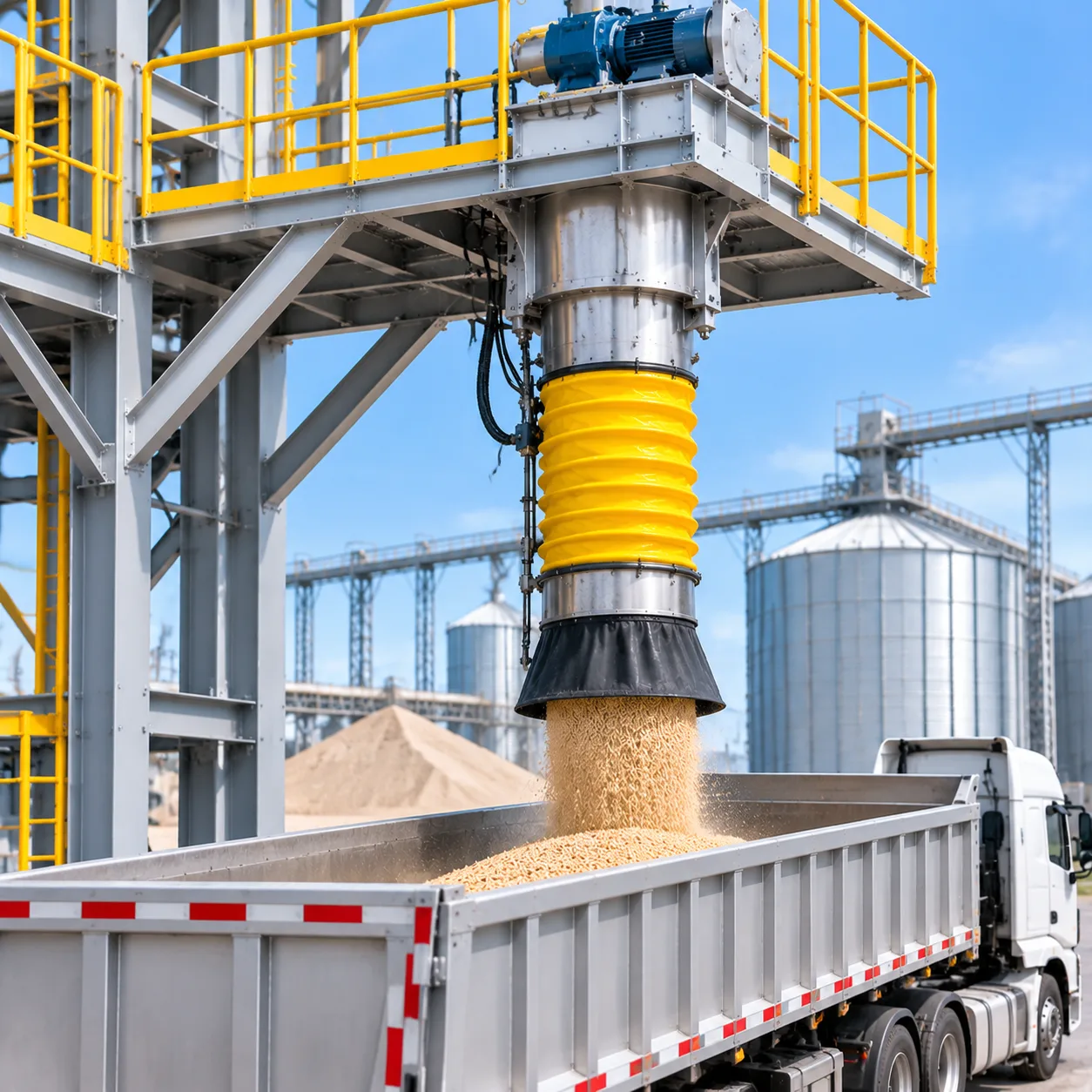
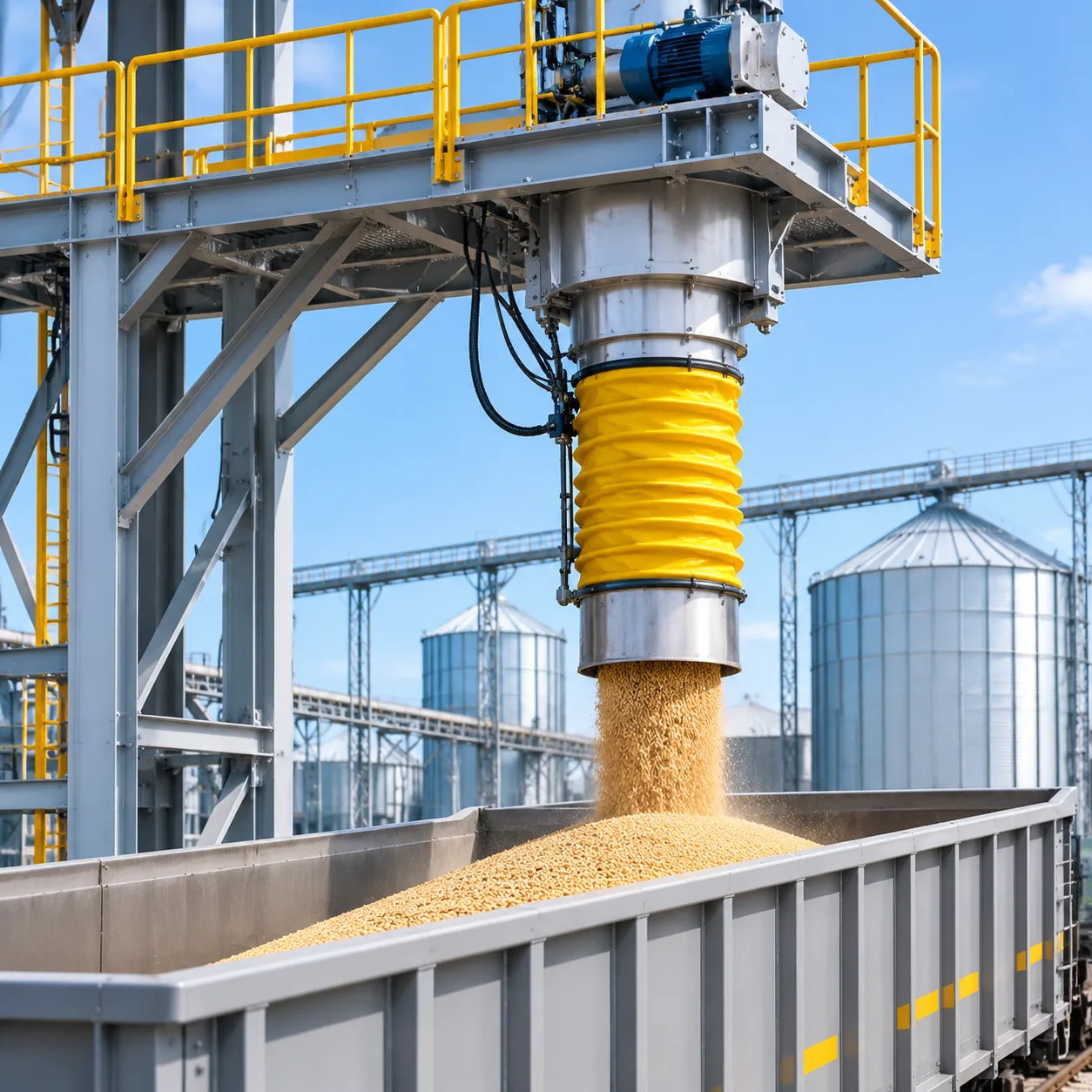
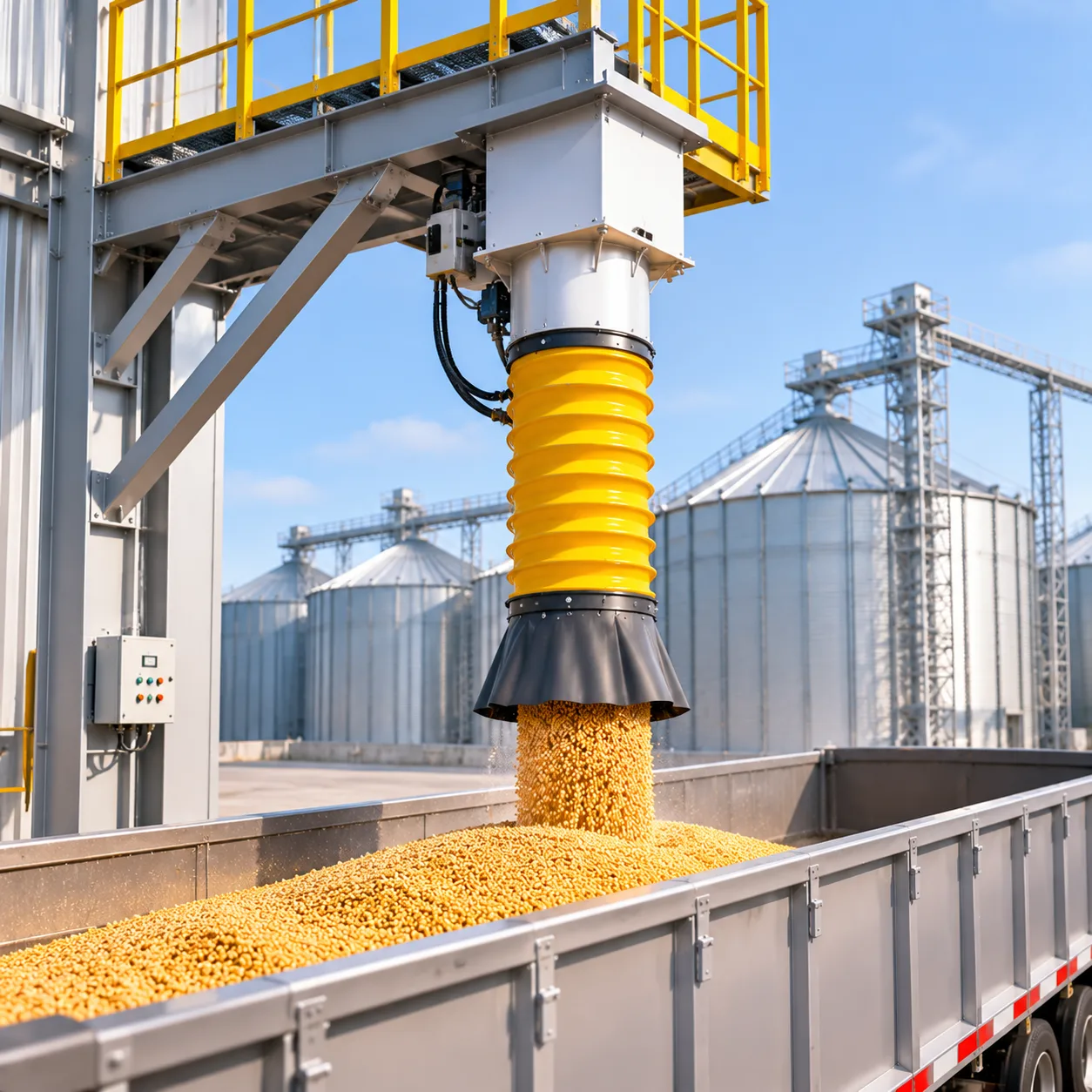
DARKO grain loading spouts are engineered for the efficient, controlled transfer of dry bulk agricultural commodities. These systems are designed to bridge the gap between upstream storage or conveying equipment and receiving vessels, ensuring material integrity and environmental compliance.
Technical Specifications Overview
| Feature | Standard Configuration |
|---|---|
| Compatible Materials | Wheat, corn, barley, rice, soybeans, feed, pellets |
| Throughput Range | Up to 1,500+ tons per hour (application-dependent) |
| Extension Range | 3 ft to 50+ ft (customizable reach) |
| Actuation Options | Manual winch, electric motorized, or pneumatic |
| Construction Materials | Carbon steel, 304/316 stainless steel, abrasion-resistant liners |
| Dust Control | Integrated aspiration port or double-bellows design |
| Power Requirements | 230V/460V, 3-Phase, 60Hz (standard industrial) |
Key Configuration Options
-
- Construction & Wear Protection: Units are available with specialized wear liners (such as AR steel or ceramic) for high-abrasion applications. Stainless steel contact parts are utilized for food-grade or corrosive environments.
- Dust Management: Systems can be configured with a dedicated dust-extraction outlet for connection to central plant dust collectors. Double-bellows configurations utilize an inner material chute and an outer dust-recovery sleeve to provide a dust-free loading experience.
- Customization: DARKO spouts offer tailored inlet adapters to match existing silo discharges or conveyor outlets, along with custom-designed discharge cones or deflectors to optimize material flow into specific vehicle hatches.
- Safety & Control: All models feature integrated limit switches for travel containment and can be supplied with local control pendants or fully automated PLC integration for site-wide synchronization.
How a Grain Loading Spout Works
A grain loading spout provides a controlled, enclosed path that moves dry bulk grain directly from storage or upstream transfer equipment into receiving vehicles or vessels. By isolating the falling product stream and extracting displaced air, it eliminates spillage and keeps combustible dust contained throughout the transfer process.
Positioning over the Loading Point
The transfer cycle begins by aligning and extending the spout over the target vehicle or vessel:
-
- Motorized Extension: The operator activates the drive system to lower the motorized telescopic spout down toward the loading hatch.
- Sealing the Opening: For enclosed trucks and railcars, the discharge cone seats firmly into the vehicle hatch, creating a tight mechanical seal. When handling open trucks or flatbed trailers, dedicated truck loading spouts utilize flexible rubber or canvas skirts that rest directly on the product pile to contain fugitive particles.
- Travel Control: Heavy-duty lifting cables and pulleys control the vertical descent, keeping the unit level and steady even in windy outdoor terminal conditions.
Material Flow from Silo or Conveyor
Once the spout is correctly seated, slide gates or feed valves open beneath the silo, hopper, or surge bin:
-
- Central Column Loading: Grain drops via gravity through the center of the loading chute.
- Internal Guiding Cones: Heavy-duty internal cones or inner tubes direct the grain downward in a concentrated, high-density stream. This controlled descent reduces grain free-fall velocity, preventing kernel cracking, stress fractures, and material degradation.
- Direct Discharge: The grain enters the center of the receiving compartment smoothly, building an even pile without bridging or blockages.
Dust Capture and Return-Air Handling
Rapidly entering grain displaces an equal volume of air inside the receiving vehicle. In an open drop, this air blows airborne dust into the surrounding facility. A dust-controlled loading spout manages this displacement:
-
- Dual-Path Design: Material falls straight down the inner cone assembly, while displaced air and fine dust are drawn upward through the outer annular chamber (between the cones and the outer telescopic bellows).
- Negative Pressure Extraction: A dedicated dust collector or an integrated filtration unit pulls continuous negative pressure on this outer chamber, capturing airborne fines instantly at the point of discharge.
- Product Reclaim: Collected dust can be pulse-cleaned back into the active material stream, preventing product loss while keeping operating areas clean and compliant with combustible dust standards.
Controls, Sensors, and System Interlocks
To prevent overfills and equipment damage, DARKO grain loading spout assemblies use automated feedback loops:
| Component / Feature | Function in Operation |
|---|---|
| Level Detection Sensors | Tilt switches, capacitance probes, or paddle sensors detect the rising grain pile as the cargo bay fills. |
| Auto-Raise Functionality | When product touches the level sensor, the motorized hoist automatically retracts the spout upward in small increments, maintaining an effective dust seal without backing up the grain stream. |
| Slack Cable Switches | Detects slack if the spout contacts an obstacle during extension, instantly halting the drive motor to protect cables and telescoping sections. |
| Full Retract Limits | Shuts off the hoist when the spout reaches its fully retracted parking position clear of traffic lanes. |
| Upstream Interlocks | Connects to upstream conveyor drives and shut-off slide gates, ensuring material feed stops immediately if the spout encounters a fault or reaches maximum fill capacity. |
Core Grain Loading Spout Components
Every DARKO grain loading spout is built around heavy-duty structural, mechanical, and electrical assemblies designed to deliver high-capacity transfer while containing fugitive dust.
| Component Group | Standard Materials / Options | Primary Function |
|---|---|---|
| Inlet Head & Collar | Carbon steel, 304/316 stainless steel | Connects to upstream silos, conveyors, or feed gates; directs material down the center |
| Material Path | Stacking cones, telescopic steel tubes, heavy-duty fabric sleeves | Guides falling grain while isolating the material stream from displaced air |
| Outer Dust Bellows | Neoprene-coated polyester, PVC, hypalon, silicone | Encloses the inner chute to create an annular vacuum chamber that traps airborne particulate |
| Hoist Mechanism | Multi-cable winches, heavy-duty pulleys, load-rated aircraft cable | Extends and retracts the telescopic sections smoothly during loading cycles |
| Drive System | TEFC or explosion-proof gear motors, brake assemblies | Delivers positive mechanical lifting power with built-in fail-safe hold |
| Discharge End | Open-discharge skirts, conical closure plugs, tilt sensors | Interfaces with truck hatches, railcar ports, or open flatbeds to seal against dust leakage |
Outer Casing and Telescopic Sections
The outer enclosure shields the inner transfer core and provides positive dust containment. On our motorized telescopic spout designs, we use heavy-duty, weather-resistant fabric bellows supported by internal steel rings, or interlocking metallic telescoping cylinders for abrasive environments. This dual-chamber approach isolates the grain stream in the center while drawing displaced air through the outer perimeter.
Material-Guiding Cones, Sleeves, and Chutes
The inner material-handling column absorbs bulk impact and controls particle velocity:
Stacking Cones: Overlapping, conical cups made from carbon steel, abrasion-resistant alloys (AR400), or food-grade polyurethane.
Continuous Sleeves: Heavy-duty fabric or reinforced polymer liners tailored for low degradation of fragile grains such as malt, barley, or edible beans.
Rigid Telescoping Tubes: Heavy-duty loading chute sections engineered for high-throughput ocean vessels and barge terminals.
Dust Collection and Return-Air Connections
Each spout features an integrated exhaust plenum on the top head assembly. This port connects directly to your plant's central baghouse or an integrated, spout-mounted compact dust collector. Displaced air and dust pull upward through the annular void between the inner cones and the outer bellow, eliminating positive pressure build-up at the discharge port.
Lifting Mechanism, Drive System, and Controls
Extension and retraction are managed by a multi-cable hoist system powered by a heavy-duty electric gear motor with an integrated electromagnetic brake. Our factory-wired control panels support:
Local Controls: NEMA 4/4X or explosion-proof pendant stations and wireless radio remotes.
Integrated Safety Features: Rotary upper and lower limit switches, slack-cable sensors to stop travel if the spout meets an obstruction, and tilt-level probes that trigger automatic spout retraction as the grain pile rises.
Inlet Interfaces and Site Protection Options
-
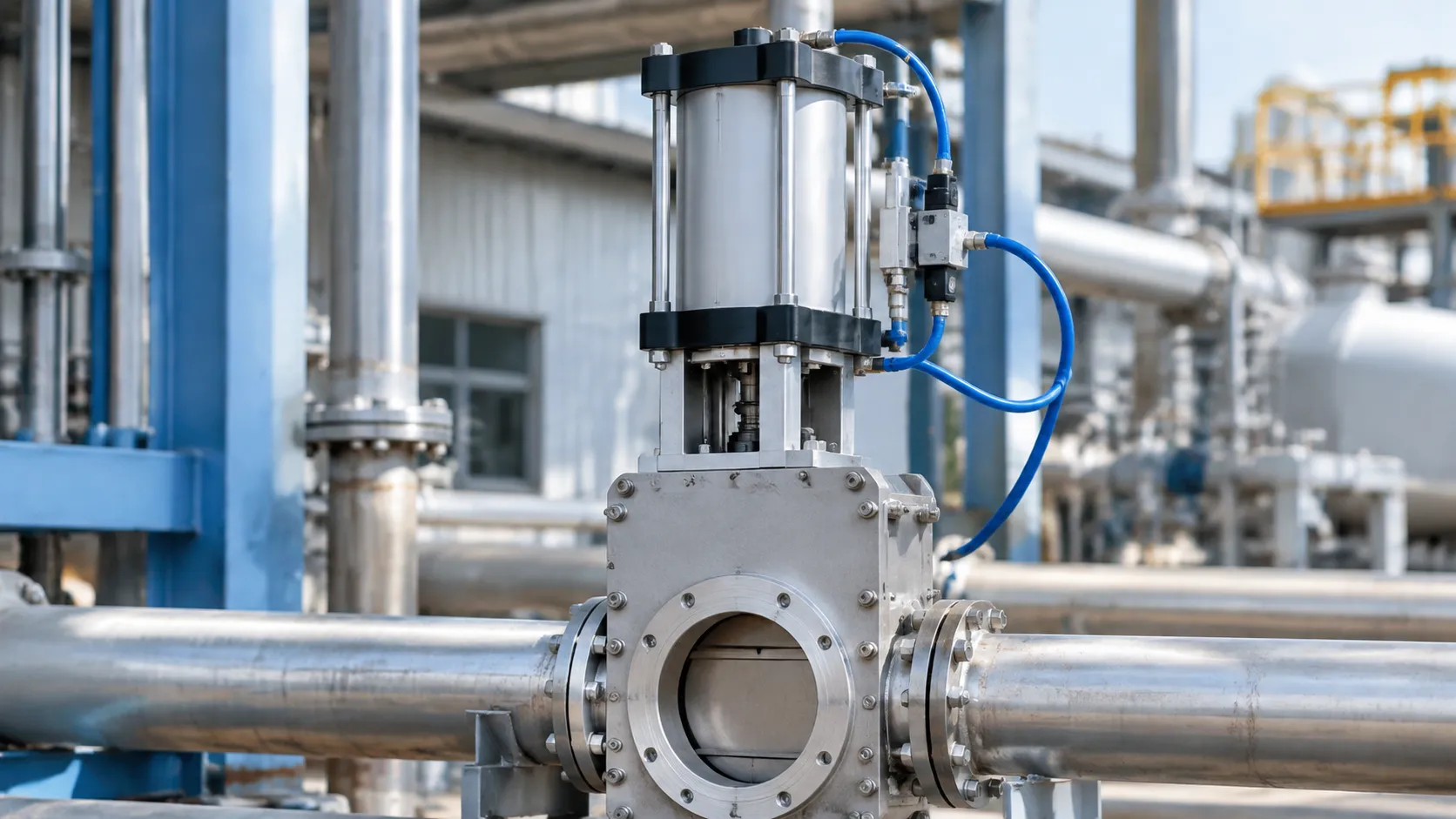
- Inlet Connections: Round or square flanged transitions mate directly with upstream hoppers and shut-off gates. When planning your upper discharge interface, check our slide gate valve dimensions and specifications guide to verify matching bolt patterns and clear throat diameters.
- Wear Liners: Bolt-in ceramic, UHMW-PE, or Hardox liners installed at high-impact drop zones.
- Weather and Access Provisions: Outward-facing weather hoods, service hatches on the upper head, and cable-inspection access panels to simplify routine maintenance without dismounting the entire spout.
Grain Loading Spout Design Options
Core Loading Configurations
| Configuration Type | Primary Application | Key Design Characteristics | Ideal Material Stream |
|---|---|---|---|
| Open-Vehicle Spout | Flatbed trucks, open-top rail wagons, open barges | Outfitted with an external capture skirt to contain fugitive dust during free-fall discharge | Whole grains, corn, soybeans, non-fragile seeds |
| Enclosed-Vehicle Spout | Covered hopper cars, enclosed bulk trucks | Features a sealing cone or hatch-mating adapter to prevent blowback during high-speed fills | Grains, animal feed ingredients, processed meals |
| Marine / Barge Loading | River barges, coasters, deep-sea bulk vessels | Extended vertical travel, heavy-duty suspension, optional 3D positioners and discharge trimmers | Export wheat, bulk corn, barley, oilseeds |
| Combination Spout | Multi-purpose loading bays (open & closed) | Interchangeable or convertible discharge ends with dual-mode dust control | Commercial grain elevators with mixed transport fleets |
Telescopic and Motorized Drive Options
Varying transport heights and site clearances require reliable vertical travel. Our telescopic loading spouts feature multi-tier nesting cones enclosed in durable, dust-tight outer bellows. This setup allows the discharge end to lower directly into the vehicle bed, tracking the material pile upward as it fills.
A motorized drive system manages smooth vertical movement:
Drive Mechanism: Heavy-duty electric gear motors paired with precision hoist cables or lifting straps.
Smart Level Sensing: Tilt switches, rotary paddles, or ultrasonic sensors that automate continuous spout retraction as the grain pile builds.
Travel Flexibility: Extended lengths engineered to clear vehicle sidewalls while collapsing compactly under overhead feed conveyors and silo discharge gates.
Application-Specific Setups
-
- Truck Loading: Fast-cycle units designed for rapid turnaround in high-traffic bays. Dual-cable drives provide stable positioning over standard grain trailers.
- Railcar Loading: High-capacity railcar loading spout models built to handle multiple hatches sequentially, accommodating the substantial drop heights of standard covered hopper wagons.
- Barge and Marine Berths: Heavy-duty, high-throughput discharge systems engineered to withstand dockside weather exposure, structural vibrations, and extended continuous loading cycles.
- Custom Drop Chutes: Tailored chute geometry, wear-resistant liner plates (such as AR steel or UHMW-PE), and specialized inlet transitions built to interface directly with existing bucket elevators, drag conveyors, or slide gates.
Dust-Control Performance Factors
A dust-controlled grain loading chute relies on balanced airflow and robust physical containment. Actual containment efficiency depends on several operational variables:
Airflow Balance: Sufficient negative pressure from an integrated or central dust collector to capture displaced air without drawing out valuable grain product.
Material Properties: Grain moisture levels, fine content percentage, fall velocity, and overall bulk density.
Discharge Management: Keeping the spout discharge end submerged or firmly seated against the receiving opening to eliminate free-fall drop energy.
System Ducting: Appropriately sized exhaust ports and flexible duct connections that maintain proper suction velocity throughout the complete extension range.
Grains and Bulk Materials Handled by Our Grain Loading Spout
Common Agricultural Grains
Our bulk grain loading chute designs reliably discharge high volumes of whole and cracked grains directly from silos or bucket elevators into trucks, railcars, and vessels:
Wheat and Durum: Free-flowing, moderate dust generation requiring balanced negative pressure.
Corn (Maize): High impact and abrasive; handled using heavy-duty inner cones or wear liners.
Soybeans: Fragile seed coats; loading systems can be configured to minimize product breakage.
Barley and Oats: Lower bulk density and fibrous hulls, requiring optimized air velocity.
Rice (Paddy and Milled): Requires smooth material paths to avoid grain fracturing and hull wear.
Processed Products and Compatible Bulk Materials
Beyond whole crops, our dry bulk loading system configurations adapt easily to downstream agricultural products:
Milled Products: Flour, cornmeal, bran, and middlings.
Feed Ingredients: Soybean meal, distillers dried grains (DDGS), and mixed mash.
Pelletized Goods: Animal feed pellets, wood pellets, and alfalfa pellets.
Seeds: Sunflower seeds, canola, pulse crops, and specialty planting seeds.
Key Material Selection Factors
To match the right spout configuration to your facility, we evaluate how your material behaves under real operating conditions:
| Material Factor | Impact on Spout Specification | Recommended Configuration |
|---|---|---|
| Abrasiveness | High friction from whole grains causes wall thinning | Hardox, AR400, or polyurethane wear cones |
| Dustiness | Fine particulates generate high fugitive dust emissions | Integrated dust skirt, exhaust plenum, and filter connection |
| Flowability | Cohesive meals or sticky feeds bridge in tight drops | Steep cone angles and oversized discharge diameter |
| Fragility | Impact drops cause bean splitting or kernel cracking | Cascading inner cones to limit free-fall velocity |
| Moisture Content | Damp grain builds up on contact surfaces | Food-grade or non-stick stainless steel contact surfaces |
| Target Throughput | Undersized chutes choke when receiving from belt conveyors | Matched spout diameter rated from 100 to 1,500+ tph |
Grain Loading Spout Applications and Industries
DARKO grain loading spouts are engineered to support high-volume material handling across diverse sectors. Our equipment ensures reliable, efficient flow for facilities ranging from regional collection points to international export hubs. By utilizing our bulk loading equipment, operators can streamline their discharge processes while minimizing waste and dust emissions.
Primary Industry Applications
-
- Grain Elevators and Terminals: Facilitating high-speed transfer of wheat, corn, and barley from storage silos to transport vessels.
- Farms and Commercial Storage: Providing scalable solutions for loading temporary storage units and long-term grain bins.
- Feed and Flour Mills: Handling processed grains and additives with precision to maintain material integrity and facility cleanliness.
- Ports and Barge-Loading Terminals: Managing the complex, high-capacity loading requirements of marine vessels with extended-reach telescopic technology.
- Rail and Truck Loading Stations: Optimizing rapid-cycle loading for domestic logistics and distribution chains.
- Dry Bulk Processing Plants: Supporting the food and agricultural sectors where controlled, dust-free transfer is a requirement for safety and quality standards.
These applications rely on durable, industry-proven designs that stand up to the rigors of continuous agricultural and food-grade operations. Our systems provide the necessary versatility to integrate seamlessly into existing bulk loading dispatch systems, ensuring that each link in the supply chain remains productive and efficient.
Benefits of a DARKO Grain Loading Spout
Key Operational Advantages
-
- Pinpoint Material Placement: Our discharge cones and inner sleeve assemblies guide free-flowing grain directly into the vehicle hatch, preventing off-center loading and eliminating cross-breeze product loss.
- Active Dust Suppression: Built-in exhaust plenums capture airborne particulates right at the discharge point. Connecting the unit to external dust collection equipment maintains negative pressure, keeping your loadout bays clean and minimizing combustible dust risks.
- Adaptable Telescopic Travel: Motorized vertical travel accommodates variable deck heights across standard flatbeds, grain hoppers, and railcars. The motorized telescopic spout automatically tracks material pile levels using integrated tilt or paddle level sensors to prevent choke feeding.
- Seamless Plant Integration: Flanged inlets bolt directly beneath existing storage silos, surge bins, or upstream conveyors. We also match mechanical and electrical tie-ins to interface directly with your plant PLC and shut-off valves, including upstream flow-control equipment like our slide gate valves.
- Built for High-Throughput Uptime: Replaceable abrasive-resistant (AR) steel cones, heavy-duty outer sleeves, and external hoist cables resist wear from continuous grain impact while keeping mechanical drives out of the corrosive, dusty material path.
Performance and Feature Overview
| Operational Feature | DARKO Loading Spout Advantage | Field Benefit |
|---|---|---|
| Material Containment | Enclosed telescopic chute design | Cuts grain spillage and eliminates product shrinkage |
| Dust Evacuation | Integrated annular exhaust ducting | Cleaner terminal air and reduced housekeeping labor |
| Height Flexibility | Extended-to-retracted stroke ratios up to 4:1 | Accommodates mixed fleets with single-operator controls |
| Wear Engineering | High-durability liner and sleeve options | Extended operating life between routine maintenance cycles |
| Tailored Build | Configurable diameters, strokes, and controls | Exact fit for existing headroom and footprint limits |
By matching spout dimensions and liner materials to your specific throughput rates, a DARKO telescopic grain loading spout keeps your dry bulk loading system running cleanly, efficiently, and at full design capacity.
How to Select a Grain Loading Spout

Selecting the correct grain loading spout requires matching your operational throughput, site geometry, and dust-control standards with the mechanical capabilities of the chute. Choosing the wrong configuration can lead to choke feeding, fugitive emissions, or excessive downtime.
We assess these critical engineering parameters when sizing and customizing a DARKO loading system:
| Selection Parameter | Key Considerations | Impact on Spout Specification |
|---|---|---|
| Material Characteristics | Bulk density, moisture, abrasiveness, particle fragility | Wear liners (AR400/ceramic), inner cone materials, chute angles |
| Throughput & Feed Rate | Peak metric tons per hour (MTPH), surge capacity | Internal cone diameter, inlet sizing, flow velocity management |
| Receiving Vessel | Open trucks, enclosed railcars, river barges, flat storage | Discharge hatch type, travel stroke, positioning requirements |
| Travel Range & Height | Fully retracted height vs. fully extended reach | Cable winch setup, outer sleeve segments, overhead clearance |
| Dust Mitigation | Environmental codes, indoor vs. outdoor terminal layout | Integrated dust extraction, exhaust CFM sizing, level sensors |
| Actuation & Controls | Manual hand winch, motorized drive, fully automated PLC | Motorized drives, tilt sensors, slack cable switches, control panels |
1. Material Properties and Upstream Feed Conditions
Particle size, flowability, and abrasiveness determine your spout’s internal construction. Free-flowing grains like wheat and corn require robust inner cones to handle continuous abrasion, while fragile grains need controlled drop velocities to avoid kernel cracking.
Upstream flow consistency is equally vital. If grain arrives via a high-capacity belt conveyor, surge hopper, or bucket elevator, the spout inlet must handle the peak surge capacity without backing up. Integrating upstream flow regulation using a slide gate valve guarantees smooth shut-off and prevents overfilling during vessel indexing.
2. Receiving Equipment and Stroke Clearance
Your receiving setup directly dictates the spout travel stroke and discharge design:
Truck loading spout for grain: Needs quick retraction to clear truck sideboards and open trailers, paired with a motorized telescopic spout for rapid turnarounds.
Railcar grain loading spout: Demands precise hatch sealing cones and level sensors to fill enclosed compartments without spillage.
Barge loading spout: Requires long telescopic reach, high volumetric throughput, and heavy-duty slewing or traversing capabilities to accommodate river fluctuations and large open holds.
Always verify your available overhead clearance, fully retracted height, and maximum extended depth to ensure the lower discharge nozzle rests directly above the pile or seals tightly onto the hatch.
3. Dust Capture and Environmental Compliance
Dry grain handling generates fine, combustible dust during free-fall loading. Selecting an effective dust-controlled loading spout depends on whether you utilize a centralized plant aspiration system or an integrated, self-contained fan and filter unit.
When planning your filtration capacity, calculating the required exhaust airflow (CFM) involves factoring in displaced vessel air and induced air from falling bulk solids. Evaluating your site requirements—such as choosing a baghouse vs cartridge dust collector—ensures your spout maintains negative pressure within the outer sleeve and captures airborne fines at the transfer point.
4. Utilities, Automation, and Structural Mounting
Verify your site infrastructure before finalizing equipment selection:
Structural support: Ensure the mounting flange, gantry, or boom structure can withstand the combined static and dynamic load of the extended spout, accumulated material, and wind exposure.
Power and utilities: Confirm available electrical voltage for motorized hoists, alongside dry compressed air supply if operating pneumatic shut-off cones or pulse-jet filter modules.
Control integration: For high-throughput terminals, spouts should interface directly with central PLC/SCADA systems using continuous level probes, motor thermal protection, and safety interlocks.
5. Operating Environment and Maintenance Access
Outdoor port and terminal environments demand weather-resistant construction. Specify UV-stabilized outer bellows, marine-grade protective coatings, and NEMA 4/4X or ATEX/IECEx-rated electrical enclosures to withstand rain, wind, and corrosive conditions.
Finally, ensure adequate access platforms and inspection doors are factored into your installation. Easy access to internal wear cones, lifting cables, pulleys, and limit switches reduces routine maintenance time and keeps your bulk grain loading chute running at peak efficiency.
Grain Loading Spout Installation and System Integration
Successful integration of a grain loading spout depends on meticulous planning of structural clearances, material feed points, and environmental controls. Prior to installation, ensure the support structure can accommodate the dynamic loads of the unit, especially during full extension and retraction cycles.
Key Integration Requirements
| Integration Aspect | Primary Considerations |
|---|---|
| Structural | Headroom, mounting flange stability, and vibration dampening |
| Material Feed | Alignment with upstream industrial pneumatic slide gate valves |
| Dust Management | Ducting diameter, negative pressure capacity, and filter connection |
| Control Interface | Limit switch wiring, PLC integration, and emergency stop circuits |
Site and System Checklist
-
- Upstream Interface: Confirm the spout inlet aligns perfectly with the discharge of existing conveyors or silos to prevent bottlenecking.
- Dimensional Accuracy: Verify vehicle or vessel loading height ranges to match the telescopic travel specs.
- Utility Planning: Route power and control cabling away from high-traffic zones to prevent damage during operation.
- Safety Interlocks: Integrate system sensors with plant safety controllers to ensure material flow only engages when the spout is fully lowered.
Commissioning Best Practices
Post-installation, perform a full-system audit before full-scale operation. Verify that the motorized extension functions smoothly without binding, and conduct a "dry run" to test the integrity of dust collection seals. Ensure that all material guiding cones are properly aligned to minimize spillage and maximize the efficiency of your dry bulk loading system. Finally, confirm that all emergency stops and safety limit switches trigger an immediate halt to both material feed and spout movement.
Grain Loading Spout Operation, Maintenance, and Safety
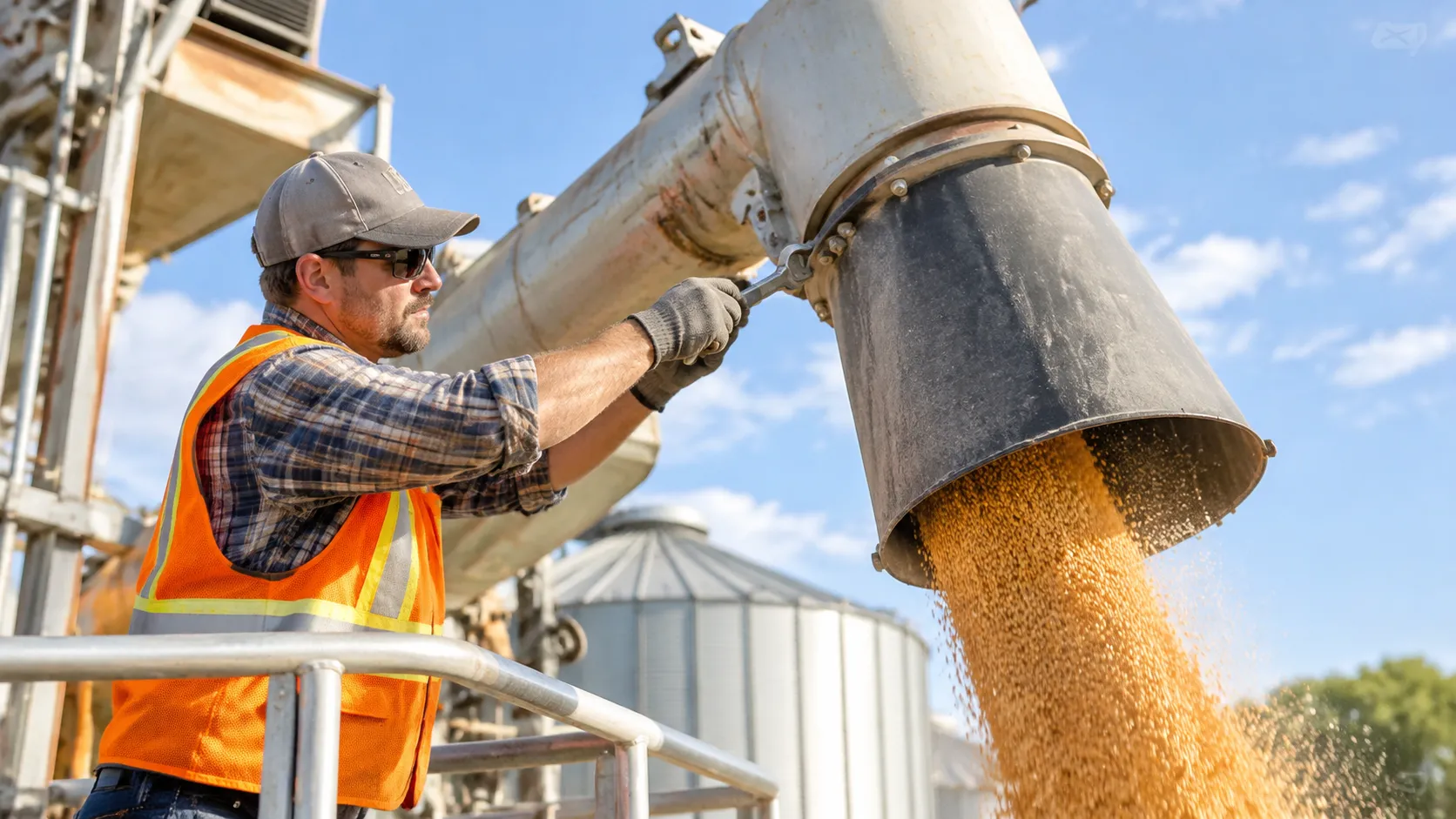
Safe and reliable bulk loading depends on routine operational discipline and proactive maintenance. We design every DARKO grain loading spout for straightforward handling, but maintaining system uptime and dust containment requires structured daily procedures and scheduled inspections.
Pre-Operation Checks and Safe Positioning
Before initiating any loading cycle, operators must run through essential baseline checks:
-
- Clearance and Path: Verify that the vertical travel path of the telescopic grain loading spout is free of physical obstructions, build-up, and personnel.
- Physical Connections: Inspect mounting flanges, flexible sleeves, and dust aspiration duct joints to ensure secure attachment.
- Correct Spout Placement: Lower the discharge cone into the vehicle hatch or pile target before initiating material transfer. Setting the discharge height correctly minimizes free-fall distance, keeping dust suppression systems working at peak efficiency.
- Feed Coordination: Confirm that upstream feed gates—such as automated slide gate valves—remain fully closed until the spout is locked into position and negative dust collection pressure is active.
Routine Maintenance and Inspection Checklist
Regular wear is normal when handling abrasive, high-velocity grains like corn, wheat, and soybeans. Keep your dry bulk loading system running efficiently by inspecting key sub-assemblies on a scheduled basis:
| Component | Inspection Focus | Action Required |
|---|---|---|
| Inner Cones & Chutes | High-velocity grain abrasion, thinning walls, cracks | Rotate or replace modular wear cones before structural breach |
| Outer Fabric Sleeves | Tears, punctures, loose clamps, dust leaks | Patch minor abrasions; replace degraded sleeves immediately |
| Lifting Cables / Straps | Fraying, kinking, tension balance, winch drum alignment | Re-tension or replace hoist ropes matching DARKO load ratings |
| Drive & Limit Switches | Slack-cable sensors, upper/lower travel limit accuracy | Test safety interlocks monthly; lubricate drive chain and bearings |
| Dust Extraction Ducting | Material bridging, negative pressure loss, seal degradation | Clear dust lines; replace worn gaskets to maintain seal integrity |
Cleaning and Material Changeovers
Accumulated grain dust and residue create pest risks, fire hazards, and batch cross-contamination.
-
- Clean the inner discharge cone and lower sealing skirt regularly, particularly during weather shifts when moisture can cause dust crusting.
- Purge any residual grains trapped along the lower transition cone between material changeovers (e.g., transitioning from feed grains to food-grade wheat).
- Keep the motor housing, limit switches, and cable reels free from heavy particulate buildup to prevent mechanical binding and overheating.
Isolation and Service Safety Protocols
Never enter the operating envelope of a motorized telescopic spout while the system is energized or primed with material.
-
- Lockout/Tagout (LOTO): Fully disconnect and lock out main electrical power and pneumatic supplies to the spout winch and upstream conveyors before conducting any inspection, liner replacement, or sleeve adjustment.
- Material Isolation: Mechanically lock closed upstream bin gates, hoppers, or diverters to prevent unexpected product discharge into the chute during maintenance.
- Procedural Compliance: Always follow the specific torque specs, cable rigging procedures, and replacement schedules detailed in your DARKO technical documentation alongside your facility's safety regulations.
DARKO Engineering Support for Grain Loading Spout Systems
Technical Assessment and Application Details
To recommend the correct spout diameter, stroke, and drive configuration, we evaluate your specific material characteristics and site parameters.
| Parameter Required | Purpose for Sizing and Specification | Common Options |
|---|---|---|
| Material Profile | Determines inner cone materials and wear protection | Wheat, corn, barley, soybean, meal, pellets |
| Bulk Density & Moisture | Sizes drive motors, lifting cables, and winch capacities | 40–60 lb/ft³ (typical grain density range) |
| Target Throughput | Defines inlet diameter and cone throat sizing | 100 to 1,500+ tons per hour (TPH) |
| Receiving Target | Sets required vertical stroke and discharge end design | Enclosed trucks, open trailers, railcars, barges |
| Headroom & Clearances | Establishes collapsed height and structural mounting | Flanged inlet, swivel joints, support frames |
| Dust Control Method | Sets exhaust port sizing or integrated filtration specs | Remote dust collector venting or integral filter unit |
Customization and System Integration
Our engineering team delivers detailed 2D layout drawings and 3D CAD models to integrate the spout into your existing tower or gantry.
-
- Wear Protection: Replaceable wear cones in AR400, AR500, stainless steel, or UHMW polymer liners for abrasive grain handling.
- Drive and Automation: Motorized telescopic spout winches with rotary limit switches, tilt-level indicators, slack-cable sensors, and custom PLC control consoles.
- Hazardous Environment Ratings: Motors, sensors, and junction boxes configured to meet local combustible dust standards (Class II, Div 1/2 or ATEX).
- Process Interlocking: Spout controls synchronize with upstream feed gates, shut-off valves, and integrated bulk conveying equipment to prevent line plugs and spillage.
End-to-End Delivery and Plant Equipment Support
We handle the full production cycle from certified welding and component assembly to factory functional testing. Our field support covers installation supervision, mechanical and electrical commissioning, and operator maintenance training.
To complete your dry bulk loading system, we coordinate the spout interface with upstream surge hoppers, aspiration ductwork, and heavy-duty storage and discharge equipment to ensure stable flow from the storage silo to the transport vessel. Replacement sleeves, lifting cables, drive belts, and inner guide cones are maintained in stock to minimize plant downtime.
Grain Loading Spout FAQs
Here are direct answers to common questions about selecting, operating, and maintaining a grain loading spout across commercial bulk handling operations.
What is a grain loading spout used for?
A grain loading spout transfers dry bulk agricultural commodities—such as corn, wheat, soybeans, and barley—from silos, overhead bins, or conveyors directly into transport vehicles and vessels. It provides an enclosed flow path that minimizes material degradation, prevents product spillage, and isolates dust during open-truck, enclosed-tanker, railcar, or barge loading operations.
What is the difference between a loading spout and a loading chute?
While both direct material downward, their construction and functionality differ:
| Feature | Telescopic Grain Loading Spout | Conventional Loading Chute |
|---|---|---|
| Height Adjustment | Extends and retracts dynamically via motorized cables | Fixed length or manually hinged |
| Dust Containment | Dual-wall design with built-in or connected negative-air aspiration | Often open or rigid; relies on external shrouding |
| Automation | Integrates tilt sensors, slack-cable switches, and level probes | Primarily passive gravity flow |
| Application | High-throughput, variable-height transport loading | Fixed transfer drops between conveyors or bins |
Can a grain loading spout reduce dust?
Yes. A properly configured dust-controlled loading spout uses a negative-pressure exhaust connection that draws airborne particulates away from the discharge tip. The inner cones or sleeve direct the downward grain stream, while the outer bellows channel displaced air and fugitive dust up to a dedicated or central dust collection system.
Which grains and bulk materials can a grain loading spout handle?
Our systems handle free-flowing and semi-free-flowing dry bulk products:
Cereal Grains: Wheat, barley, rye, oats, and rough rice
Oilseeds & Coarse Grains: Corn, soybeans, canola, and sunflower seeds
Processed Products: Grain pellets, animal feed crumbles, meal, and distiller grains (DDGS)
How do I determine the required capacity and extension range?
-
- Capacity: Match the inner cone diameter to your peak upstream conveyor feed rate (typically 100 to 1,500+ tons per hour). Sizing must handle surge volume without choking.
- Retracted Height: Measure the clearance between the discharge flange and the tallest transport vehicle entering the bay.
- Extended Length: Calculate the distance needed to reach the bottom of empty railcars, open trucks, or deep barge holds to prevent free-fall dusting.
Can a grain loading spout load trucks, railcars, or barges?
Yes. DARKO configures discharge terminations to match specific transport types:
Trucks & Railcars: Outfitted with conical rubber bottoms for enclosed hatch loading or flexible skirts for open-top trucks and hoppers.
Barge & Vessel Terminals: Built as heavy-duty, extended-reach units with heavy-gauge inner wear cones to handle long drops and continuous high-tonnage cycles.
What is the difference between a fixed and telescopic spout?
A fixed spout has a stationary drop length, making it suitable only where loading heights never change. A telescopic grain loading spout uses motorized drive systems to expand and contract vertical reach. This keeps the spout outlet positioned immediately above the grain pile as it builds, drastically limiting material velocity and dust generation.
Can a motorized spout integrate with existing plant controls?
Yes. Our motorized drive units tie directly into plant PLC and SCADA architectures. Typical integration points include:
Interlocking the upstream gate or feeder with the spout’s high-level level probe to prevent overfilling.
Automated auto-raise sequences that retract the spout as the product pile builds.
Safety interlocks with position limit switches and slack-cable detection.
What information is needed to request a quote?
To receive an engineered proposal from DARKO, provide:
1. Material handled: Commodity type, bulk density, moisture level, and abrasiveness.
2. Throughput rate: Nominal and maximum tons per hour (TPH).
3. Loading geometry: Mounting flange height, extended length required, and vehicle types (flatbed, enclosed hatch, rail, barge).
4. Utilities & Site specs: Operating voltage, indoor vs. outdoor location, hazardous area rating (e.g., ATEX / Class II, Div 1/2), and whether integrated dust filtration is needed. You can review our full range of bulk systems within our dry bulk handling equipment catalog.
What maintenance does a grain loading spout require?
Routine upkeep ensures reliable uptime and safety:
Hoisting Cables & Pulleys: Inspect weekly for fraying, tension balance, and proper spooling.
Wear Cones & Inner Sleeves: Check periodically for abrasion or thinning caused by high-velocity grain flow. Replace components using certified spout wear parts and replacement liners before the outer fabric shell is exposed.
Outer Bellows: Inspect for tears, punctures, or loose clamp bands that cause vacuum loss.
Sensors & Drives: Test tilt switches, slack-cable sensors, level probes, and gearbox lubricants according to the equipment manual schedule.